
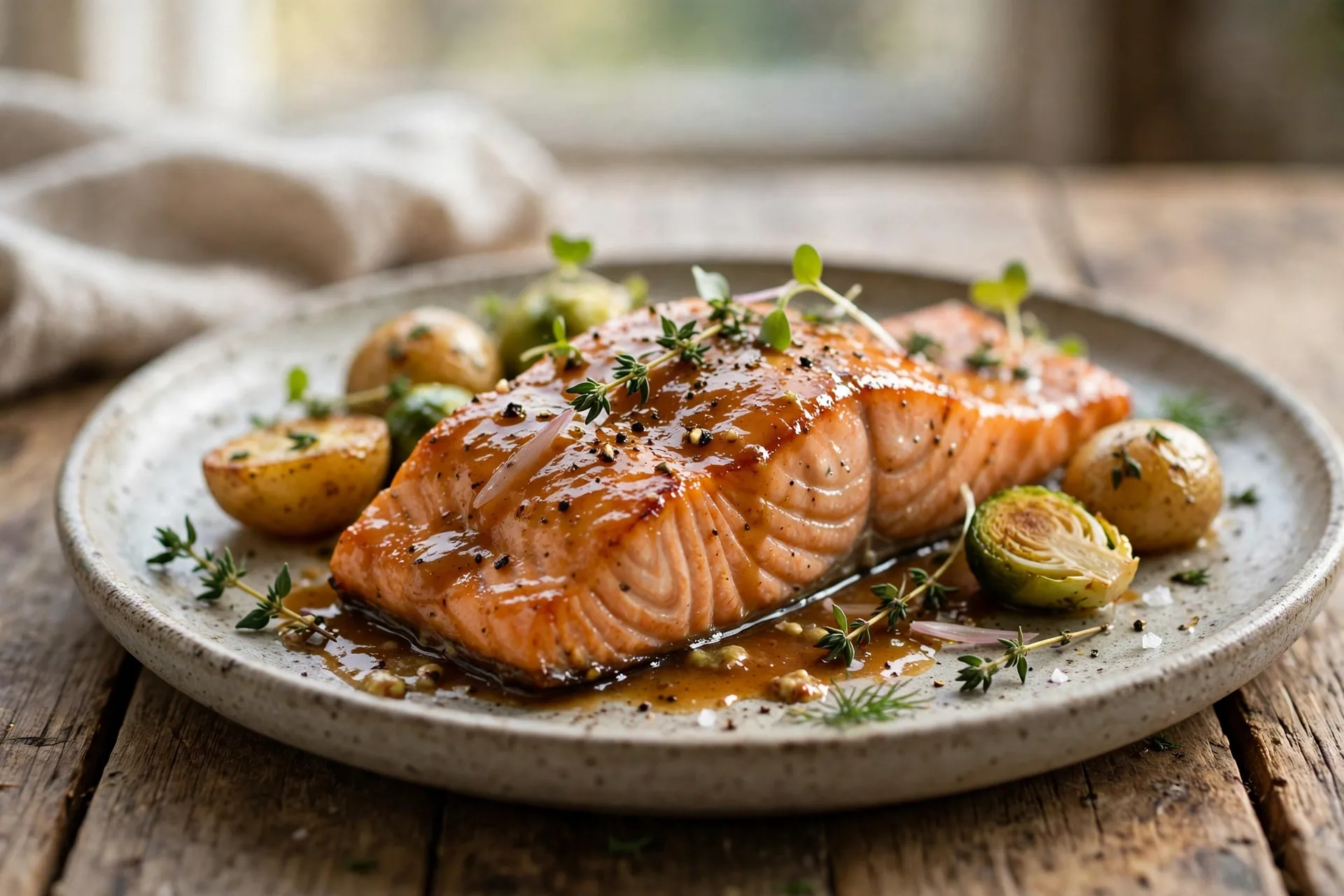
Maple Dijon glazed salmon is one of those recipes that looks elegant enough for guests but is so easy you can make it on a busy weeknight in under 30 minutes. A simple glaze of pure maple syrup, Dijon mustard, garlic, and soy sauce is brushed over salmon fillets, then the fish is roasted until the glaze caramelizes into a shiny, sweet and tangy coating. The inside stays moist and flaky, while the outside develops a beautiful golden crust that is full of flavor.
Salmon is a wonderful fish for home cooks because it is forgiving, cooks quickly, and pairs well with so many flavors. The maple adds a gentle sweetness that balances the sharpness of the Dijon, and the soy sauce adds a savory depth that keeps the glaze from tasting too sweet. A squeeze of lemon at the end brightens everything up. This is the kind of recipe that makes people think you spent much more time in the kitchen than you actually did.
Serve this salmon with roasted vegetables, rice, or a simple salad, and dinner is done. It is also a great option for meal prep, because the leftovers are delicious cold in a salad or flaked into a grain bowl the next day. If you are looking for a reliable salmon recipe that never disappoints, this maple Dijon version should be at the top of your list.
Why You’ll Love This Recipe
You will love this recipe because it is fast, flavorful, and nearly foolproof. The glaze uses only a handful of pantry ingredients and comes together in one bowl in two minutes. The salmon roasts in about 12 minutes, so dinner is on the table in less than half an hour. The sweet and tangy glaze caramelizes beautifully without burning, and the fish stays tender and juicy. It is a healthy, satisfying main dish that feels special, and it works just as well for a weeknight family dinner as it does for a dinner party.
Ingredients
- 4 salmon fillets, 6 ounces each, skin on or off
- 1 teaspoon kosher salt
- 1/2 teaspoon black pepper
- 1/2 teaspoon garlic powder
- 1/4 cup pure maple syrup
- 2 tablespoons Dijon mustard
- 1 tablespoon whole-grain Dijon mustard
- 1 tablespoon low-sodium soy sauce
- 2 cloves garlic, minced
- 1 tablespoon olive oil
- 1 tablespoon fresh lemon juice
- 1 teaspoon lemon zest
- 1/4 teaspoon red pepper flakes, optional
- 1 tablespoon fresh parsley or chives, chopped, for serving
- Lemon wedges, for serving
Instructions
- 1. Preheat the oven to 400 degrees F. Line a rimmed baking sheet with parchment paper or lightly grease it with oil. Pat the salmon fillets dry with paper towels and place them skin-side down on the prepared baking sheet, leaving space between each fillet.
- 2. Season the salmon with the salt, black pepper, and garlic powder. Let the fillets sit at room temperature for 10 minutes while you make the glaze. This helps the fish cook more evenly.
- 3. In a small bowl, whisk together the maple syrup, Dijon mustard, whole-grain mustard, soy sauce, minced garlic, olive oil, lemon juice, lemon zest, and red pepper flakes if using. The mixture should be smooth and pourable.
- 4. Brush about half of the glaze generously over the top and sides of each salmon fillet. Reserve the remaining glaze for basting and serving. Make sure each fillet is evenly coated.
- 5. Roast the salmon for 10 to 12 minutes, depending on the thickness of the fillets. The salmon is done when it flakes easily with a fork and the center is just barely translucent. An instant-read thermometer inserted into the thickest part should read 125 to 130 degrees F for medium, or 145 degrees F for fully cooked.
- 6. During the last 3 minutes of cooking, brush the fillets with more of the reserved glaze. This second layer helps build a shiny, caramelized coating. If you like a deeper color, switch the oven to broil for the final 1 to 2 minutes, watching closely so the glaze does not burn.
- 7. Remove the salmon from the oven and let it rest for 3 to 5 minutes. The fish will continue cooking slightly from residual heat, and the glaze will set into a glossy coating.
- 8. Transfer the salmon to serving plates and spoon any remaining glaze from the bowl over the top, or serve the extra glaze on the side. Sprinkle with chopped parsley or chives and serve with lemon wedges.
Tips and Variations
Use pure maple syrup, not pancake syrup, for the best flavor. Pancake syrup is mostly corn syrup and will make the glaze overly sweet and sticky without the rich maple taste. If you prefer a less sweet glaze, reduce the maple syrup to 3 tablespoons and add an extra tablespoon of Dijon mustard. For a spicier version, add a teaspoon of sriracha or increase the red pepper flakes.
Salmon fillets vary in thickness, so check for doneness a minute or two early if your fillets are thin. Overcooked salmon becomes dry, so it is better to pull it out when the center is still slightly translucent, because it will finish cooking as it rests. You can also cook this salmon in a skillet or on the grill. For the grill, brush the glaze on during the last few minutes of cooking so it does not burn. Leftover salmon is excellent flaked over a salad, in a wrap, or mixed into pasta.
Serving Suggestions
Serve maple Dijon glazed salmon with roasted asparagus, green beans, or Brussels sprouts, and a side of wild rice, quinoa, or garlic mashed potatoes. It also pairs well with a simple cucumber salad or a mixed green salad with a light vinaigrette. For a complete meal, add a loaf of crusty bread and a glass of white wine such as Pinot Grigio or Chardonnay. The sweet glaze also complements roasted sweet potatoes nicely.
Storage and Make-Ahead
Store leftover salmon in an airtight container in the refrigerator for up to 3 days. Reheat gently in a 275 degree F oven for about 10 minutes, or in the microwave at reduced power, until just warmed through. Avoid overheating, because salmon dries out quickly. The glaze can be made up to 3 days ahead and stored in the refrigerator in a sealed container. Bring it to room temperature and whisk it before using. Cooked salmon can also be flaked and used cold in salads or grain bowls.
Nutrition Notes
Salmon is a good source of protein and omega-3 fatty acids, along with vitamin D, vitamin B12, and selenium. The maple Dijon glaze adds sweetness and flavor with a modest amount of sugar from the maple syrup. Serving the salmon with vegetables and whole grains makes a balanced, nutrient-rich meal. Choosing wild-caught or responsibly farmed salmon is a good option when available.
Frequently Asked Questions
Can I use frozen salmon? Yes, thaw frozen salmon completely in the refrigerator overnight before cooking. Pat it very dry before seasoning so the glaze adheres well and the fish browns properly.
Should I keep the skin on? Skin-on salmon is a good choice because the skin helps protect the fish from drying out and becomes crisp in the oven. You can easily slide the cooked fillet off the skin when serving if you prefer not to eat it.
How do I keep the glaze from burning? The glaze contains sugar from the maple syrup, so it can burn if the heat is too high or if it cooks too long. Roast at 400 degrees F, add the second layer of glaze only in the last few minutes, and watch closely if you broil at the end.