
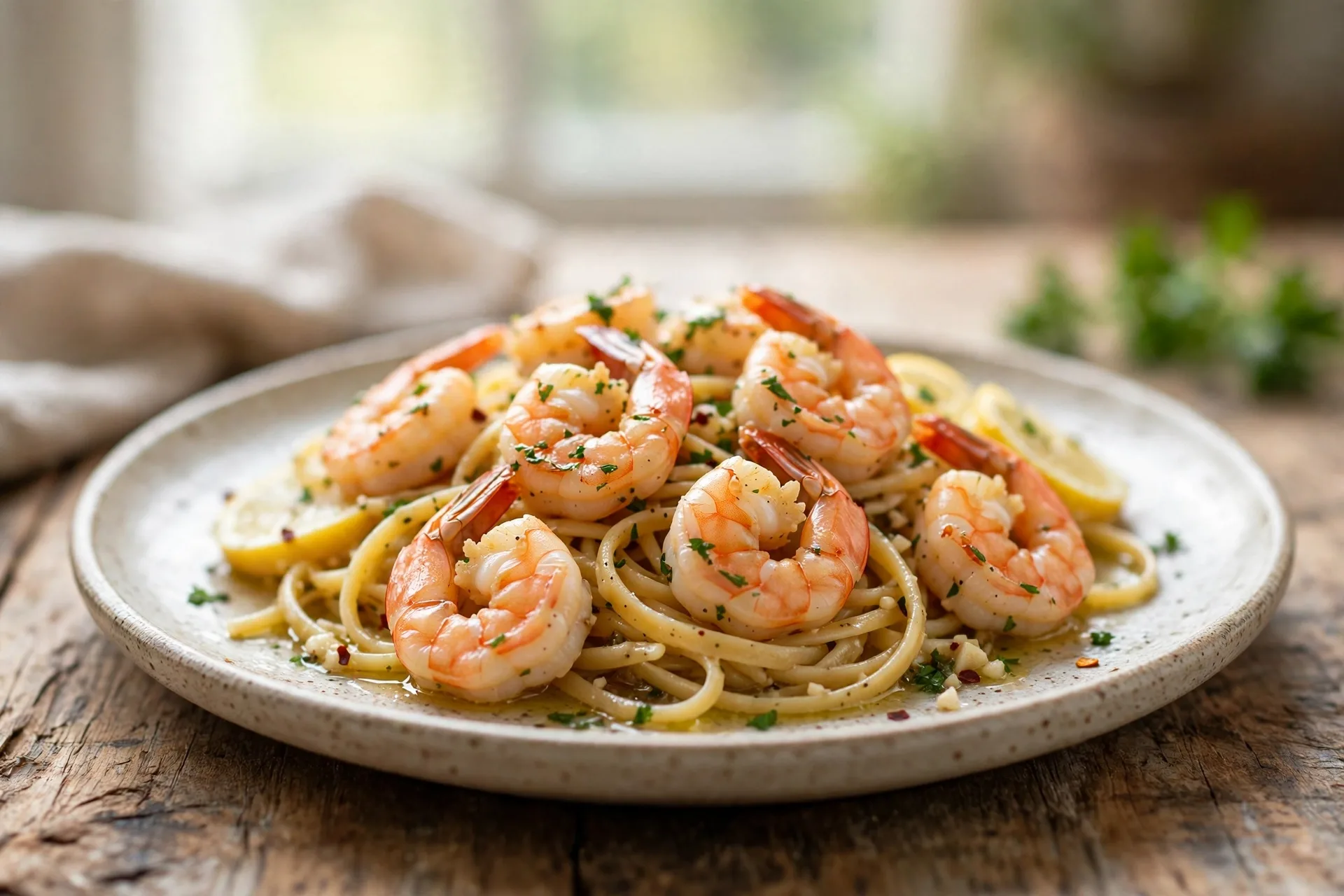
There are few dinners that feel as special and yet come together as quickly as Shrimp Scampi with Linguine. It is the kind of meal that belongs on a white tablecloth in a restaurant, but it is also completely at home on a busy weeknight when you need something impressive on the table in about thirty minutes. Plump shrimp are sauteed in butter, olive oil, garlic, and white wine until they are pink and tender, then tossed with silky linguine, fresh lemon juice, and a shower of chopped parsley. The sauce is light rather than heavy, bright rather than rich, and it clings to every strand of pasta in the best possible way.
What makes this dish so enduring is its balance. The butter gives it richness, the garlic gives it depth, the wine adds a gentle acidity, and the lemon lifts everything at the end so the plate never feels greasy. A pinch of red pepper flakes adds a faint warmth without making the dish spicy, and the parsley brings a fresh, green finish. It is a complete meal on its own, yet it also welcomes a simple salad or a piece of crusty bread for soaking up the last of the sauce.
Shrimp scampi is also wonderfully flexible. It works for a quiet dinner for two, for a family meal when you double the recipe, or for guests when you want to serve something that looks far more complicated than it is. The shrimp cook in just a few minutes, the pasta cooks while the sauce comes together, and the whole dish is best served immediately, straight from the pan, while the sauce is glossy and the shrimp are at their juiciest. If you keep shrimp in the freezer and pasta in the pantry, you are never more than half an hour away from a dinner that tastes like a celebration.
Why You’ll Love This Recipe
You will love this recipe because it delivers restaurant flavor with pantry ingredients and very little effort. The sauce comes together in one skillet while the pasta boils, so there is almost no extra washing up. The shrimp stay tender when you follow the short cooking times, and the lemon butter sauce is light enough for a weeknight but elegant enough for company. It is also easy to adjust. Add more garlic if you love it, leave out the wine and use extra broth if you prefer, or toss in a handful of spinach at the end. Once you make it a few times, it becomes one of those reliable recipes you can cook without even looking at the page.
Ingredients
- 12 ounces linguine
- 1 pound large shrimp, peeled and deveined, tails removed
- 1/2 teaspoon kosher salt, plus more for the pasta water
- 1/4 teaspoon black pepper
- 1/4 teaspoon red pepper flakes
- 3 tablespoons unsalted butter, divided
- 2 tablespoons olive oil
- 5 cloves garlic, thinly sliced
- 1 small shallot, finely chopped
- 1/2 cup dry white wine, such as Pinot Grigio or Sauvignon Blanc
- 1/2 cup low-sodium chicken broth
- 1 tablespoon lemon zest
- 3 tablespoons fresh lemon juice
- 1/4 cup fresh flat-leaf parsley, chopped
- 1/4 cup grated Parmesan cheese, plus more for serving
- Lemon wedges, for serving
Instructions
- 1. Bring a large pot of water to a boil over high heat. Add 1 tablespoon of salt, then add the linguine. Cook according to the package directions until just al dente, usually 9 to 11 minutes. Before draining, scoop out 1 cup of the starchy pasta water and set it aside. Drain the pasta and return it to the pot, off the heat.
- 2. While the pasta cooks, pat the shrimp dry with paper towels. Dry shrimp brown better and absorb the sauce more evenly. Season them on both sides with the salt, black pepper, and red pepper flakes.
- 3. Heat 1 tablespoon of butter and the olive oil in a large, deep skillet over medium-high heat until the butter foams. Add the shrimp in a single layer, taking care not to crowd the pan. Cook for 2 minutes without moving them, then flip and cook for 1 to 2 minutes more, just until pink and opaque. Transfer the shrimp to a clean plate. They will finish cooking later in the sauce, so do not overcook them now.
- 4. Reduce the heat to medium. Add the remaining 2 tablespoons of butter to the same skillet. When it melts, add the shallot and cook for 2 minutes until softened. Add the sliced garlic and cook for 30 seconds to 1 minute, stirring constantly, until fragrant and just starting to turn golden. Garlic burns quickly, so watch it closely and lower the heat if needed.
- 5. Pour in the white wine and chicken broth. Use a wooden spoon to scrape up any browned bits from the bottom of the pan. Bring the liquid to a gentle simmer and cook for 3 to 4 minutes, until it has reduced by about one third and the raw wine smell has cooked off.
- 6. Stir in the lemon zest and lemon juice. Taste the sauce and adjust the salt if needed. It should taste bright, garlicky, and lightly buttery.
- 7. Add the drained linguine to the skillet and toss well to coat it in the sauce. Add 1/4 cup of the reserved pasta water, a little at a time, tossing constantly until the sauce turns glossy and clings to the noodles. Add more pasta water, a splash at a time, if the pasta looks dry.
- 8. Return the shrimp to the skillet along with any juices from the plate. Toss for 1 minute, just until the shrimp are heated through. Remove the pan from the heat.
- 9. Stir in the chopped parsley and the grated Parmesan. Toss once more, then divide the pasta among warm bowls. Serve immediately with extra Parmesan and lemon wedges on the side.
Tips and Variations
The most important tip for shrimp scampi is to avoid overcooking the shrimp. Shrimp go from perfectly tender to rubbery in less than a minute, so pull them from the pan as soon as they turn pink and curl into a gentle C shape. If they curl tightly into an O, they are overdone. Use large shrimp if you can, because they stay juicier than small ones and are easier to cook evenly. If you are using frozen shrimp, thaw them overnight in the refrigerator or under cold running water, then pat them very dry before seasoning.
For a variation without wine, replace the white wine with an equal amount of extra chicken broth plus 1 tablespoon of lemon juice. For a richer sauce, add an extra tablespoon of butter at the end and let it melt into the pasta. You can also add 2 cups of baby spinach or a cup of halved cherry tomatoes in step 7 and let them wilt into the hot pasta. If you like a little more heat, increase the red pepper flakes to 1/2 teaspoon. For a gluten-free version, use your favorite gluten-free linguine and check that the broth is certified gluten-free.
Serving Suggestions
Serve Shrimp Scampi with Linguine in wide, shallow bowls so the sauce pools nicely around the pasta. A simple green salad with a lemon vinaigrette makes a fresh contrast, and warm crusty bread or garlic bread is ideal for soaking up the sauce left in the bowl. Roasted asparagus, steamed broccoli, or green beans also pair well and add color to the plate. For drinks, a crisp white wine such as Pinot Grigio or a sparkling water with lemon keeps the meal light. This dish is best eaten right away, while the pasta is hot and the sauce is at its glossiest.
Storage and Make-Ahead
Shrimp scampi is best served fresh, but leftovers can be stored in an airtight container in the refrigerator for up to 2 days. Reheat gently in a skillet over low heat with a splash of water or chicken broth to loosen the sauce, and warm just until heated through. Avoid microwaving on high heat, which can make the shrimp tough. The sauce base, without the shrimp and pasta, can be made a few hours ahead and kept in the refrigerator, then reheated before you cook the pasta and shrimp. Do not freeze the finished dish, as the shrimp and pasta will lose their texture.
Nutrition Notes
This dish provides lean protein from the shrimp, carbohydrates for energy from the linguine, and healthy fats from the olive oil. Shrimp are naturally low in calories and a source of protein, selenium, and vitamin B12. The sauce is butter-based, so the dish is richer than a tomato-based pasta, but the portion of butter is modest when spread across four servings. Using whole wheat linguine adds fiber, and adding vegetables such as spinach or tomatoes increases the fiber and micronutrient content. As with most pasta dishes, portion size matters, and pairing the pasta with a salad helps balance the plate.
Frequently Asked Questions
Can I use frozen shrimp for shrimp scampi? Yes. Thaw them completely first, either overnight in the refrigerator or under cold running water for about 10 minutes. Pat them very dry with paper towels before seasoning so they sear properly instead of steaming in the pan.
What can I use instead of white wine? Use an equal amount of low-sodium chicken broth with an extra tablespoon of lemon juice. The broth keeps the sauce savory while the lemon preserves the brightness the wine would have added.
How do I keep the shrimp from getting rubbery? Cook them briefly, just until pink and opaque, and remove them from the pan before making the sauce. Return them only at the very end for about a minute to heat through. Residual heat finishes the cooking without overdoing it.