
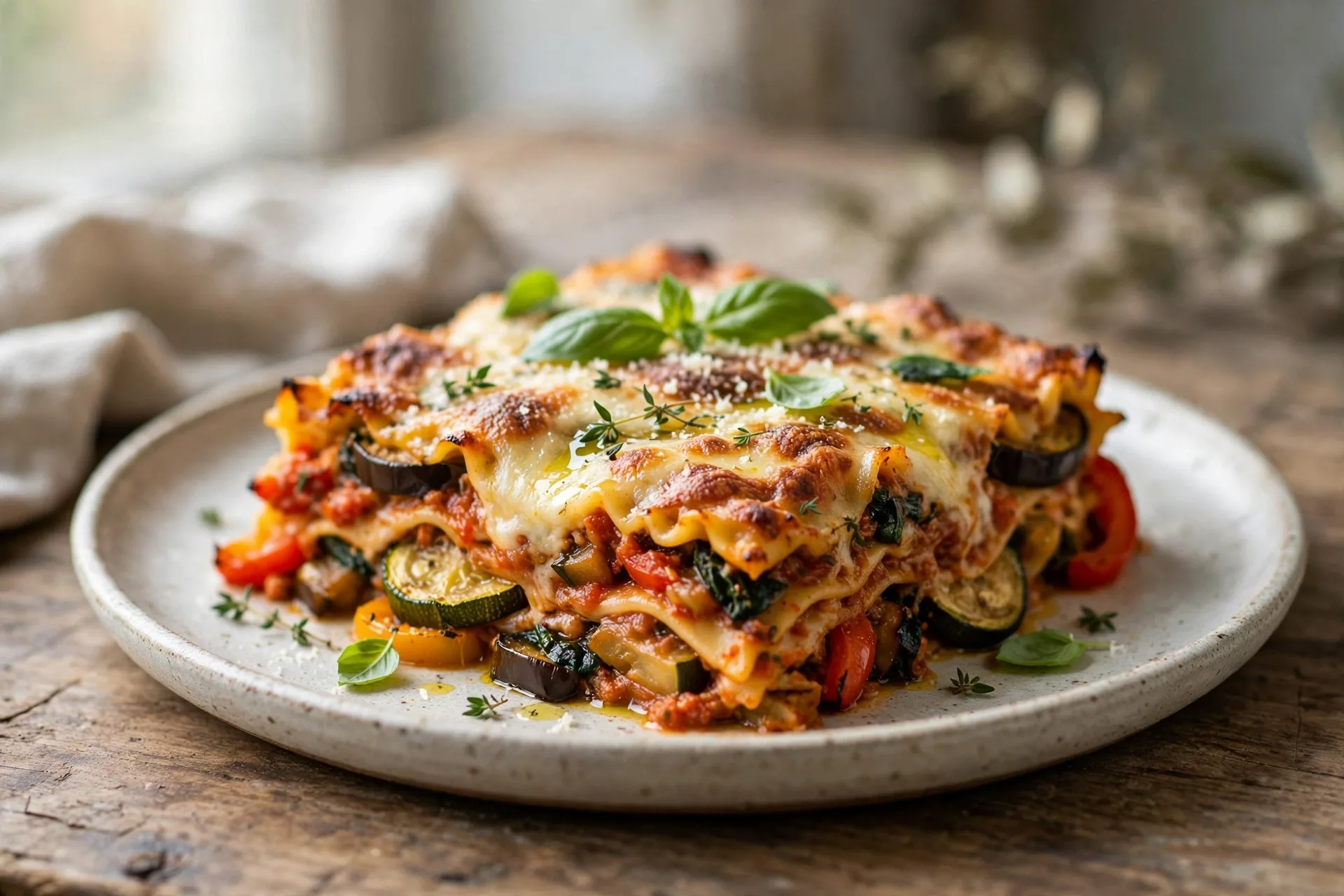
Vegetable Lasagna is proof that a meatless dinner can be just as hearty, comforting, and satisfying as any classic version. Layers of tender pasta, a rich tomato sauce, creamy ricotta, sauteed vegetables, and melted mozzarella come together in a bubbling pan that feeds a crowd and tastes even better the next day. It is the kind of dish that makes a weeknight feel special and a weekend gathering feel generous, because one pan serves eight people and everyone goes back for seconds.
What sets a good vegetable lasagna apart is the way the vegetables are treated. They are not an afterthought tucked between noodles. Zucchini, mushrooms, spinach, carrots, and bell peppers are cooked first until they release their moisture and develop flavor, so the finished lasagna is rich and structured instead of watery. The ricotta mixture, brightened with lemon zest, basil, and Parmesan, adds creaminess without heaviness, and a good marinara ties the whole dish together.
This lasagna is also a practical cook’s friend. You can assemble it in the morning and bake it in the evening, freeze it for a busy week, or use it to clear out vegetables from the refrigerator. It freezes and reheats beautifully, which makes it ideal for meal prep. Whether you serve it for a family dinner, a potluck, or a meatless Monday, it is a reliable, crowd-pleasing recipe that earns a permanent place in your rotation.
Why You’ll Love This Recipe
You will love this recipe because it is hearty without meat, make-ahead friendly, and endlessly adaptable to the vegetables you have on hand. The layers hold together cleanly when sliced, the cheese turns golden and bubbly on top, and the flavors deepen as it rests. It is also a wonderful way to get more vegetables onto the table in a form even picky eaters enjoy. One pan feeds a crowd, leftovers reheat well, and the whole dish can be assembled a day ahead, which makes entertaining far less stressful.
Ingredients
- 12 lasagna noodles, regular or no-boil
- 2 tablespoons olive oil
- 1 large onion, finely chopped
- 3 cloves garlic, minced
- 8 ounces cremini mushrooms, sliced
- 2 medium zucchini, diced
- 1 red bell pepper, diced
- 2 medium carrots, finely diced
- 5 ounces fresh baby spinach
- 1 teaspoon dried Italian seasoning
- 1/2 teaspoon kosher salt, plus more to taste
- 1/4 teaspoon black pepper
- 1/4 teaspoon red pepper flakes
- 24 ounces marinara sauce, about 3 cups
- 15 ounces whole milk ricotta cheese
- 1 large egg
- 1/2 cup grated Parmesan cheese, divided
- 1 teaspoon lemon zest
- 1/4 cup fresh basil leaves, chopped, plus more for serving
- 16 ounces whole milk mozzarella cheese, shredded, divided
- 1 tablespoon chopped fresh parsley, for serving
Instructions
- 1. Preheat the oven to 375 degrees F. Lightly grease a 9 by 13 inch baking dish with olive oil or cooking spray and set it aside.
- 2. If you are using regular lasagna noodles, bring a large pot of salted water to a boil. Cook the noodles for 2 minutes less than the package directions, until just flexible but still firm. Drain, rinse briefly with cool water, and lay them flat on a baking sheet so they do not stick together. If you are using no-boil noodles, skip this step.
- 3. Heat the olive oil in a large, deep skillet over medium-high heat. Add the onion and carrots and cook for 5 minutes until softened. Add the mushrooms, zucchini, and bell pepper and cook for 7 to 8 minutes, stirring often, until the vegetables are tender and most of their liquid has evaporated. This step is essential. Vegetables that are still wet will make the lasagna soggy.
- 4. Add the garlic, Italian seasoning, salt, black pepper, and red pepper flakes. Cook for 1 minute until fragrant. Add the spinach in handfuls, stirring until each batch wilts, about 2 minutes total. Remove the pan from the heat and let the mixture cool for 5 minutes. Taste and adjust the salt if needed.
- 5. In a medium bowl, stir together the ricotta, egg, 1/4 cup of the Parmesan, lemon zest, and chopped basil until smooth and well combined.
- 6. Spread 1 cup of marinara sauce evenly over the bottom of the prepared baking dish. This keeps the first layer of noodles from sticking.
- 7. Arrange 4 noodles over the sauce, overlapping slightly if needed. Spread half of the ricotta mixture over the noodles, then spoon half of the vegetable mixture over the ricotta. Sprinkle with 1 cup of shredded mozzarella and spoon 3/4 cup of marinara over the top.
- 8. Repeat the layers: 4 more noodles, the remaining ricotta mixture, the remaining vegetables, 1 cup of mozzarella, and 3/4 cup of marinara.
- 9. Top with the final 4 noodles. Spread the remaining marinara over the noodles, then sprinkle with the remaining mozzarella and the remaining 1/4 cup of Parmesan.
- 10. Cover the dish tightly with aluminum foil, making sure the foil does not touch the cheese. You can spray the underside lightly with cooking spray to prevent sticking. Bake for 30 minutes.
- 11. Remove the foil and bake for 15 to 20 minutes more, until the cheese is melted, golden in spots, and bubbling around the edges. If you want more browning, switch the oven to broil for 2 minutes and watch it closely.
- 12. Remove the lasagna from the oven and let it rest for 15 minutes before slicing. Resting lets the layers set so you get clean, neat squares. Sprinkle with fresh basil and parsley before serving.
Tips and Variations
The key to a vegetable lasagna that slices cleanly is cooking the vegetables until dry and letting the finished dish rest. If the vegetable mixture looks wet in the pan, keep cooking for a few more minutes until the liquid evaporates. Squeeze the spinach gently if it releases a lot of water. Whole milk ricotta and mozzarella give the best texture and melt; low-fat versions can turn grainy or watery.
For variations, swap in eggplant, yellow squash, or butternut squash for the zucchini, or add a layer of roasted red peppers. For a richer sauce, stir 1/2 cup of heavy cream into the marinara. To make it gluten-free, use gluten-free lasagna noodles and check that the marinara is certified gluten-free. For a vegan version, use plant-based ricotta and mozzarella and omit the egg, adding 2 tablespoons of nutritional yeast to the ricotta mixture for flavor. You can also add a layer of pesto between the noodles for a fresh, herby twist.
Serving Suggestions
Serve Vegetable Lasagna in generous squares with a simple green salad dressed in lemon and olive oil. Garlic bread or warm focaccia is perfect for scooping up extra sauce. Roasted green beans or steamed broccoli add color and balance. For a dinner party, start with a light soup or bruschetta and finish with fruit or a simple dessert, since the lasagna itself is filling. A glass of red wine, sparkling water, or iced tea pairs well with the tomato and cheese flavors.
Storage and Make-Ahead
Store leftover lasagna in an airtight container in the refrigerator for up to 4 days. Reheat individual portions in the microwave for 2 to 3 minutes, or reheat the whole dish, covered with foil, in a 350 degree F oven for 20 to 25 minutes until hot in the center. To freeze, let the lasagna cool completely, then wrap the dish tightly in plastic wrap and foil, or transfer portions to freezer containers. Freeze for up to 3 months. Thaw overnight in the refrigerator before reheating. You can assemble the lasagna up to 24 hours ahead, cover it, refrigerate it, and add 10 minutes to the covered baking time.
Nutrition Notes
Vegetable lasagna provides fiber and a wide range of vitamins from the zucchini, spinach, carrots, peppers, and mushrooms, along with protein and calcium from the ricotta, mozzarella, and Parmesan. The tomato sauce contributes lycopene and vitamin C. Because cheese and pasta are energy-dense, a moderate portion served with a large salad makes a balanced plate. Using whole wheat noodles increases fiber, and adding extra vegetables or reducing the cheese slightly lowers the overall richness without changing the character of the dish.
Frequently Asked Questions
Why is my vegetable lasagna watery? The most common cause is vegetables that were not cooked long enough. Saute them until their liquid evaporates and the pan looks dry before layering. Also let the baked lasagna rest for 15 minutes so the sauce thickens and the layers set.
Can I make vegetable lasagna ahead of time? Yes. Assemble it up to a day ahead, cover tightly, and refrigerate. Bake it straight from the refrigerator, adding about 10 minutes to the covered baking time. You can also freeze the assembled, unbaked lasagna for up to 3 months.
Can I use no-boil noodles? Yes. No-boil noodles work well and save time. Make sure each noodle is fully covered with sauce so it softens properly in the oven, and add an extra 5 minutes to the covered baking time if needed.