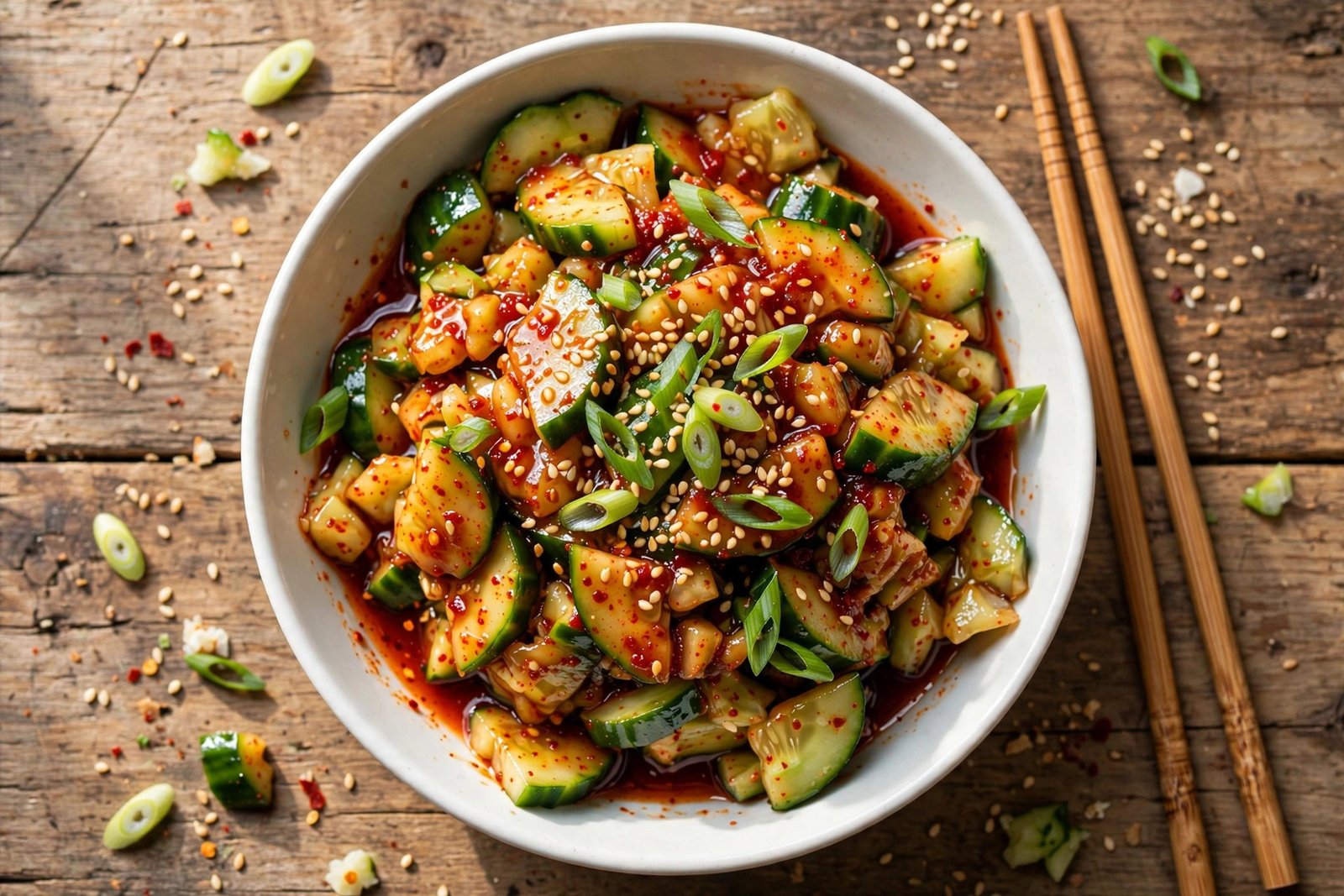
Viral Korean Cucumber Salad (Oi Muchim) is the crunchy, spicy-sweet side dish that has taken over food feeds lately — and for good reason. Oi muchim (pronounced “oy moo-chim”) is a classic Korean banchan made from cucumbers smashed rather than sliced, then tossed in a fiery, garlicky gochugaru dressing with toasted sesame oil, rice vinegar, and scallions. It’s the kind of recipe that gets filmed over and over again because the smash itself is so satisfying to watch: cucumbers crack under the flat of a knife, breaking into craggy, irregular pieces whose rough edges drink up every drop of the glossy red dressing.
What comes out of that quick smashing session is one of the most addictive textures in Korean cooking. Every bite is cool and hydrating, then comes the heat — a slow, smoky burn from coarse Korean chili flakes — balanced by a whisper of sweetness, a tangy vinegar brightness, and that nutty sesame finish. It takes about 15 minutes start to finish, uses a handful of pantry staples, and is naturally vegan, gluten-free (with tamari or gluten-free soy sauce), and light enough to eat by the bowlful. Serve it alongside grilled meats, pile it into rice bowls, or eat it straight from the mixing bowl the way half of social media apparently does.
Why You’ll Love This Oi Muchim
- Ready in 15 minutes: No cooking at all. Smash, salt, whisk, toss — the whole recipe comes together in a quarter of an hour.
- That unbeatable smashed texture: Crushing the cucumbers creates jagged edges that grip the dressing far better than neat slices ever could, so every bite is coated in spicy-sweet flavor.
- Light yet satisfying: Cool, crunchy, and hydrating with a bold seasoning punch — it eats like a snack but fits effortlessly into a healthy dinner.
- Pantry-friendly and budget-friendly: Cucumbers, chili flakes, vinegar, soy sauce, sesame oil, and garlic. Nothing exotic, nothing expensive.
- Perfect with everything: Pair it with Korean BBQ, grilled chicken, bibimbap, salmon, or plain steamed rice — it brightens any plate it lands on.
- Endlessly adjustable: Dial the heat up or down, swap in different vinegars or sweeteners, or bulk it up with extras like julienned carrots or shredded cabbage.
Ingredients
For the Cucumbers:
- 5 Persian cucumbers (about 1 1/2 lbs)
- 1 tsp kosher salt
For the Dressing:
- 2 tbsp gochugaru (Korean chili flakes; coarse flakes give the classic texture)
- 1 tbsp rice vinegar
- 1 tbsp soy sauce (use tamari for gluten-free)
- 1 tsp sugar (or honey)
- 1 tbsp toasted sesame oil
- 2 cloves garlic, minced
- 2 green onions, thinly sliced
- 1 tsp toasted sesame seeds, plus more for serving
Instructions
- Smash the cucumbers: Place one cucumber at a time on a sturdy cutting board. Lay the flat side of a large chef’s knife across it (or use the bottom of a heavy glass or jar) and press down firmly until the cucumber cracks and splits open lengthwise. Don’t be shy — a confident, firm press gives you the best irregular pieces. Once split, tear or roughly chop the cucumber into bite-size pieces, about 1 to 1 1/2 inches. Repeat with the remaining cucumbers and transfer all the pieces to a colander or large bowl.
- Salt and drain: Sprinkle the kosher salt over the smashed cucumber pieces and toss well so every piece is coated. Let the cucumbers rest for 10 minutes. During this time the salt draws out excess water, which concentrates the cucumber flavor and keeps the finished salad from turning watery. After 10 minutes, drain off the liquid that has collected. Give the cucumbers a gentle squeeze or press with the back of a spoon to release more liquid, then pat them dry with a clean kitchen towel or paper towels. Do not rinse unless you accidentally oversalted — simply shake off any visible salt crystals.
- Whisk the dressing: In a large mixing bowl, combine the gochugaru, rice vinegar, soy sauce, sugar, toasted sesame oil, and minced garlic. Whisk until the sugar is fully dissolved and the mixture looks glossy and well combined. Taste it: you should get heat first, then tang, then a nutty-sweet finish. Adjust now if needed — a little more sugar tames heat, a splash more vinegar brightens it.
- Toss everything together: Add the drained cucumber pieces, the sliced green onions, and the toasted sesame seeds to the bowl with the dressing. Using clean hands or tongs, toss thoroughly for a full minute so that the dressing works its way into all the smashed crevices. Every piece should glisten with the red dressing.
- Rest and serve: Let the salad sit at room temperature for 10 minutes so the flavors meld and the cucumbers absorb the dressing. Sprinkle with a few extra sesame seeds and serve cold or at room temperature. Oi muchim is at its absolute best within a few hours of making it — that’s when the crunch is loudest and the colors are brightest.
Tips for the Best Oi Muchim
- Use Persian (or English) cucumbers: These thin-skinned, low-seed varieties have the best crunch and the least water. If all you can find are standard field cucumbers, peel them and scoop out the seedy center before smashing.
- Don’t skip the salting step: Ten minutes of salting makes the difference between a crisp, intensely flavored salad and a soggy, diluted one. That drained liquid is flavor dilution you don’t want in your dressing.
- Pick coarse gochugaru: Korean chili flakes come in fine and coarse grinds. Coarse gochugaru gives oi muchim its signature rustic texture and a smoky, fruity heat that tastes distinctly Korean — regular red pepper flakes are a poor substitute here.
- Use toasted sesame oil, not regular: The dark amber toasted oil is what delivers that deep nutty aroma. Light or untoasted sesame oil won’t give you the same flavor.
- Smash, don’t slice: Clean slices look tidy, but the rough, broken surfaces from smashing are the whole point — they absorb dressing like a sponge. This is also what makes the salad go viral every time someone films it.
- Serve it fresh: This salad waits for no one. The first two to three hours are prime time; after that the cucumbers keep softening and releasing water.
Variations
- Extra-spicy oi muchim: Bump the gochugaru up to 3 tablespoons and add 1 teaspoon of gochujang (Korean chili paste) to the dressing for deeper, stickier heat.
- Sweet-and-tangy version: Swap the sugar for honey or maple syrup and add an extra tablespoon of rice vinegar for a brighter, more pickle-like profile.
- Oi muchim with carrots: Add 1 large carrot, julienned into matchsticks, to the bowl before tossing. It brings sweetness, extra crunch, and a gorgeous color contrast.
- Garlicky perilla twist: Tear a small handful of fresh perilla (kkaennip) or mint leaves into the salad at the end for a fragrant, herbal lift that’s very traditional in Korean kitchens.
- Protein-packed bowl: Serve the salad over steamed rice with a soft-boiled egg, some grilled tofu, or shredded rotisserie chicken to turn it into a complete light meal.
Storage & Reheating
Oi muchim is genuinely best eaten fresh — within a few hours of tossing. That said, leftovers keep in an airtight container in the refrigerator for up to 2 days. The cucumbers will soften and release some liquid as they sit, so before serving leftover salad, drain off any excess liquid and refresh it with a small drizzle of sesame oil and a pinch of sesame seeds. Do not freeze this salad; cucumbers turn mushy when thawed. No reheating is needed — this is a cold or room-temperature dish by design.
Frequently Asked Questions
What does “oi muchim” mean?
In Korean, “oi” means cucumber and “muchim” means a seasoned or tossed salad. So oi muchim is literally “seasoned cucumber” — one of Korea’s most beloved banchans, the small side dishes served with nearly every Korean meal.
Is oi muchim very spicy?
It has a pleasant, warm heat from the gochugaru, but Korean chili flakes are more smoky and fruity than searing. If you’re sensitive to spice, start with 1 tablespoon of gochugaru and add more to taste. A little extra sugar also balances the heat nicely.
Can I make it ahead of time?
You can salt and drain the cucumbers up to a few hours ahead and keep them covered in the fridge, but toss them with the dressing no more than an hour or two before serving for maximum crunch. The dressed salad loses its signature texture if it sits overnight.
What should I serve oi muchim with?
It’s a natural partner for rich, savory foods: Korean BBQ, bulgogi, grilled salmon, or fried rice. It’s also wonderful in a rice bowl with a fried egg on top, or simply on its own as a refreshing snack.
Plate up a bowl of Viral Korean Cucumber Salad (Oi Muchim) and watch it disappear — the combination of shattering crunch, smoky heat, and cool freshness is the reason this humble cucumber side has become one of the most-filmed recipes on the internet. Make it once, and you’ll understand the hype. Make it twice, and it’s officially in your rotation.