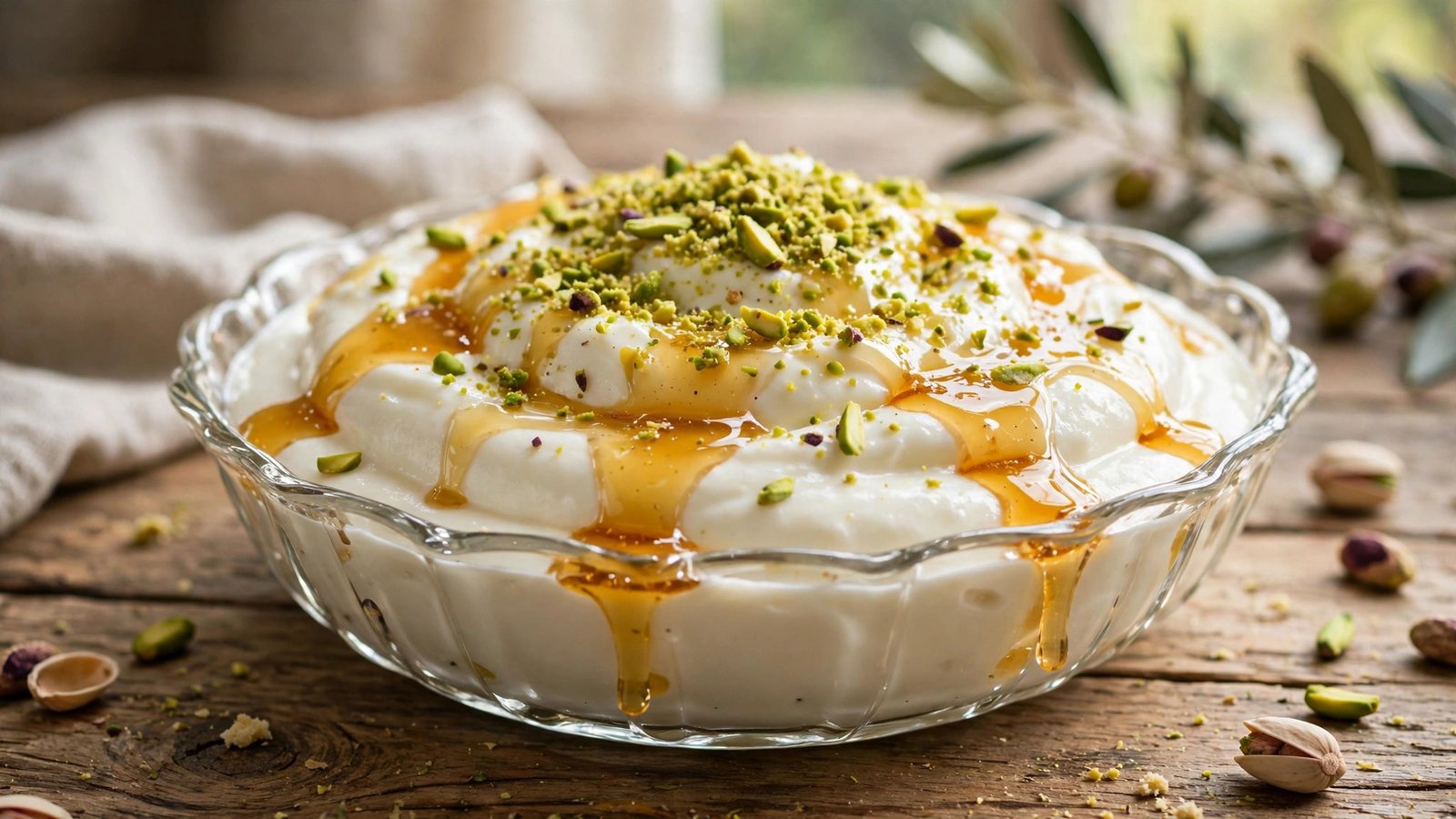
Viral Dubai Qishta Dessert is the Middle Eastern milk dessert that has taken over social feeds — a homemade version of qishta (also spelled ashta), the luxurious clotted cream that sits at the heart of countless Levantine and Gulf sweets. Made by gently thickening whole milk and cream into a silky, spoonable custard, then chilling it until perfectly set, this dessert is pure comfort: rich, delicately milky, and perfumed with just a whisper of rose water.
What makes it special is its texture — smooth and luscious, like a cross between panna cotta and clotted cream, but lighter and more delicate. Served ice-cold with a generous drizzle of golden honey and a shower of crushed pistachios, it is the kind of dessert that glows on a Ramadan or Eid table and turns any dinner party into an occasion. And despite its impressive look, it comes together from the simplest pantry staples in under 15 minutes of active cooking.
Why You’ll Love This Qishta Dessert
- Silky and rich: whole milk and heavy cream cook down into a luxuriously smooth, spoonable cream with the most delicate milky flavor.
- No baking required: just whisk, heat, stir, and chill — the refrigerator does all the setting work for you.
- Elegant with minimal effort: a shallow dish of chilled qishta, honey, and pistachios looks like something from a high-end Middle Eastern patisserie.
- Perfect make-ahead dessert: it actually needs 3–4 hours of chilling, so it is ideal for Ramadan, Eid gatherings, or dinner parties.
- Endlessly customizable: add saffron, cardamom, fresh fruit, or a kataifi nest to make it your own.
- Crowd-pleasing sweetness: gently sweetened and served cold, it is refreshing rather than heavy — the kind of dessert people ask the recipe for.
Ingredients
- 3 cups whole milk, divided
- 1 cup heavy cream
- 3 tablespoons cornstarch
- 3 tablespoons granulated sugar
- 1 tablespoon rose water (or orange blossom water)
- Pinch of salt
- Honey, for drizzling (about 1/4 cup for serving)
- 1/3 cup crushed pistachios, for topping
- Dried rose petals, for garnish (optional)
Instructions
- Make the cornstarch slurry: In a small bowl, whisk the 3 tablespoons of cornstarch into 1/2 cup of the cold milk until completely smooth with no lumps. Set aside.
- Warm the milk and cream: Pour the remaining 2 1/2 cups of milk and the heavy cream into a medium saucepan. Stir in the sugar and the pinch of salt. Place over medium-low heat and warm gently, stirring occasionally, until the sugar dissolves and the mixture is steaming — about 5 minutes. Do not let it come to a boil.
- Thicken the qishta: Give the cornstarch slurry a quick re-whisk (it settles fast), then pour it into the warm milk mixture while stirring constantly with a wooden spoon or whisk. Reduce the heat to low and continue stirring — gently but constantly — for 5 to 8 minutes, scraping the bottom and corners of the pan, until the mixture thickens to the consistency of a smooth, creamy pudding. It should coat the back of the spoon.
- Add the rose water: Remove the pan from the heat and stir in the rose water. Taste and adjust: if you like a stronger floral note, add another 1/2 teaspoon, a little at a time — rose water is potent.
- Pour and cover: Pour the hot qishta into a shallow serving dish (an 8-inch glass dish works well) or individual ramekins. Press a piece of plastic wrap directly onto the surface of the cream to prevent a skin from forming.
- Chill until set: Refrigerate for at least 3 to 4 hours, or overnight, until the qishta is completely cold and set. It should hold a clean line when you run a spoon through it, yet still feel soft and creamy.
- Serve: Scoop or slice the chilled qishta into portions, arrange on plates or in small bowls, and drizzle generously with honey. Shower with crushed pistachios and a few dried rose petals if using. Serve immediately, ice-cold.
Tips for the Best Qishta
- Use full-fat milk only: whole milk and heavy cream are essential — the fat is what gives qishta its signature silky richness. Low-fat milk will set thin and grainy.
- Keep the heat low and stir constantly: gentle heat plus constant movement is the secret to a lump-free, glossy finish.
- Don’t boil it hard: a vigorous boil can make the cream curdle or scorch on the bottom. Steam and gentle bubbling at the edges are all you need.
- Chill it fully before serving: qishta firms up and its flavors mellow as it chills — rushing this step gives you a soft, loose cream instead of the classic set slice.
- Serve it well-chilled: this is a cold dessert through and through; it tastes best straight from the refrigerator.
- Balance the sweetness: the honey drizzle adds the final sweetness, so keep the cream itself lightly sweetened — taste before chilling and remember the honey is still to come.
Variations
Once you master the classic, qishta is a blank canvas. Here are some of the most popular ways to dress it up:
- Saffron qishta: steep a generous pinch of saffron threads in 2 tablespoons of warm milk for 10 minutes, then stir it into the cream off the heat. It turns the qishta a gorgeous golden color with a honeyed aroma.
- Cardamom-spiced: add 1/2 teaspoon of ground cardamom along with the sugar for a warm, fragrant twist that pairs beautifully with the pistachios.
- Qishta with fresh figs or berries: top the chilled cream with sliced fresh figs, raspberries, or pomegranate seeds instead of (or alongside) the honey and pistachios for a fresh, juicy contrast.
- Kataifi nest version: bake shredded kataifi pastry tossed with melted butter until golden and crisp, then spoon chilled qishta over little nests of it. This is the viral “Dubai” presentation all over social media — creamy against crunchy.
- Vegan version: swap the whole milk and cream for full-fat coconut milk and use cornflour in place of cornstarch. Note the texture will be slightly different — coconut-flavored and a touch less silky — but still delicious.
Storage & Reheating
Store leftover qishta in the refrigerator, covered with plastic wrap pressed directly on the surface, for up to 4 days. Add the honey and pistachios only when serving, since the nuts soften and the honey pools if left sitting.
Qishta does not freeze well — freezing and thawing breaks the delicate starch set and turns it watery and grainy, so make only as much as you will eat within a few days.
There is no reheating involved with this dessert: it is always served cold, straight from the refrigerator.
Frequently Asked Questions
Is qishta the same as clotted cream?
They are similar but not identical. Both are rich, thickened creams, but traditional qishta (ashta) is made by skimming the skin that forms on heated milk, giving it a uniquely delicate, slightly stretchy texture. This home version thickens milk and cream with cornstarch to mimic that luscious result without the hours of stovetop skimming.
Can I use low-fat milk?
It is not recommended. Full-fat milk and heavy cream provide the fat needed for qishta’s signature silky body. With low-fat milk, the dessert will set thin, loose, and slightly grainy instead of creamy and rich.
Why is my qishta lumpy?
Lumps almost always come from the cornstarch: it must be fully dissolved in cold milk before it hits the heat, and the slurry should be re-whisked right before pouring since cornstarch settles quickly. Constant stirring on low heat also keeps it smooth. If it does lump, you can rescue it by pushing it through a fine-mesh sieve while still warm.
Is rose water necessary?
Not strictly — the dessert is delicious without it. But rose water (or orange blossom water) is what gives qishta its classic Middle Eastern character. Start with the tablespoon called for, taste, and add a little more if you like a stronger floral note. A little goes a long way.
Serve your qishta in small chilled bowls with an extra drizzle of honey and plenty of crushed pistachios, and watch it disappear. Whether you are putting together a Ramadan dessert spread, an Eid table, or simply want a taste of the dessert taking over Dubai’s feeds, this creamy, fragrant, make-ahead treat is one you will come back to again and again.