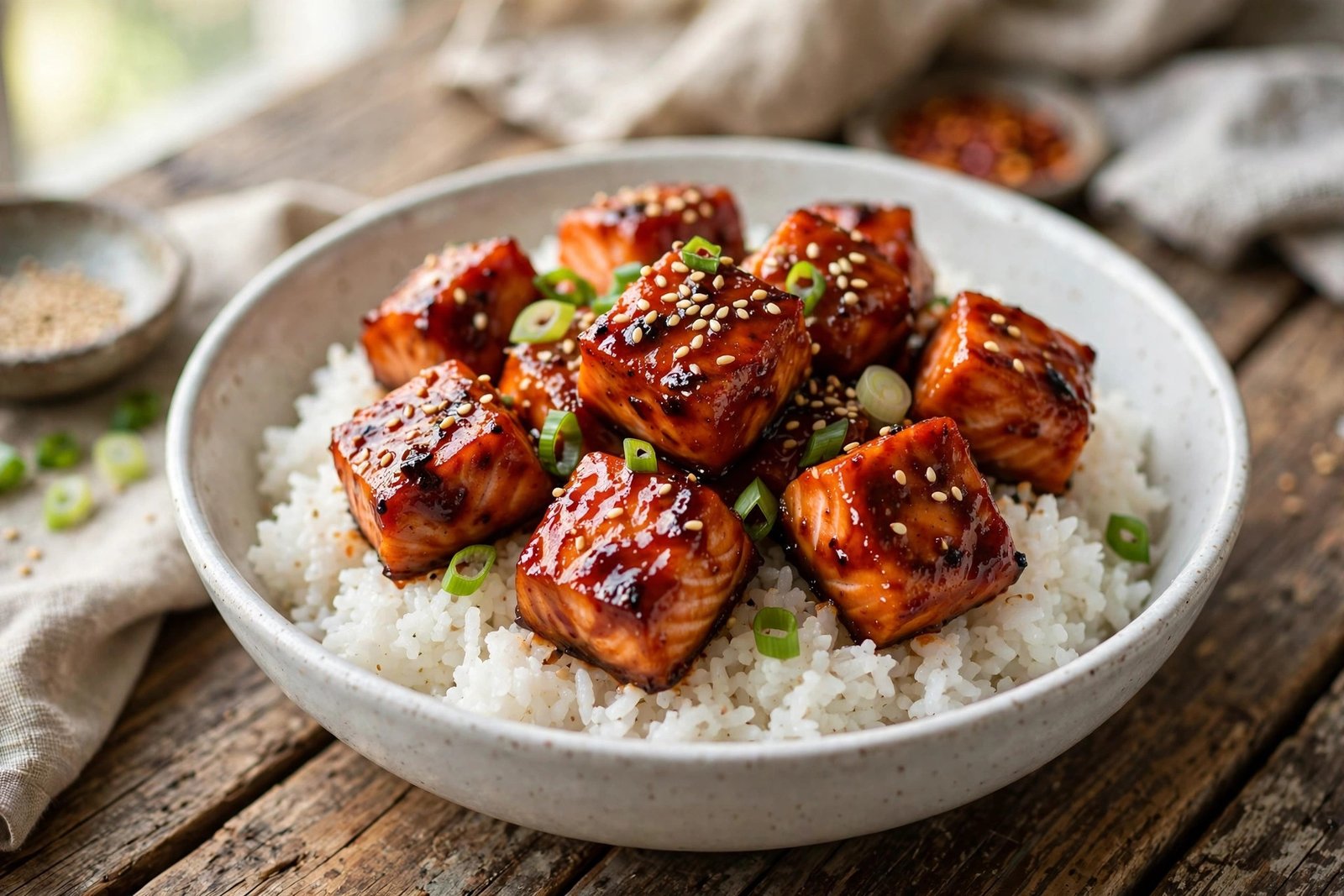
If your feed has been full of glistening, ruby-red salmon cubes lately, you are not imagining it — viral gochujang glazed salmon bites are having a moment, and for good reason. Bite-size pieces of salmon get seared hard in a hot pan until the edges caramelize, then tossed in a sticky glaze of gochujang, honey, soy sauce, and sesame oil that lacquers every cube in sweet-spicy shine. Fifteen minutes, one pan, and a dish that tastes like your favorite restaurant’s appetizer but eats like a proper weeknight dinner.
What made this one blow up on TikTok and Facebook is how effortlessly photogenic and approachable it is: the glaze turns a deep mahogany color as it reduces, the salmon stays buttery and flaky inside, and every bite hits that addictive sweet-heat-savory balance that keeps you reaching back into the pan. These bites are built for healthy weeknight bowls piled over jasmine rice with crisp vegetables, they meal-prep beautifully, and the high-protein payoff makes them as practical as they are craveable.
Why You’ll Love These Salmon Bites
- 15 minutes, one pan: From raw salmon to the dinner table in about fifteen minutes with minimal cleanup — this is the definition of a weeknight hero.
- High protein, naturally light: Salmon delivers serious protein and omega-3s, and the cubes cook fast without heavy breading or deep frying.
- That sticky, caramelized glaze: Gochujang and honey reduce into a glossy coating with deep, fermented savoriness and gentle sweetness — the kind of sauce you will want on everything.
- Endlessly bowl-able: Serve them over steamed jasmine rice with broccoli or cucumber for a balanced bowl, or let everyone build their own plate from the pan.
- Meal prep friendly: The bites reheat well and hold their texture, making them one of the rare salmon dishes that works as a packed lunch.
- Restaurant-level looks, beginner effort: The sear-and-glaze technique sounds fancy but requires zero special skills — just a hot pan and a timer.
Ingredients
- 1 1/2 pounds salmon fillets, skin removed, cut into 1-inch cubes
- 1 teaspoon kosher salt
- 1/2 teaspoon freshly ground black pepper
- 1 tablespoon neutral oil (avocado, canola, or vegetable)
- 3 tablespoons gochujang
- 2 tablespoons honey (or maple syrup)
- 2 tablespoons low-sodium soy sauce
- 1 tablespoon rice vinegar
- 1 tablespoon toasted sesame oil
- 2 garlic cloves, minced
- 1 teaspoon fresh ginger, grated
- 1 teaspoon sesame seeds, for garnish
- 2 green onions, thinly sliced, for garnish
- Steamed jasmine rice and steamed broccoli or sliced cucumber, for serving
Instructions
- Whisk the glaze. In a small bowl, whisk together the gochujang, honey, soy sauce, rice vinegar, toasted sesame oil, minced garlic, and grated ginger until completely smooth. Set the glaze aside near the stove — the final step moves quickly.
- Prep and season the salmon. Pat the salmon cubes thoroughly dry with paper towels; this is the single most important step for getting a good sear. Season all over with the kosher salt and black pepper, tossing gently so every cube is coated.
- Sear in a hot pan. Heat the neutral oil in a large skillet or wok over medium-high heat until shimmering. Add the salmon cubes in a single layer, working in two batches if needed — crowding the pan will steam the fish instead of searing it. Cook undisturbed for about 2 minutes per side, turning once or twice, until deeply golden with crisp caramelized edges. The interior can still look slightly underdone; it will finish in the glaze.
- Add the glaze and lacquer. Lower the heat to medium-low and pour the gochujang glaze over the salmon. Toss gently with a spatula for 1 to 2 minutes, letting the glaze bubble and reduce until it clings thickly to every cube and turns a deep, glossy mahogany. If the glaze thickens too fast, splash in a teaspoon of water; it should coat, not pool.
- Garnish. Remove the pan from the heat and sprinkle the salmon bites with the sesame seeds and sliced green onions. The residual heat will bloom the sesame and soften the scallions just slightly.
- Serve. Spoon the glazed bites over hot steamed jasmine rice with steamed broccoli or cool sliced cucumber alongside. Drizzle any glaze left in the pan over the top — none of it should go to waste.
Tips for the Best Salmon Bites
- Pat the salmon dry — seriously. Surface moisture is the enemy of browning. Dry cubes sear to a crisp, golden crust; wet cubes steam into sad gray chunks. Use several paper towels and don’t rush this step.
- Keep the heat high, but watch the honey. Honey caramelizes fast and burns faster. Sear over medium-high for color, then drop to medium-low the moment the glaze goes in so the sugars reduce gently instead of scorching.
- Cut even cubes. Uniform 1-inch pieces cook at the same rate, so every bite finishes opaque and flaky at the same time. Pieces from the thinner tail end cook faster — keep them uniform by trimming and cubing thoughtfully.
- Don’t overcook. Pull the salmon when it reads about 125°F on an instant-read thermometer, or when it is just opaque and flakes with gentle pressure. The cubes carry over as the glaze reduces, and overdone salmon turns dry no matter how good the sauce is.
- Dial the heat to your taste. Gochujang brands vary in spice. Start with the full 3 tablespoons for the authentic viral flavor, or drop to 2 tablespoons and add a squeeze of extra honey if you prefer mild. You can always serve extra glaze (simmered separately for 2 minutes) on the side for heat lovers.
Variations
- Air fryer version: Toss the seasoned salmon cubes with the oil and air fry at 400°F for 8 to 10 minutes, shaking halfway, until crisp at the edges. Meanwhile simmer the glaze in a small saucepan for 2 to 3 minutes until thickened, then toss the hot bites in it right before serving.
- Shrimp or chicken version: Swap in 1 1/2 pounds of peeled shrimp (sear 1 to 2 minutes per side) or boneless chicken breast cut into 1-inch cubes (sear 5 to 6 minutes until cooked through). The glaze works beautifully on both.
- Add pineapple chunks: Toss in 1 cup of fresh pineapple chunks with the glaze for the last minute of cooking. The sweet-tart fruit and charred edges play perfectly against the spicy glaze — a nod to the viral Hawaiian-inspired variations all over social media.
- Protein bowl version: Build bowls with the salmon bites over rice plus edamame, shredded carrots, and quick-pickled cucumber (sliced cucumber tossed with rice vinegar, sugar, and salt for 10 minutes). Extra crunch, extra color, extra nutrition.
- Lettuce wrap tacos: Skip the rice and pile the bites into butter lettuce cups with shredded cabbage, a squeeze of lime, and a drizzle of extra glaze thinned with a little water. Fresh, light, and hands-on in the best way.
Storage & Reheating
Leftover salmon bites keep well in an airtight container in the refrigerator for up to 3 days. The glaze actually keeps the fish moist, which is why this is one of the few salmon dishes that reheats without regret.
To reheat, warm the bites gently in a skillet over medium-low heat with a splash of water for 2 to 3 minutes, tossing, until heated through. The splash of water loosens the glaze back into a silky coating. Avoid the microwave if you can — it tends to overcook the edges and make the salmon rubbery.
Freezing is not ideal here: thawed salmon loses its buttery texture and the glaze can turn gummy. If you must freeze, store in a freezer bag for up to 2 months and thaw overnight in the refrigerator, then reheat gently in the skillet with a splash of water.
Frequently Asked Questions
How spicy is gochujang?
Gochujang brings a moderate, warm heat — most people would call it a solid medium. It is a fermented chili paste, so the flavor is deep and slightly sweet alongside the spice, not sharp like hot sauce. In this glaze the honey and soy sauce mellow it further, so the finished dish reads as sweet-spicy rather than outright hot. If you are sensitive to heat, start with 2 tablespoons of gochujang and taste.
Can I use frozen salmon?
Yes, with one non-negotiable rule: thaw it completely first, then pat it very dry. Thaw overnight in the refrigerator, or in a pinch, in a sealed bag under cold running water for about 30 minutes. Frozen-thawed salmon releases more moisture than fresh, so be extra thorough with the paper towels — any residual water will prevent a proper sear.
What if I don’t have gochujang?
The closest approximation is 2 tablespoons of sriracha mixed with 1 tablespoon of white or red miso paste, which mimics gochujang’s fermented depth and chili heat. The result will be a touch sharper and less rounded than the real thing, but still delicious. Gochujang is widely available in the international aisle of most supermarkets and at Asian grocery stores, and it is worth buying — a tub keeps for months in the fridge.
Can I make this gluten-free?
Easily. Swap the low-sodium soy sauce for an equal amount of tamari or a certified gluten-free soy sauce. Also double-check your gochujang label: most brands are gluten-free, but a few contain wheat-based thickeners, so look for one marked gluten-free if it matters to you.
Spoon these sticky, lacquered bites over a bowl of steaming jasmine rice, add something green and crisp on the side, and dinner is done before you have time to reconsider ordering in. Make them once and the glaze alone will earn a permanent spot in your weeknight rotation — this is the kind of viral recipe that actually deserves the hype.