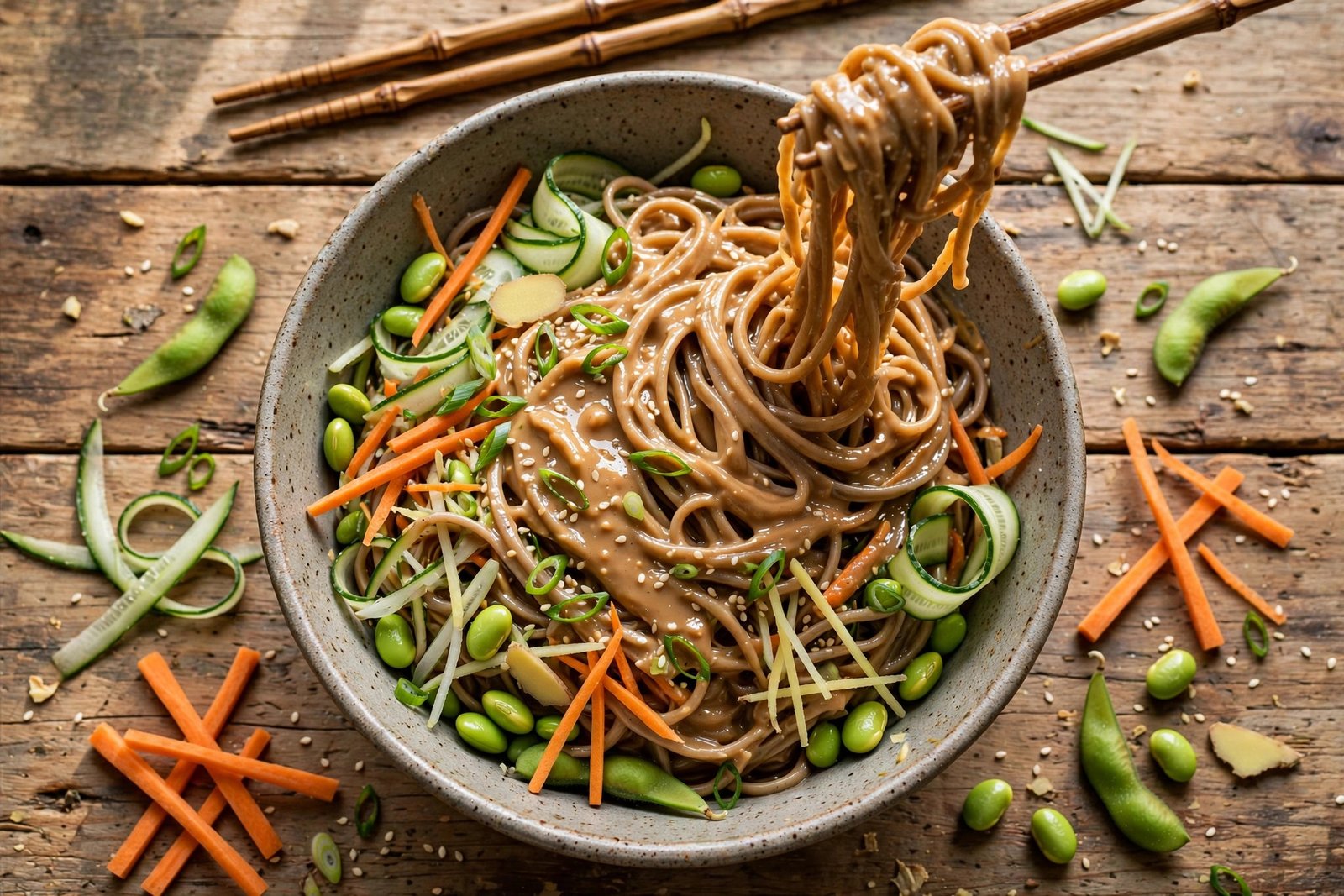
If you have spent any time on food TikTok or Instagram lately, you have almost certainly watched someone twirl glossy, caramel-colored noodles around a pair of chopsticks while the caption flashes “BEST MEAL PREP EVER.” Cold Peanut Ginger Noodles – Creamy Sesame Noodle Salad is that bowl: chilled soba noodles cloaked in a rich, nutty peanut-sesame sauce, loaded with crunchy carrots, cool cucumber ribbons, and sweet pops of edamame, then finished with toasted sesame seeds, crushed peanuts, and fresh cilantro. It is one of the most-searched recipes of late 2026, landing on major trending recipe lists for the simple reason that it is nearly impossible to make it badly.
The magic here is the sauce. Creamy peanut butter melts into low-sodium soy sauce, rice vinegar, and toasted sesame oil, while freshly grated ginger and garlic bring a bright, peppery warmth that keeps the richness from ever feeling heavy. A spoonful of chili crisp or sriracha adds a slow-building heat at the back of the throat, and a touch of honey rounds everything out. Served ice cold, straight from the fridge, this is the kind of dish you will find yourself eating at the counter, standing up, because you simply could not wait to sit down. It feeds four comfortably, comes in at roughly 420 calories per serving, and only gets better after a night in the fridge as the noodles drink in the sauce.
Why You’ll Love This Peanut Ginger Noodles
- Viral for a reason: This is the no-fuss cold noodle bowl everyone has been making on social media — restaurant flavor from a handful of pantry staples, ready in about 25 minutes.
- Meal-prep hero: It actually improves in the fridge, making it one of the rare recipes that tastes better on day two and three than it did on day one.
- Crunch in every bite: Chewy chilled soba, crisp cucumber, shredded carrots, and snappy edamame create a texture combination that never gets boring.
- Plant-based friendly: Naturally vegetarian, easily vegan with maple syrup, and endlessly customizable with whatever protein or vegetables you have on hand.
- Zero cooking stress: One pot of noodles, one bowl of whisked sauce, a few minutes of chopping — no oven, no complicated technique, no special equipment.
Ingredients
For the Noodles & Vegetables:
- 8 ounces soba noodles (or spaghetti)
- 1 cup shredded carrots
- 1 cup thinly sliced cucumber (ribbons or half-moons)
- 1 cup shelled edamame, thawed if frozen
- 4 scallions, thinly sliced
- 2 tablespoons toasted sesame seeds, plus more for serving
- 1/4 cup chopped roasted peanuts, for garnish
- 1/4 cup fresh cilantro leaves, for garnish
For the Peanut Ginger Sauce:
- 1/3 cup creamy peanut butter
- 3 tablespoons low-sodium soy sauce
- 2 tablespoons rice vinegar
- 2 tablespoons toasted sesame oil
- 1 tablespoon honey or maple syrup
- 1 tablespoon freshly grated ginger
- 2 garlic cloves, grated
- 1 to 2 teaspoons chili crisp or sriracha, to taste
- 3 to 5 tablespoons warm water, to thin
Instructions
- Cook the noodles: Bring a large pot of salted water to a rolling boil. Add the soba noodles and cook according to package directions, typically 4 to 5 minutes, until just tender. Soba overcooks fast, so start tasting a minute early.
- Rinse and chill: Drain the noodles in a colander and immediately rinse under very cold running water, tossing with your hands or tongs, until the noodles are fully cold and the starchy coating is washed away. This stops the cooking and keeps them springy. Drain thoroughly and shake off as much water as possible — excess water will dilute the sauce.
- Whisk the sauce: While the noodles cook, combine the peanut butter, soy sauce, rice vinegar, toasted sesame oil, honey, grated ginger, grated garlic, and chili crisp in a large mixing bowl. Whisk vigorously, then add the warm water a tablespoon at a time until the sauce reaches a smooth, pourable consistency — thicker than dressing but looser than a dip. Taste and adjust: more vinegar for brightness, more honey for sweetness, more chili for heat.
- Toss the noodles: Add the cold, well-drained noodles to the bowl and pour in half the sauce. Toss thoroughly with tongs until every strand is evenly coated. The sauce will look like a lot; the noodles will absorb it as they rest.
- Fold in the vegetables: Add the shredded carrots, cucumber, edamame, sliced scallions, and sesame seeds. Fold gently to combine, then cover and refrigerate for at least 30 minutes — ideally 1 to 2 hours — so the flavors meld and the dish is properly chilled.
- Serve cold: Divide the noodles among bowls and drizzle with the remaining sauce. Garnish generously with chopped peanuts, extra sesame seeds, and fresh cilantro. Serve cold, straight from the fridge.
Tips for the Best Peanut Ginger Noodles
- Drain the noodles aggressively: Water clinging to the noodles is the number one reason peanut noodle sauces turn watery. After rinsing, let them sit in the colander for a few minutes and give them a good shake.
- Grate, don’t mince, the ginger and garlic: A microplane produces a paste that dissolves completely into the sauce, so every strand of noodle gets the flavor. Minced pieces would sink to the bottom and hit in harsh bites.
- Use toasted sesame oil, not plain: The toasted variety has a deep, nutty aroma that is the backbone of this sauce. A drizzle of the pale untoasted oil just won’t deliver the same flavor.
- Thin the sauce gradually: Peanut butter brands vary wildly in thickness. Add the warm water a tablespoon at a time and whisk well between additions; the sauce should coat the back of a spoon and still flow off it.
- Let it chill: Skipping the 30-minute rest gives you a good noodle bowl; honoring it gives you a great one. The rest lets the noodles absorb the sauce and the garlic and ginger mellow into it.
- Reserve sauce for serving: Cold noodles keep drinking up sauce in the fridge. Keep half aside and drizzle it on just before serving (and again on leftovers the next day) so the final bowl tastes as saucy as the first.
Variations
- Protein-packed: Fold in shredded rotisserie chicken, sautéed shrimp, or thin strips of baked tofu. The cold sauce pairs beautifully with any of them, and it turns the bowl into a complete one-dish dinner.
- Almond butter swap: Replace the peanut butter with an equal amount of creamy almond butter for a slightly milder, sweeter sauce — a great option if you’re cooking for someone with a peanut allergy.
- Rainbow crunch: Add a cup of shredded red cabbage and a handful of julienned bell pepper for extra color, fiber, and crunch. The purple cabbage makes the bowl look spectacular.
- Spicy Dan-Dan style: Double the chili crisp, add a teaspoon of ground Sichuan peppercorns, and finish with a drizzle of extra chili oil for a tingling, Sichuan-inspired version.
- Gluten-free: Swap the soba for 8 ounces of cooked rice noodles (rinse well and don’t let them sit too long before saucing) and use tamari or gluten-free soy sauce in place of the soy sauce.
Storage & Reheating
Store leftovers in an airtight container in the refrigerator for 3 to 4 days. The noodles will absorb more sauce as they sit — this is a feature, not a bug — but splash on a tablespoon of water or a drizzle of the reserved sauce and toss before serving to loosen everything back up. Give the vegetables a look on day three; the cucumber softens first.
This dish is meant to be eaten cold, so no reheating is needed. Freezing is not recommended: the vegetables turn mushy and the peanut sauce can split when thawed.
Frequently Asked Questions
Can I use regular spaghetti instead of soba?
Absolutely. Spaghetti works great — cook it until just al dente, rinse it very cold, and drain it well. Soba adds a nuttier, more delicate bite, but the peanut-ginger sauce carries the dish either way.
How do I make this vegan?
Use maple syrup instead of honey and you’re done — every other ingredient is already plant-based. Double-check your soba noodles, as some brands blend in wheat flour (fine for vegans) and a few traditional ones are made in facilities with egg products; most supermarket soba is vegan.
My sauce is too thick. What did I do wrong?
Nothing — natural-style peanut butters and even some commercial brands are quite thick. Just whisk in more warm water, a tablespoon at a time, until it flows. Warm water blends in far more smoothly than cold.
Is this good for meal prep?
It’s one of the best meal-prep recipes out there. It holds beautifully for 3 to 4 days in the fridge and the flavor deepens overnight. Pack the garnish peanuts and extra sesame seeds separately so they stay crunchy, and add a splash of water or extra sauce when serving from the fridge.
Make this Cold Peanut Ginger Noodles – Creamy Sesame Noodle Salad the next time you need a weeknight dinner that doubles as tomorrow’s lunch, and you’ll understand exactly why it went viral. Serve it straight from the fridge in big bowls with plenty of crunchy peanut garnish on top — and don’t be surprised if it becomes your most-requested repeat.