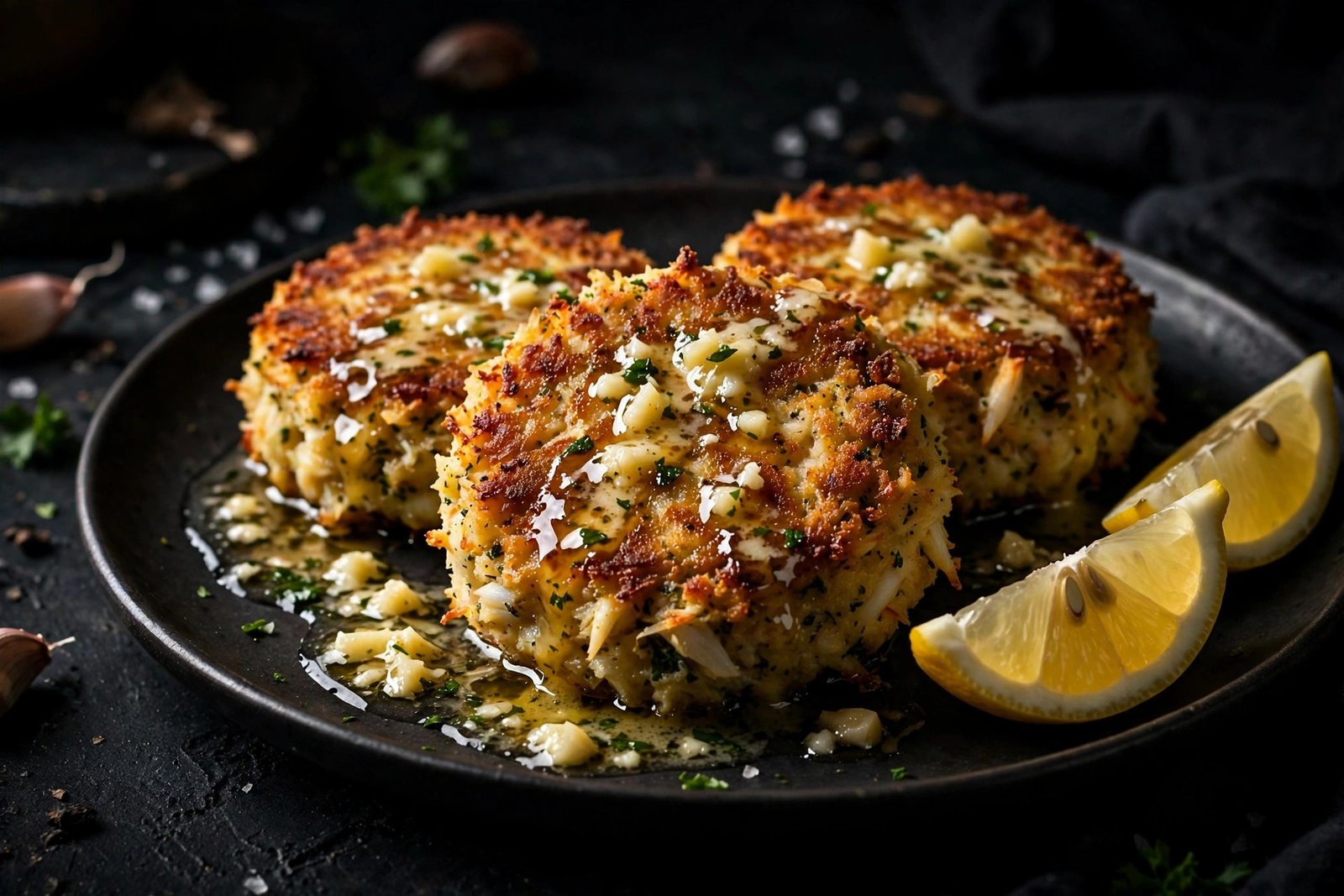
I will never forget the crab cakes I had on a rickety wooden dock in Maryland, eaten with my fingers while the sun went down over the water. They were almost entirely crab — sweet, delicate lumps barely held together — with edges so crisp they shattered. I came home and tried to recreate them, and my first batch was… let us call it crab hash. It fell apart in the pan, the filler overwhelmed the crab, and my husband very kindly called it “rustic.”
What I learned, mostly through delicious trial and error, is that great crab cakes are about restraint. Less filler, gentle hands, and a proper chill before frying. The crab is the star; everything else is just there to hold it together and make it sing. Add a drizzle of warm garlic butter at the end — the way the butter soaks into those crispy edges is pure luxury — and you have something that genuinely rivals that dockside memory. These are the crab cakes I make when I want dinner to feel like a holiday.
Why You’ll Love This Recipe
Restaurant-quality crab cakes without the restaurant — here is why this recipe works:
- Crab first, filler last. The ratio here favours sweet lump crabmeat heavily over binder, so every bite tastes like crab — not breadcrumbs with a rumour of seafood.
- Shatteringly crisp edges. A light panko coating plus a hot pan gives you that golden, crackling exterior that makes crab cakes irresistible.
- The garlic butter finish. Warm garlic butter drizzled over the top soaks into the crispy coating and takes the whole thing from excellent to unforgettable.
- Easier than they look. Mix, chill, fry — that is genuinely the whole process. No special equipment, no complicated technique.
- Impressive but approachable. Serve these to guests and they will assume you have secret seafood connections. You can just smile.
Ingredients You’ll Need
Prep Time: 20 minutes | Cook Time: 15 minutes | Total Time: 35 minutes | Servings: 4 (makes 8 cakes)
- 450 g (1 lb) lump crabmeat, picked over
- 80 ml (1/3 cup) mayonnaise
- 1 large egg, lightly beaten
- 1 tablespoon Dijon mustard
- 1 teaspoon Worcestershire sauce
- 1 teaspoon Old Bay seasoning
- 30 g (1/2 cup) panko breadcrumbs, plus more for coating
- 2 spring onions, finely sliced
- 2 tablespoons chopped parsley
- Salt and freshly ground black pepper
- 3 tablespoons vegetable oil, for frying
- 60 g (4 tablespoons) butter
- 3 cloves garlic, minced
- Lemon wedges, to serve
Ingredient Notes
Lump crabmeat: This is the one place to spend a little. Lump crabmeat — those beautiful whole pieces from the body of the crab — gives you the sweet, delicate chunks that make crab cakes luxurious. Pick through it gently for bits of shell, but handle it like treasure: broken lumps mean a denser, less special cake. In a pinch, a good-quality tin or tub of crabmeat works, but drain it very well.
Old Bay seasoning: The classic Maryland spice blend — celery salt, paprika, mustard, and a dozen other things — and the authentic soul of a proper crab cake. If you cannot find it, a mix of celery salt, paprika, and a pinch of cayenne gets you close, but the real thing is worth seeking out.
Panko breadcrumbs: Used sparingly inside and as a light outer coating. Panko’s flaky structure crisps up better than fine breadcrumbs and stays delicate. Remember: the panko is a supporting actor, not the lead — 30 grams inside is plenty.
Mayonnaise and egg: The gentle binders. Mayo adds richness and helps everything hold together without making the cakes heavy; the egg sets in the heat and locks the structure. Together they are just enough glue — no more.
Butter and garlic: The finishing touch that makes these special. Warm, not browned — you want the garlic sweet and fragrant, melting into the butter into a golden drizzle.
How to Make Crispy Crab Cakes with Garlic Butter
- Pick over the crab. Spread the lump crabmeat on a plate and gently pick through it with your fingertips, removing any bits of shell or cartilage. Do this carefully and patiently — biting into shell is the fastest way to ruin a beautiful crab cake. Try to keep the lumps as intact as possible while you work.
- Mix the binder. In a large bowl, whisk together the mayonnaise, beaten egg, Dijon mustard, Worcestershire sauce, and Old Bay seasoning until smooth. It should look creamy and smell faintly of the seaside — tangy, savoury, and seasoned. This mixture is flavour as well as glue, so taste it: it should be well-seasoned and delicious on its own.
- Fold in the crab gently. Add the crabmeat, panko, sliced spring onions, and parsley to the bowl. Using a rubber spatula, fold everything together with the lightest possible touch — think of it as tucking the crab into bed, not mixing cement. You want the lumps to stay whole and distinct. Season lightly with salt and pepper, remembering the Old Bay already brings salt.
- Form the cakes. With damp hands (the mixture will not stick to wet skin), gently form the mixture into 8 patties, about 7–8 cm across and 2 cm thick. Do not pack them tightly — a loose, gentle hand keeps them tender. They will feel delicate, almost as if they might fall apart. That is correct, and the chilling step is what saves them.
- Chill to firm up. Arrange the patties on a parchment-lined tray and refrigerate for at least 15 minutes. This step is non-negotiable: chilling firms up the butter and egg in the mixture, so the cakes hold together in the hot pan instead of disintegrating. You can chill them for up to a day, which makes these brilliant party prep.
- Coat in panko. Spread extra panko on a plate and lightly press each chilled cake into it, coating all sides with a thin, even layer. Shake off the excess — you want a whisper of coating, not a thick shell. This is what turns shatteringly crisp in the pan.
- Fry until deeply golden. Heat the vegetable oil in a large skillet over medium-high heat until it shimmers. Fry the cakes in batches — do not crowd them — for 3–4 minutes per side. Listen for the sizzle and watch the edges turn deep golden brown and crisp. Flip once, gently, with a thin spatula. They should feel firm and sound faintly crackly when tapped.
- Drain and keep warm. Transfer the fried cakes to a wire rack set over a tray (not paper towels — a rack keeps the bottoms crisp instead of steaming). If frying in batches, keep the finished ones warm in a low oven while you fry the rest.
- Make the garlic butter. In a small pan, melt the butter with the minced garlic over low heat for 1–2 minutes, just until fragrant and the garlic turns the palest gold. It should smell sweet and buttery, never sharp or browned. Take it off the heat the moment it is fragrant — garlic goes bitter fast.
- Drizzle and serve. Arrange the crab cakes on a warm platter, drizzle generously with the warm garlic butter, and serve immediately with lemon wedges. The butter will pool slightly around the cakes and soak into the crispy coating. Squeeze lemon over each bite — the acidity against the rich crab is perfection.
Pro Tips
- Less filler is the whole philosophy. Every extra spoonful of breadcrumbs dilutes the crab. Resist the urge to add more “to be safe” — the chill and the egg are enough to hold them.
- Handle like a whisper. Overworking the mixture breaks the lumps and makes dense, bready cakes. Fold gently, form gently, flip gently. Gentle is the theme.
- Do not skip the chill. Fifteen minutes minimum, longer if you can. Warm crab cake mixture in a hot pan is a recipe for crab hash — delicious, but not what we are making.
- Give them space in the pan. Crowded cakes steam instead of crisping, and they are harder to flip without breaking. Two batches with room to breathe beat one crowded batch.
- Keep the garlic butter warm, not hot. Browned garlic turns bitter and will taint the whole drizzle. Low heat, brief cooking, off at the first sign of fragrance.
- Serve immediately. Crab cakes wait for no one. The contrast between the hot, crisp exterior and the sweet, tender crab is at its peak in the first ten minutes.
Variations
Remoulade instead of garlic butter: Serve with a classic rémoulade — mayo, capers, cornichons, and a squeeze of lemon. It is the traditional Maryland pairing and absolutely delicious.
Spicy sriracha mayo: Stir sriracha into mayonnaise and drizzle over the cakes instead of garlic butter. The heat against the sweet crab is addictive.
Corn and red pepper: Fold a handful of sweetcorn kernels and finely diced red pepper into the mixture. Little pops of sweetness and colour that make the cakes even prettier.
Mini appetiser cakes: Form the mixture into 16 small cakes instead of 8 and fry for 2–3 minutes per side. Perfect finger food for parties — one bite of crispy, crabby heaven.
Storage & Reheating
Cooked crab cakes keep in the fridge for up to 2 days, though they are at their best fresh. Reheat in a 190°C (375°F) oven for 8–10 minutes to re-crisp — never microwave them unless you enjoy rubbery disappointment. Uncooked formed patties freeze well: freeze solid on a tray, then bag for up to a month. Fry from frozen, adding a couple of extra minutes per side.
Serving Suggestions
These deserve simple, elegant company. A crisp green salad with lemon vinaigrette, some golden chips or a buttery corn on the cob, and a pile of lemon wedges. For a starter portion, one cake on a bed of rocket with a drizzle of the garlic butter looks restaurant-worthy. Coleslaw — creamy or vinegar-based — is a classic partner. To drink: a chilled glass of white wine (Sauvignon Blanc or unoaked Chardonnay), a cold lager, or sparkling water with lemon.
Frequently Asked Questions
Can I use imitation crab? Honestly? I would not. Imitation crab is flavoured fish paste, and it will not give you anything close to the sweet, delicate flavour of real crab. If real crab is out of budget, save this recipe for a special occasion rather than substituting — it deserves the real thing.
Why did my crab cakes fall apart? Usually one of three things: not chilled long enough, too little binder, or flipped too aggressively. Chill for the full 15 minutes minimum, make sure the egg is well mixed in, and flip once, gently, with a thin spatula.
Can I bake them instead of frying? You can — brush with a little oil and bake at 200°C (400°F) for 12–15 minutes, flipping once. They will be good, but they will not have quite the same shattering crust as the pan-fried version. The skillet is worth it.
What is the difference between lump and claw meat? Lump is the prized whole pieces from the body — sweet, delicate, and perfect for crab cakes where texture matters. Claw meat is darker, shreddier, and more flavourful but less pretty. For these cakes, lump is worth it.
Can I make them ahead for a dinner party? Absolutely — form and chill the patties up to 24 hours ahead, then coat and fry just before serving. The frying takes 15 minutes, so you can be at the table with your guests instead of stuck in the kitchen.
Nutrition
Per serving (approximate): 390 calories, 28 g protein, 26 g fat, 10 g carbohydrates. High in protein, naturally low in carbs, and built on real crab — indulgent-tasting but genuinely nourishing.