
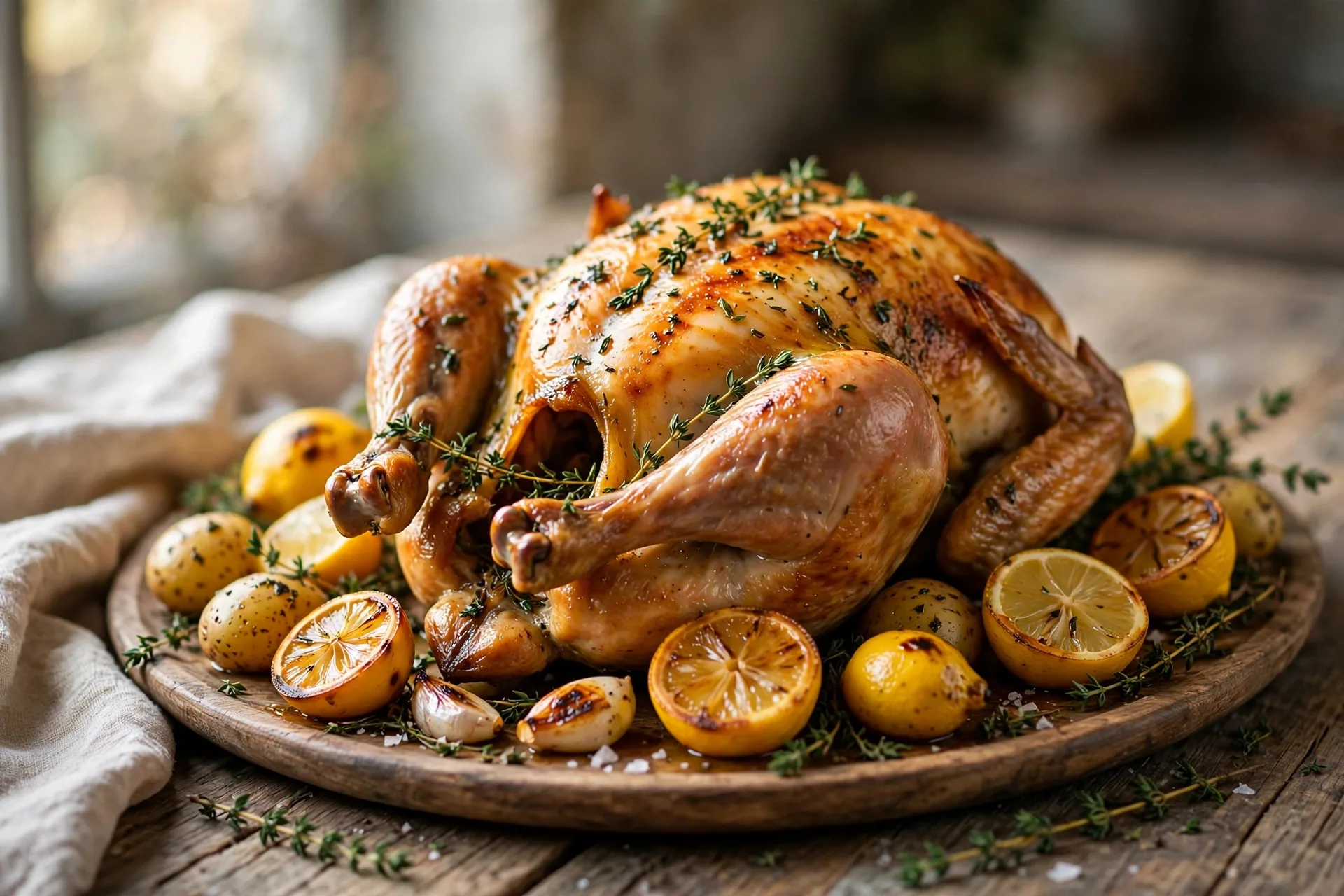
There is something deeply comforting about a whole chicken roasting in the oven, filling the kitchen with the scent of lemon, garlic, thyme, and butter. This herb-roasted whole chicken with lemon and thyme is the kind of dinner that turns an ordinary evening into a small occasion, yet it asks very little of the cook. You season the bird, tuck lemon and herbs inside the cavity, scatter potatoes and carrots around it if you like, and let the oven do the work. An hour later you have golden, crackling skin, juicy meat that falls easily from the bone, and pan drippings that make a simple gravy or a sauce worth spooning over everything on the plate.
Roast chicken is one of the great foundation recipes every home cook should know. It is economical, it feeds a family generously, and the leftovers are useful for days, from sandwiches and salads to soup and tacos. This version leans on classic French-inspired flavors without being fussy. Fresh thyme and rosemary, lemon zest and juice, garlic, and good butter are rubbed under and over the skin so the flavor goes all the way through the meat, not just on the surface. The lemon inside the cavity steams gently as the chicken roasts, keeping the breast moist and perfuming the meat from the inside out.
Serve this chicken on a Sunday evening with roasted vegetables and a simple green salad, or make it on a weeknight when you want a dinner that feels special without a long list of steps. It is equally at home at a holiday table or a casual family supper. Carve it at the table for a little ceremony, or slice it in the kitchen and arrange it on a platter with the roasted lemons and herbs for a beautiful presentation. Either way, this is a recipe you will come back to again and again, because it is reliable, forgiving, and always delicious.
Why You’ll Love This Recipe
This roast chicken delivers maximum flavor for minimum effort. The herb butter does most of the work, basting the bird as it melts and helping the skin turn crisp and golden. The lemon keeps the meat bright and juicy, and the fresh herbs give the chicken a warm, savory aroma that dried herbs alone cannot match. It is a one-pan meal when you add vegetables to the roasting pan, which means less cleanup. It is also naturally gluten-free and adaptable: swap the herbs, add different vegetables, or change the citrus to orange for a slightly sweeter note. Best of all, it is a true crowd-pleaser that looks impressive and tastes even better.
Ingredients
- 1 whole chicken, about 4 to 4 1/2 pounds
- 1 1/2 teaspoons kosher salt
- 1 teaspoon freshly ground black pepper
- 1 teaspoon garlic powder
- 1/2 teaspoon paprika
- 6 tablespoons unsalted butter, softened
- 4 cloves garlic, minced
- 1 tablespoon fresh thyme leaves, plus 6 to 8 whole sprigs
- 1 tablespoon fresh rosemary, finely chopped
- 1 tablespoon lemon zest
- 2 tablespoons fresh lemon juice
- 1 large lemon, halved
- 1 head garlic, halved crosswise
- 1 medium yellow onion, quartered
- 2 tablespoons olive oil
- 1 1/2 pounds small potatoes, halved
- 3 large carrots, peeled and cut into 2-inch pieces
- Fresh thyme sprigs and lemon wedges, for serving
Instructions
- 1. Preheat the oven to 425 degrees F. Position a rack in the lower third of the oven. Pat the chicken very dry inside and out with paper towels. Dry skin is essential for crisp, golden results, so take your time with this step and do not skip it.
- 2. Remove any giblets from the cavity and discard them or save them for stock. Trim any excess fat around the cavity opening. Place the chicken in a large roasting pan or a heavy rimmed baking sheet fitted with a rack if you have one.
- 3. In a small bowl, combine the softened butter, minced garlic, thyme leaves, chopped rosemary, lemon zest, lemon juice, salt, black pepper, garlic powder, and paprika. Stir until the mixture is smooth and evenly combined.
- 4. Gently loosen the skin over the chicken breast and thighs with your fingers, being careful not to tear it. Spread about two-thirds of the herb butter under the skin, pushing it evenly over the breast and down toward the thighs. Rub the remaining butter all over the outside of the chicken, including the legs and wings.
- 5. Stuff the cavity with the halved lemon, the halved head of garlic, the quartered onion, and several sprigs of thyme. The aromatics will steam inside the bird and keep the meat moist and fragrant.
- 6. Tie the legs together with kitchen twine and tuck the wing tips behind the back. This helps the chicken cook evenly and gives it a neat, compact shape for roasting.
- 7. Toss the potatoes and carrots with the olive oil, a generous pinch of salt, and a pinch of pepper in a large bowl. Scatter them around the chicken in the roasting pan in a single layer so they roast in the drippings.
- 8. Roast the chicken for 50 to 60 minutes, then reduce the oven temperature to 375 degrees F and continue roasting for another 25 to 35 minutes. The total roasting time will be about 1 hour and 20 minutes to 1 hour and 35 minutes, depending on the size of the bird. The chicken is done when the skin is deep golden brown and crisp, the juices run clear, and an instant-read thermometer inserted into the thickest part of the thigh, without touching the bone, reads 165 degrees F. The breast should read at least 165 degrees F as well.
- 9. If the skin is browning too quickly before the chicken is done, tent the bird loosely with foil for the remainder of the cooking time. If the vegetables are done before the chicken, remove them to a serving platter and keep them warm.
- 10. Transfer the chicken to a cutting board and let it rest for 15 minutes before carving. Resting is important because it allows the juices to redistribute through the meat instead of running out onto the board. While the chicken rests, you can spoon some of the pan drippings over the vegetables.
- 11. Carve the chicken into breasts, thighs, drumsticks, and wings. Arrange the carved chicken on a platter with the roasted potatoes and carrots, the roasted lemon halves, and fresh thyme sprigs. Serve warm with the pan juices spooned over the top.
Tips and Variations
For the crispiest skin, leave the chicken uncovered in the refrigerator for several hours or overnight before roasting. The dry air in the fridge dries the skin, which helps it crisp beautifully in the oven. If you are short on time, patting the chicken very dry and using a hot oven at the start will still give good results. Do not baste the chicken during roasting, because opening the oven door lowers the temperature and the butter under the skin already keeps the meat moist.
You can change the herbs to suit what you have on hand. Sage, oregano, and parsley all work well with lemon and chicken. For a slightly different flavor, replace the lemon with an orange and add a pinch of ground cumin to the butter. If you prefer a spicier version, add half a teaspoon of red pepper flakes to the herb butter. For a smaller household, the same method works with a 3-pound chicken; just reduce the roasting time by about 15 minutes and check the temperature early. Leftover roast chicken is excellent shredded into soup, tossed into a grain bowl, or layered into a sandwich with mayonnaise and lettuce.
Serving Suggestions
Serve this herb-roasted chicken with the roasted potatoes and carrots from the pan, plus a simple green salad with a lemon vinaigrette and a loaf of crusty bread to soak up the pan juices. It also pairs well with mashed potatoes, green beans, roasted Brussels sprouts, or a wild rice pilaf. For a holiday meal, add cranberry sauce and a stuffing or dressing on the side. A glass of white wine such as Chardonnay or Sauvignon Blanc complements the lemon and herb flavors nicely.
Storage and Make-Ahead
Store leftover chicken in an airtight container in the refrigerator for up to 4 days. Keep the meat on the bone if possible, because it stays juicier that way, and reheat gently in a 325 degree F oven covered with foil until warmed through. You can also freeze carved chicken in freezer-safe bags for up to 3 months; thaw overnight in the refrigerator before reheating. The herb butter can be made up to 3 days ahead and stored in the refrigerator, then softened at room temperature before using. Save the carcass to make a flavorful homemade chicken stock.
Nutrition Notes
A serving of roast chicken provides a good amount of protein, along with B vitamins and minerals such as selenium and phosphorus. The skin adds flavor and helps keep the meat moist, but it also adds fat, so you can remove it after cooking if you prefer a lighter portion. Pairing the chicken with roasted vegetables adds fiber and a variety of nutrients to the meal. As with any recipe, portion size and side dishes will affect the overall nutritional profile.
Frequently Asked Questions
How do I know when the chicken is done? Use an instant-read thermometer. The thickest part of the thigh should read 165 degrees F, and the juices should run clear when you pierce the thigh. The breast should also reach 165 degrees F.
Can I use dried herbs instead of fresh? Yes, you can use dried thyme and rosemary, but use about one-third the amount because dried herbs are more concentrated. Fresh herbs give a brighter flavor, so use them when you can.
Do I need to brine the chicken first? No, brining is not necessary for this recipe. The herb butter under the skin and the lemon in the cavity keep the chicken moist, and the resting time after roasting helps the juices stay in the meat.