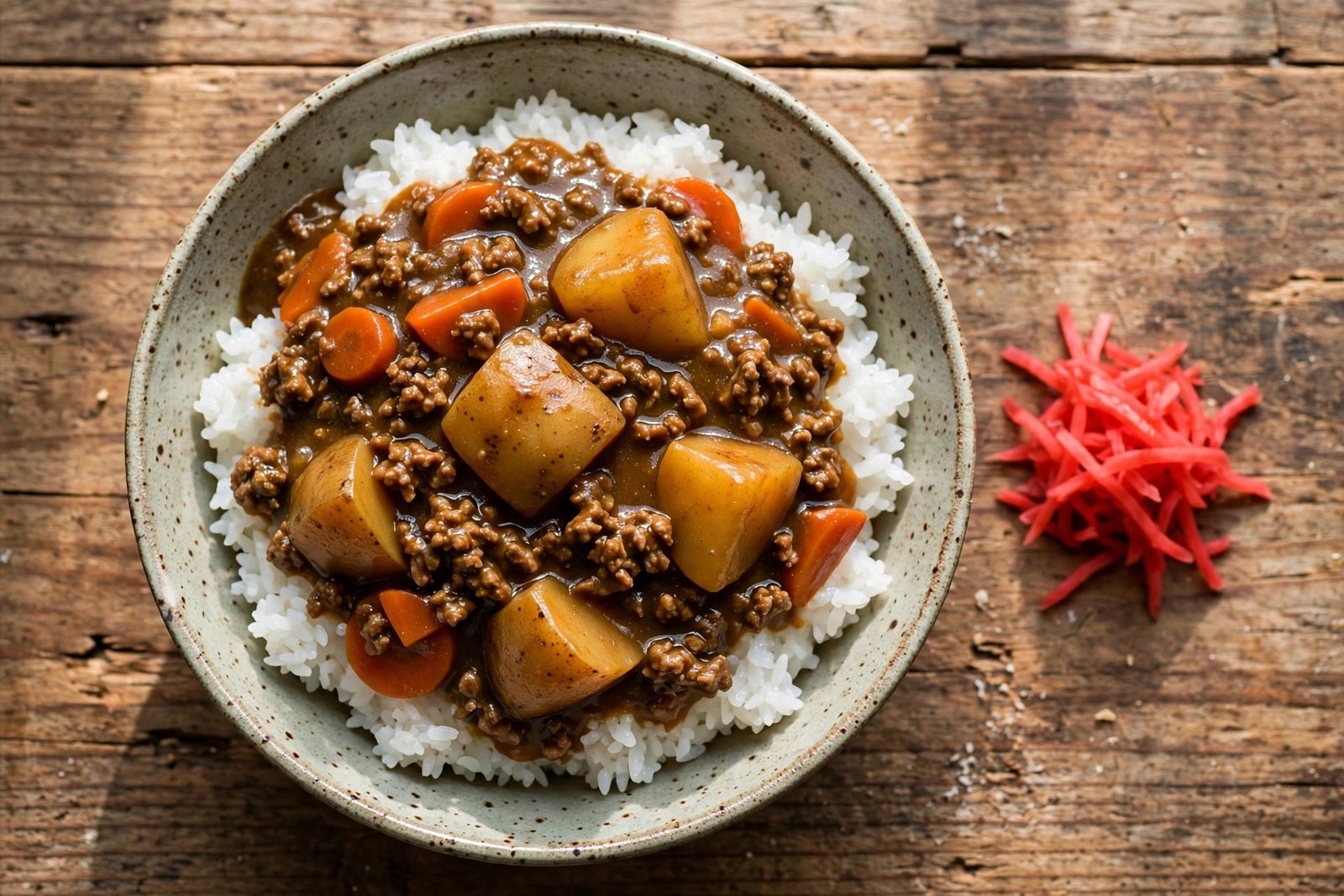
Japanese Ground Beef Curry is the cozy one-pot dinner that’s quietly taking over weeknight kitchens everywhere — sweet-savory, richly spiced, and finished with that signature glossy brown sauce that defines classic Japanese kare raisu. Think tender chunks of potato, sweet carrots, and deeply browned ground beef simmered together with Japanese curry roux until the sauce turns thick, velvety, and impossibly spoonable. It’s comfort food in its purest form: mild enough for kids, satisfying enough for adults, and ready in under an hour with mostly pantry staples.
This version is blowing up right now thanks to its appearance on NYT Cooking and a wave of food creators who’ve declared it the ultimate weeknight curry hack. Using ground beef instead of the traditional beef chunks means you get dinner on the table faster — no long braising required — while the classic flavor trio of grated apple, honey, and a splash of mirin delivers that unmistakable sweet-savory depth that makes Japanese curry taste like a warm hug. Ladled generously over steaming short-grain rice and finished with pickled ginger or fukujinzuke, it’s the kind of meal that turns an ordinary Tuesday into something special.
Why You’ll Love This Japanese Ground Beef Curry
- One-pot wonder: Everything cooks in a single pot, which means big flavor with barely any cleanup. The curry simmers itself while you cook the rice.
- Weeknight fast: Ground beef eliminates the long braising time of traditional curry recipes, cutting the total cook time to around 45 minutes start to finish.
- Sweet-savory perfection: The combination of curry roux, honey, soy sauce, and grated apple creates that signature Japanese curry flavor — mild, mellow, and deeply comforting rather than fiery hot.
- Kid-approved: Japanese curry is famously the most kid-friendly curry in the world. The mild sweetness and tender texture make this a dinner the whole family will actually finish.
- Budget-friendly: A single pound of ground beef stretches into four hearty servings when combined with potatoes, carrots, and rice — this is affordable comfort food at its best.
- Better the next day: Like all great curries, this one thickens and deepens overnight. Leftovers are genuinely something to look forward to.
Ingredients
- 1 lb (450 g) ground beef (80/20 works best)
- 1 tablespoon neutral oil (avocado, canola, or vegetable)
- 1 large yellow onion, diced
- 2 medium carrots, peeled and cut into 1/2-inch dice
- 2 garlic cloves, minced
- 1 tablespoon fresh ginger, grated
- 2 tablespoons all-purpose flour
- 3 cups water or low-sodium dashi (or chicken broth)
- 2 tablespoons soy sauce
- 1 tablespoon mirin
- 1 tablespoon honey
- 4 to 5 cubes Japanese curry roux (about 100–110 g total; e.g., S&B Golden Curry medium-hot or mild)
- 2 medium Yukon Gold potatoes (about 12 oz), peeled and cut into 3/4-inch chunks
- 1/2 sweet apple (such as Fuji or Gala), peeled and grated
- Cooked short-grain Japanese rice, for serving
- Pickled red ginger (beni shoga) or fukujinzuke, for serving
Instructions
- Brown the beef: Heat the oil in a large Dutch oven or heavy-bottomed pot over medium-high heat. Add the ground beef and cook, breaking it into small crumbles with a wooden spoon, for 6 to 8 minutes until deeply browned with some crispy bits. The browning is essential — it’s where the deep, meaty flavor of the curry starts. Transfer the beef to a bowl, leaving the rendered fat in the pot.
- Sauté the aromatics: Reduce the heat to medium. Add the diced onion to the pot and cook, stirring occasionally, for about 3 minutes until softened and translucent. Add the diced carrots, minced garlic, and grated ginger; cook for another 2 minutes, stirring, until fragrant and the carrots have begun to soften.
- Return the beef and add flour: Return the browned ground beef to the pot along with any accumulated juices. Sprinkle the flour over everything and stir constantly for 1 minute. The flour will coat the meat and vegetables in a thin paste — this is the thickening base that gives the finished curry its silky body.
- Add the liquids and seasonings: Pour in the water or dashi, scraping up any browned bits from the bottom of the pot. Stir in the soy sauce, mirin, and honey until combined. Bring the mixture to a gentle boil, then reduce the heat to maintain a steady simmer.
- Simmer the curry: Add the cubed potatoes and grated apple to the pot. Simmer uncovered for 10 minutes, stirring occasionally, until the potatoes are just starting to become tender. The apple will dissolve into the sauce, adding its signature subtle sweetness.
- Dissolve the roux: Turn the heat to low. Break the curry roux cubes into the pot, adding them one at a time and stirring until each cube has completely dissolved before adding the next — this prevents lumps and ensures a smooth sauce. Let the curry simmer gently for another 10 to 15 minutes, stirring frequently so the bottom doesn’t scorch, until the potatoes are completely tender and the sauce has thickened to a rich, glossy consistency that coats a spoon.
- Rest and serve: Remove the pot from the heat and let the curry rest for 5 minutes — it will thicken a bit more as it stands. Taste and adjust: add a splash more soy sauce for saltiness, a touch more honey for sweetness, or a pinch of curry powder for extra depth. Serve hot over bowls of steaming short-grain rice, topped with pickled red ginger or fukujinzuke on the side.
Tips for the Best Japanese Ground Beef Curry
- Don’t skip the browning: Really let the ground beef get browned and a little crispy — those caramelized bits are pure flavor. If your pot is crowded, brown in two batches.
- Choose the right roux: S&B Golden Curry is the classic choice, but House Vermont Curry is sweeter and Java Curry is bolder. Medium-hot gives the most balanced result; go mild for kids.
- Grate the apple finely: Use the small holes of a box grater. The apple should melt into the sauce — you shouldn’t see any pieces, just a mellow sweetness.
- Dissolve roux off the boil: Adding the roux cubes while the pot is at a rolling boil can cause graininess. Lower the heat first and stir each cube in patiently.
- Cut potatoes evenly: Uniform 3/4-inch chunks cook at the same rate and hold their shape. If cut too small, they’ll disintegrate into the sauce.
- Make extra rice: The curry sauce is so good you’ll want generous mounds of rice to soak it up. A rice cooker makes this effortless.
Variations
- Japanese beef curry with chunks: Swap the ground beef for 1 lb of beef chuck cut into 1-inch cubes, browned the same way. Increase the simmering time in step 5 to 45–60 minutes until the beef is fork-tender before adding the roux.
- Chicken katsu-style curry: Use 1 lb ground chicken instead of beef, then serve the curry over rice with crispy breaded chicken cutlets (chicken katsu) on top for the full restaurant experience.
- Loaded vegetable version: Halve the beef and add diced kabocha squash, sweet potato, and mushrooms. Stir in a handful of baby spinach at the end for extra greens.
- Spicy upgrade: Use hot curry roux, or stir in a teaspoon of Japanese chili flakes (ichimi togarashi) or a drizzle of sriracha at the table for heat lovers.
- Cheese curry: A beloved Japanese café twist — ladle the curry over rice and top with a generous handful of shredded mozzarella, then broil for 2 minutes until bubbly and golden.
Storage & Reheating
Store leftover curry in an airtight container in the refrigerator for up to 4 days. The flavors deepen beautifully overnight, and the sauce thickens further — many fans insist day-two curry is even better than day one. The potatoes will continue to absorb sauce, so the texture becomes extra luscious.
To reheat, warm gently in a saucepan over medium-low heat, stirring frequently and adding a splash of water to loosen the sauce if needed. For the microwave, heat in 1-minute intervals, stirring between rounds, until steaming. Store the curry separately from the rice if possible, and always cook fresh rice when serving leftovers. Leftover curry also freezes well for up to 3 months — thaw overnight in the fridge before reheating.
Frequently Asked Questions
Can I use a different brand of Japanese curry roux?
Absolutely. S&B Golden Curry is the most widely available, but House Vermont Curry (sweeter, fruitier) and House Java Curry (richer, more robust) are equally excellent. Just match the total weight — roughly 100 to 110 grams, or 4 to 5 cubes — and adjust the spice level to your preference.
Is the grated apple really necessary?
It’s optional but highly recommended — grated apple is a classic Japanese home-cooking trick that adds gentle sweetness and body without making the curry taste fruity. If you skip it, add an extra teaspoon of honey to compensate.
Can I make this curry gluten-free?
Yes. Use a gluten-free Japanese curry roux (S&B makes one), swap the all-purpose flour for sweet rice flour or a gluten-free flour blend, and use tamari or gluten-free soy sauce in place of regular soy sauce. The rest of the recipe is naturally gluten-free.
Why did my curry turn out too thin?
The most common cause is adding too much liquid or not simmering long enough. Let it simmer uncovered for an extra 5 to 10 minutes, stirring often — the sauce should coat the back of a spoon. You can also dissolve an extra half cube of roux or a teaspoon of cornstarch mixed with cold water to thicken it. Remember that the curry thickens noticeably as it cools.
Japanese Ground Beef Curry is proof that the most comforting meals are often the simplest — humble ingredients, one pot, and a sauce worth dreaming about. Whether it’s your first taste of Japanese curry or your fiftieth, this sweet-savory bowl over steaming rice is sure to earn a permanent spot in your weeknight rotation. Grab a box of curry roux this week and see why everyone’s making it.