
Prep Time: 30 minutes | Cook Time: 3 hours 15 minutes | Total Time: 3 hours 45 minutes | Serves: 10 to 12
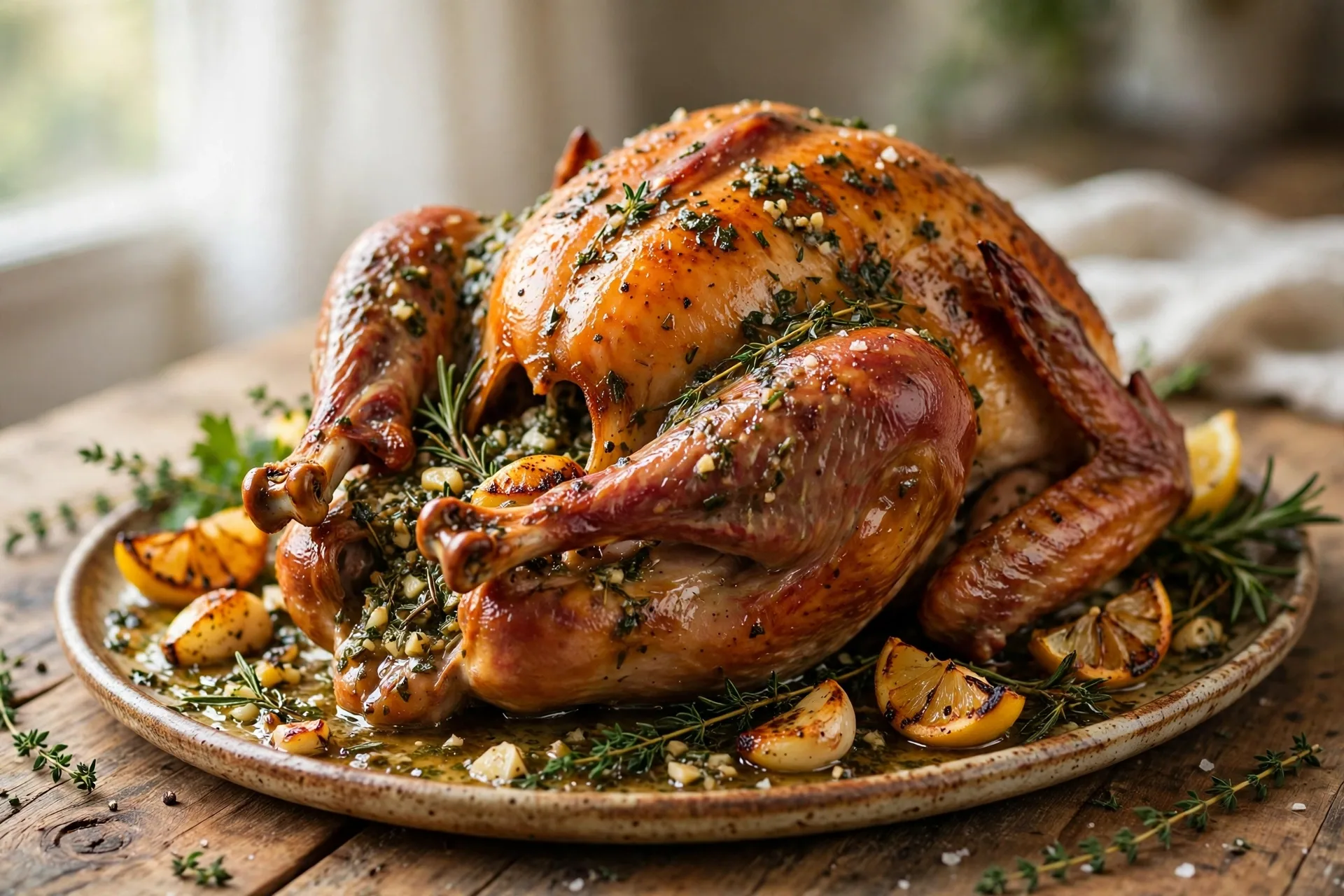
There is a moment at every Thanksgiving table when the turkey comes out of the oven and the whole room goes quiet for a second. That is the moment this recipe is built for. A whole roast turkey with garlic herb butter is not complicated cooking, but it is cooking that rewards a little patience and a few good habits. The butter goes under the skin, where it bastes the breast meat from the inside while the skin turns crisp and golden. The herbs go right into the butter, so every slice tastes like rosemary, thyme, sage, and roasted garlic.
I have cooked a lot of turkeys over the years, for big family gatherings and for small quiet dinners, and this is the method I come back to every single time. It does not need a brine bucket, a special bag, or a drawer full of gadgets. It needs a good turkey, a hot oven, a meat thermometer, and about half an hour of resting time at the end. If you can rub butter on a bird and read a thermometer, you can make this turkey. The recipe below walks through every step, including how long to roast per pound, when to tent the breast with foil, and how to tell without guessing that the turkey is truly done.
One thing worth saying up front is that the resting time is not optional. A turkey that is carved the minute it leaves the oven will lose its juices all over the cutting board. A turkey that rests for twenty to thirty minutes under a loose tent of foil will stay juicy in every slice, and it will still be hot when it reaches the table. Plan your side dishes around that rest, and dinner will come together without a rush.
Why You’ll Love This Recipe
It stays juicy where it matters. The breast is the part of the turkey that dries out first, and the garlic herb butter rubbed under the skin protects it. The butter melts slowly as the bird roasts, keeping the breast meat moist while the skin above it crisps up.
The flavor is classic, not fussy. Garlic, rosemary, thyme, and sage are the herbs people expect on a Thanksgiving turkey, and they belong there. Nothing in this recipe tastes strange or trendy. It tastes like the turkey you grew up with, only better.
It makes its own gravy base. The drippings in the roasting pan are liquid gold. Onion, celery, carrot, and chicken broth in the bottom of the pan catch the juices as they fall, and those drippings turn into a rich gravy with almost no extra work.
It works with any size bird. The method scales cleanly from a 10 pound turkey for a small table to an 18 pound bird for a crowd. The timing rule in the instructions tells you exactly how to adjust, so you are never guessing.
You can prep it ahead. The herb butter can be made up to three days early and kept in the fridge, and the turkey can be buttered and seasoned the night before. On Thanksgiving morning, all you have to do is put it in the oven.
Ingredients
- 1 whole turkey, 12 to 14 pounds, thawed, giblets and neck removed
- 1 cup (2 sticks) unsalted butter, softened to room temperature
- 6 cloves garlic, finely minced
- 2 tablespoons fresh rosemary, finely chopped
- 2 tablespoons fresh thyme leaves
- 1 tablespoon fresh sage, finely chopped
- 1 teaspoon lemon zest
- 2 teaspoons kosher salt
- 1 teaspoon black pepper, freshly ground
- 1 large yellow onion, quartered
- 1 lemon, halved
- 1 head garlic, halved crosswise
- 3 stalks celery, cut into large chunks
- 2 large carrots, peeled and cut into large chunks
- 2 cups low sodium chicken broth
- Kitchen twine, for tying the legs
- Fresh rosemary sprigs and thyme sprigs, for garnish (optional)
Instructions
- Thaw and bring the turkey to the table. A frozen turkey needs about 24 hours in the refrigerator for every 4 to 5 pounds, so a 12 to 14 pound bird needs a full 3 days to thaw. Take the turkey out of the fridge about 45 minutes before roasting so it loses the worst of its chill. Remove the giblets and neck from the cavities and set them aside for stock or gravy if you like.
- Heat the oven. Set the oven to 325 degrees F and move the rack to the lowest position. A lower rack gives the turkey room and keeps the breast from browning too fast. Place a rack inside a large roasting pan and set it nearby.
- Make the garlic herb butter. In a medium bowl, mash the softened butter with the minced garlic, rosemary, thyme, sage, lemon zest, salt, and pepper. Stir until everything is evenly mixed and the butter is flecked green with herbs. It should smell wonderful already.
- Dry the turkey well. Pat the whole bird dry inside and out with paper towels. Dry skin is the secret to crisp skin, so take your time here. A damp turkey steams in the oven instead of roasting, and the skin will never turn properly golden.
- Butter under the skin. Slide your fingers gently under the skin of the breast, working from the neck end, and loosen the skin without tearing it. Spread about two thirds of the herb butter under the skin, pressing it out over the breast meat in an even layer. Rub the rest of the butter all over the outside of the bird, including the legs and wings.
- Fill the cavity. Stuff the cavity loosely with the quartered onion, the lemon halves, the halved head of garlic, and a few sprigs of rosemary and thyme. Do not pack it tight. The aromatics are there to steam gently and perfume the meat, not to fill the bird like a stuffing.
- Truss and set it in the pan. Tie the legs together with kitchen twine and tuck the wing tips behind the back so they do not burn. Scatter the celery and carrots in the bottom of the roasting pan, pour in the chicken broth, and set the turkey breast side up on the rack.
- Roast low and slow. Put the pan in the oven and roast at 325 degrees F for about 13 minutes per pound. A 12 pound turkey takes about 2 hours 45 minutes, and a 14 pound turkey takes about 3 hours 15 minutes. Do not open the oven door every ten minutes to check. Let the oven do its work.
- Tent the breast if it browns early. After about 2 hours, check the color. If the breast skin is already deep golden brown, lay a loose sheet of foil over the breast only, shiny side up. This keeps the breast from overbrowning while the legs and thighs finish cooking.
- Check the temperature. Start checking about 30 minutes before you expect the turkey to be done. Push an instant read thermometer into the thickest part of the thigh, away from the bone. The turkey is done when the thigh reads 165 degrees F and the breast reads at least 160 degrees F. The breast will climb to 165 degrees as it rests. The juices should run clear, not pink.
- Rest before carving. Lift the turkey onto a cutting board and tent it loosely with foil. Let it rest for 20 to 30 minutes. The temperature will rise a few more degrees and the juices will settle back into the meat. This is the step that makes the difference between a good turkey and a great one.
- Carve and serve. Remove the twine, slice the breast meat against the grain, and separate the legs, thighs, and wings. Arrange everything on a warm platter, spoon a little of the pan juices over the top, and garnish with fresh herbs if you like. Save the pan drippings for gravy.
Tips for the Best Results
Use a thermometer, not the clock. Ovens run hot or cold, and turkeys vary. The clock tells you when to start checking, but only a thermometer tells you when the turkey is done. An instant read thermometer is the single best tool for this recipe.
Do not wash the turkey. Rinsing a raw turkey spreads bacteria around the sink and does nothing to make the bird cleaner or safer. Patting it dry with paper towels is all it needs.
Season under the skin, not just on top. Salt and herbs sprinkled on the outside mostly stay on the skin. Butter pushed under the skin seasons the meat itself, which is where the flavor belongs.
Keep the oven door shut. Every time the door opens, the oven loses a big chunk of heat and the turkey takes longer. Trust the timing and check only when the recipe says to.
Let the butter soften fully. Cold butter tears the skin when you try to spread it. Leave the butter on the counter for an hour before you start, and it will spread smoothly under the skin without a fight.
Save the carcass. After dinner, the leftover bones make a wonderful stock. Cover them with water, add an onion and a couple of carrots, simmer for a few hours, and freeze the stock for soups all winter.
Variations
Citrus herb turkey. Swap the lemon for an orange and add a tablespoon of orange zest to the butter. The flavor turns a little sweeter and brighter, and it pairs beautifully with cranberry sauce.
Maple butter turkey. Stir 2 tablespoons of pure maple syrup into the herb butter and brush a little extra maple over the skin during the last 30 minutes of roasting. The skin turns a deep, glossy brown.
Spicy turkey. Add 1 teaspoon of smoked paprika and half a teaspoon of cayenne pepper to the butter. The heat is gentle and warm rather than hot, and it gives the gravy a lovely color.
Spatchcocked turkey. If you are short on time, ask the butcher to remove the backbone and flatten the bird. A spatchcocked turkey roasts in about 90 minutes at 425 degrees F, with the same butter and seasoning. The skin gets extra crisp this way.
Dry brine option. If you like, rub the turkey all over with 1 tablespoon of kosher salt per 4 pounds of bird and leave it uncovered in the fridge for 24 to 48 hours before buttering. The skin dries out in the fridge, which makes it even crisper, and the meat seasons all the way through.
How to Store
Let leftover turkey cool to room temperature, then slice the meat off the bone and store it in airtight containers in the refrigerator. It will keep well for 3 to 4 days. Pour a spoonful or two of pan drippings or chicken broth over the sliced meat before you store it, which keeps it from drying out when you reheat it.
For longer storage, pack the sliced turkey in freezer bags with as much air pressed out as possible and freeze for up to 3 months. Thaw overnight in the refrigerator. Reheat gently in a covered dish at 325 degrees F with a splash of broth, just until warm. Avoid microwaving big portions on high, which toughens the meat. Leftover turkey is wonderful in sandwiches, soups, pot pies, and casseroles for days after the holiday.
Frequently Asked Questions
How long do I roast a turkey per pound?
At 325 degrees F, plan on about 13 minutes per pound for an unstuffed turkey. A 12 pound bird takes roughly 2 hours 45 minutes, and a 14 pound bird takes roughly 3 hours 15 minutes. Always confirm with a thermometer, since ovens and birds vary.
What temperature should a turkey be when it is done?
The thickest part of the thigh should read 165 degrees F, and the breast should read at least 160 degrees F when it comes out of the oven. The breast will rise to 165 degrees as the turkey rests. Never carve a turkey that reads below 165 degrees in the thigh.
Can I brine the turkey first?
Yes. A simple dry brine works well with this recipe. Rub the bird with kosher salt a day or two ahead and leave it uncovered in the fridge. When you are ready to cook, butter it as the recipe says and skip any extra salt in the butter, since the brine has already seasoned the meat.
Why did my turkey come out dry last year?
The most common reason is overcooking. Even 10 degrees past done can dry out the breast. A thermometer fixes this. The second most common reason is skipping the rest. Carving too soon lets the juices run out onto the board instead of staying in the meat.
Can I make the herb butter ahead of time?
Yes, and it is a smart way to save time on a busy morning. Make the butter up to 3 days ahead and keep it in the fridge, tightly covered. Let it sit out for about 30 minutes before you use it so it spreads easily. You can also freeze it for up to a month.