
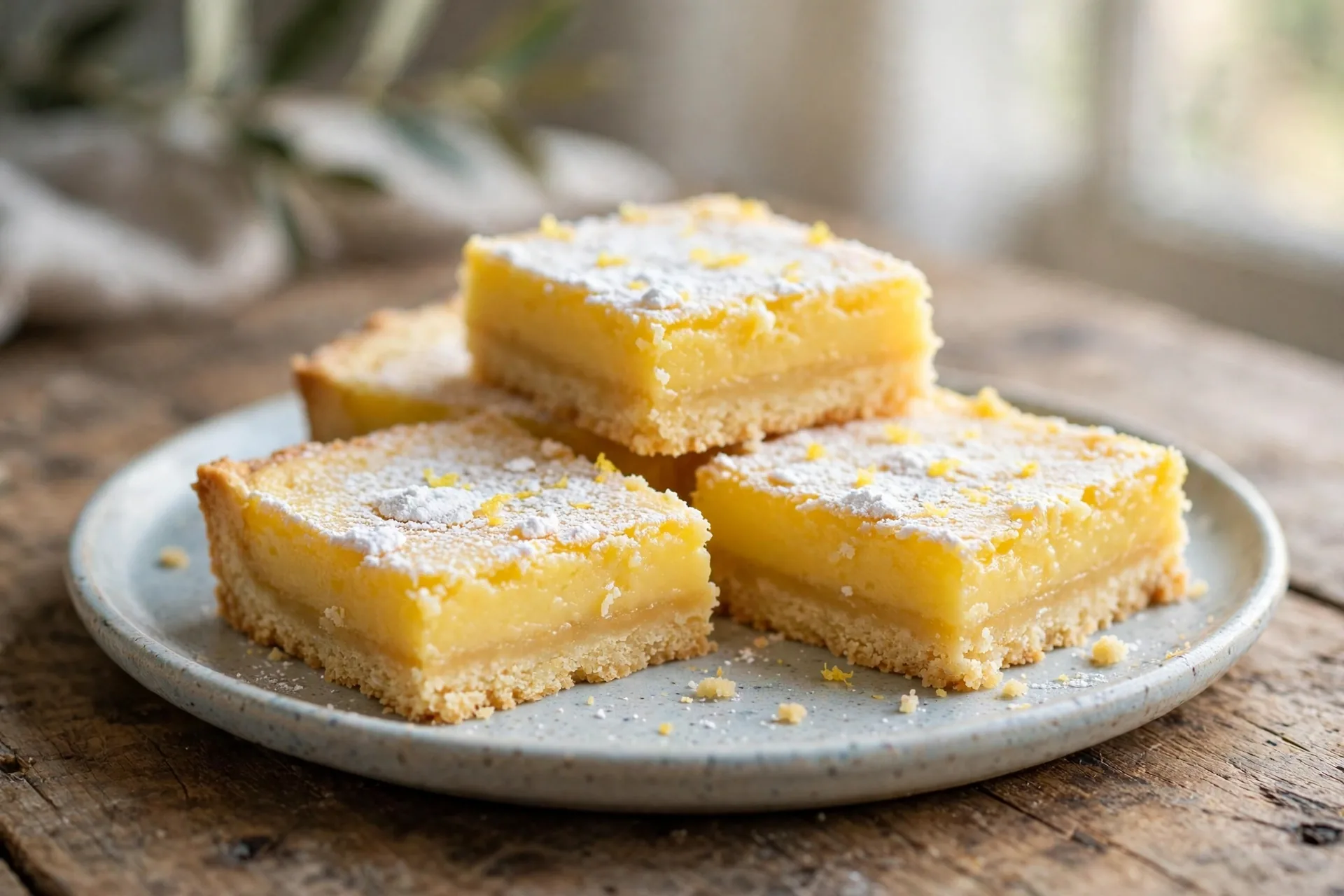
Lemon bars are one of those desserts that never go out of style, and for good reason. They are bright, buttery, and refreshing, with a crisp shortbread base and a silky lemon filling that strikes the perfect balance between sweet and tart. One bite delivers the richness of butter, the fragrance of fresh lemon zest, and a tangy brightness that wakes up your palate. They are the kind of treat that works at a summer picnic, a holiday cookie tray, a baby shower, or an ordinary afternoon when you want something sweet but not heavy. Unlike many desserts that demand special equipment or complicated techniques, lemon bars are wonderfully straightforward, and they reward you with a bakery-quality result every time.
The magic of a great lemon bar lies in the contrast between its two layers. The shortbread crust should be tender and crumbly, with a buttery flavor that melts in your mouth, while the lemon filling should be smooth, glossy, and just firm enough to slice cleanly. Getting that filling right depends on fresh lemons, not bottled juice, because the zest carries the aromatic oils that give lemon bars their signature fragrance, and fresh juice has a brightness that bottled juice simply cannot match. A dusting of powdered sugar on top is the classic finish, and it is more than decoration. It softens the tartness slightly and gives the bars their familiar, elegant look. Whether you are baking for a crowd or just for yourself, these lemon bars are a reliable, crowd-pleasing choice that disappears fast.
Why You’ll Love This Recipe
This recipe is simple, dependable, and deeply satisfying. The shortbread crust comes together in minutes with just a few ingredients, and the lemon filling is a one-bowl mixture that pours right over the hot crust. There is no mixer required, no complicated technique, and no chilling or rolling involved. The bars bake in a single pan, slice into neat squares, and travel well, which makes them ideal for potlucks, bake sales, and picnics. They also keep beautifully in the refrigerator, so you can make them a day ahead and they will taste even better the next day, once the flavors have had time to settle and the filling has firmed up completely.
Ingredients
For the shortbread crust:
- 1 cup (226 grams) unsalted butter, softened
- 1/2 cup (60 grams) powdered sugar
- 2 cups (250 grams) all-purpose flour
- 1/4 teaspoon fine sea salt
- 1 teaspoon vanilla extract
For the lemon filling:
- 4 large eggs, at room temperature
- 1 1/2 cups (300 grams) granulated sugar
- 1/3 cup (80 milliliters) fresh lemon juice, from about 4 to 5 lemons
- 1 tablespoon finely grated lemon zest, from about 2 lemons
- 1/4 cup (30 grams) all-purpose flour
- 1/2 teaspoon baking powder
- 1/4 teaspoon fine sea salt
For finishing:
- Powdered sugar, for dusting
Instructions
- 1. Prepare the pan and oven. Preheat the oven to 350 degrees Fahrenheit (175 degrees Celsius). Line a 9 by 13 inch baking pan with parchment paper, leaving an overhang on the two long sides so you can lift the bars out easily after baking. Lightly grease the parchment and any exposed pan surfaces with butter or cooking spray.
- 2. Make the shortbread crust. In a large bowl, beat the softened butter and powdered sugar together with a wooden spoon or electric mixer on medium speed until smooth and creamy, about 2 minutes. Add the vanilla extract and mix until combined. Add the flour and salt and mix on low speed just until the dough comes together in soft crumbs. Do not overmix, because overworking the dough can make the crust tough instead of tender.
- 3. Press and bake the crust. Transfer the dough to the prepared pan and press it evenly across the bottom with your fingers or the bottom of a measuring cup. Make sure the layer is even, especially in the corners, so the crust bakes uniformly. Bake for 18 to 20 minutes, until the edges are lightly golden and the center looks set. The crust will not be fully browned at this stage, and that is fine, because it will bake more with the filling.
- 4. Prepare the lemon filling. While the crust bakes, whisk the eggs in a large bowl until smooth. Add the granulated sugar and whisk until well combined and slightly pale. Stir in the fresh lemon juice and lemon zest, then sift in the flour, baking powder, and salt. Whisk until the mixture is completely smooth and no lumps remain. The filling should be thin and pourable, with visible flecks of zest throughout.
- 5. Bake the bars. As soon as the crust comes out of the oven, reduce the oven temperature to 325 degrees Fahrenheit (165 degrees Celsius). Give the lemon filling one more quick whisk, then pour it evenly over the hot crust. Return the pan to the oven and bake for 20 to 25 minutes, until the filling is set around the edges and only slightly jiggly in the very center. The top should look matte rather than wet, and the edges should not be browned. Overbaking will make the filling rubbery, so watch it closely in the last few minutes.
- 6. Cool and chill. Remove the pan from the oven and let the bars cool completely at room temperature, about 1 hour. Then cover the pan and refrigerate for at least 2 hours, or overnight, until the filling is fully firm. Chilling is essential for clean slices, so do not skip this step.
- 7. Slice and serve. Use the parchment overhang to lift the whole slab out of the pan and onto a cutting board. Use a sharp knife, wiping the blade clean between cuts, to slice the bars into 24 squares. Dust generously with powdered sugar just before serving. The powdered sugar will dissolve if added too early, so wait until serving time.
Tips and Variations
Always use fresh lemons for this recipe, because bottled lemon juice lacks the brightness and aroma that make lemon bars special. Roll each lemon firmly on the countertop before juicing it to get the most juice, and zest the lemons before you cut them. Be careful to zest only the yellow outer peel, not the bitter white pith underneath. For an even smoother filling, strain the lemon mixture through a fine-mesh sieve before pouring it over the crust. If you like a thicker crust, increase the shortbread ingredients by half and bake the crust for a few extra minutes. For a fun variation, try lime bars using the same method with fresh lime juice and zest, or add a teaspoon of poppy seeds to the filling for a subtle crunch.
Serving Suggestions
Serve lemon bars chilled or at cool room temperature, dusted with powdered sugar, on a pretty platter. They are a perfect addition to a dessert table alongside chocolate brownies or fruit tarts, because their brightness balances richer desserts. Pair them with iced tea, lemonade, or a cup of hot tea for an afternoon treat. For a more elegant presentation, serve a single bar with a few fresh raspberries and a sprig of mint. They are also wonderful as part of a picnic spread, since they hold up well and do not need refrigeration for a few hours.
Storage and Make-Ahead
Store lemon bars in an airtight container in the refrigerator for up to 5 days. Place parchment paper between layers to prevent sticking. Dust with powdered sugar just before serving, since the sugar will absorb moisture and disappear during storage. The bars also freeze well for up to 3 months. Freeze the uncut slab, wrapped tightly in plastic wrap and aluminum foil, then thaw overnight in the refrigerator before slicing. The crust and filling can be made a day ahead, which makes these bars an excellent choice when you need a dessert ready in advance.
Nutrition Notes
Lemon bars are a sweet treat best enjoyed in moderation, but they do offer some bright spots. Fresh lemon juice provides vitamin C, and the eggs in the filling contribute protein that helps the bars set and adds structure. The shortbread crust is rich in butter, which gives it its tender texture and satisfying flavor, while the sugar provides the sweetness that balances the tart lemon. A single bar is a modest portion that delivers a lot of flavor, and pairing it with fresh fruit or unsweetened tea can round out the experience. As with any dessert, enjoying these bars as part of a varied diet is the sensible approach.
Frequently Asked Questions
Why did my lemon filling crack on top? Cracking usually happens when the bars are overbaked or cooled too quickly. Bake just until the center is slightly jiggly, then let the bars cool gradually at room temperature before refrigerating. A dusting of powdered sugar will hide any small cracks, and the bars will still taste wonderful.
Can I use Meyer lemons? Yes, Meyer lemons make delicious lemon bars with a slightly sweeter, more floral flavor. Use the same quantities of juice and zest. Because Meyer lemons are less tart, you may want to reduce the sugar by a couple of tablespoons if you prefer a tangier result.
How do I get clean slices? Chill the bars thoroughly before slicing, at least 2 hours in the refrigerator or overnight. Use a long, sharp knife, and wipe the blade clean with a damp cloth between each cut. Lifting the whole slab out of the pan with the parchment overhang also makes slicing much easier than cutting in the pan.