
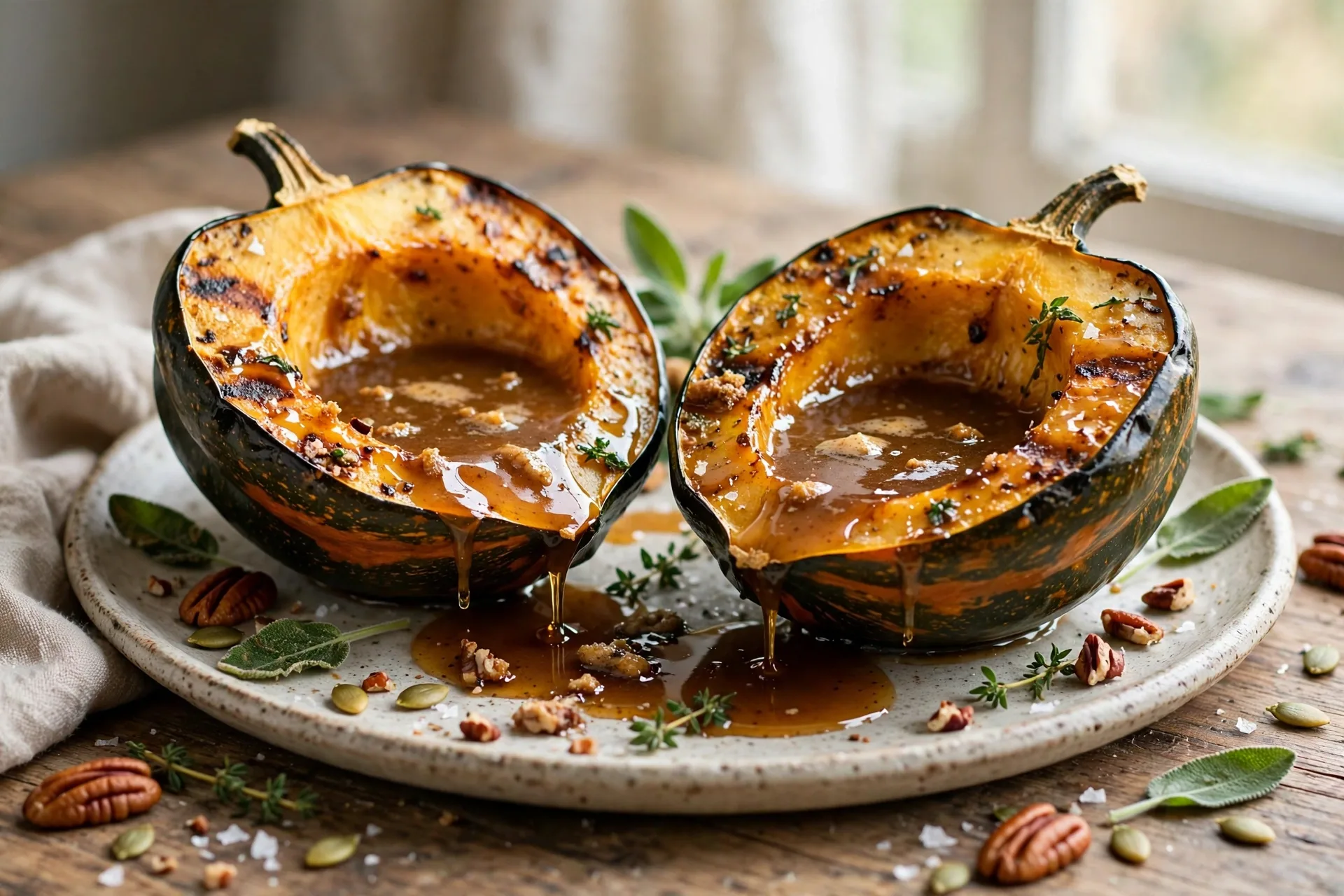
Roasted acorn squash with maple and brown butter is the kind of side dish that tastes like fall itself. The squash becomes tender and sweet in the oven, its edges caramelized and golden, while a drizzle of maple syrup and nutty brown butter adds warmth and richness. A sprinkle of fresh sage and a handful of toasted pecans turn it into something elegant enough for a holiday table and simple enough for a quiet weeknight dinner. It is beautiful, comforting, and surprisingly easy to make.
Acorn squash is one of the most approachable winter squashes. It is smaller than a butternut squash, which makes it easier to handle, and its natural shape creates perfect wedges that roast evenly and look lovely on a plate. When roasted at high heat, the flesh becomes soft and creamy, with a mild, nutty sweetness that pairs beautifully with maple, butter, and warm spices. The skin becomes tender enough to eat, though most people scoop the flesh from the skin or eat the wedges with a fork and knife.
Brown butter is the quiet star of this recipe. When butter is cooked gently until the milk solids turn golden brown, it develops a deep, nutty, almost toasty flavor that plain melted butter does not have. It takes only a few minutes to make, but it transforms the dish. Combined with maple syrup, it creates a sauce that is sweet, nutty, and rich without being heavy. A little sage, crisped in the brown butter, adds a savory, earthy note that balances the sweetness perfectly.
This dish is also practical for entertaining. The squash can be cut and seasoned ahead of time, and it roasts unattended while you prepare the rest of the meal. It serves well family style on a large platter, and it pairs with turkey, ham, roast chicken, pork, and vegetarian mains. It is a side dish that feels special without requiring special skills.
Why You’ll Love This Recipe
You will love this recipe because it is sweet, nutty, and comforting, with tender roasted squash, a glossy maple and brown butter sauce, and crisp sage. It is easy to prepare, looks beautiful on the table, and pairs with turkey, ham, chicken, and pork. It is a perfect fall side dish for holidays and weeknights alike.
Ingredients
- 2 medium acorn squash, about 1 1/2 pounds each, halved and seeded
- 3 tablespoons olive oil
- 1 teaspoon fine sea salt
- 1/2 teaspoon freshly ground black pepper
- 1/2 teaspoon ground cinnamon
- 1/4 teaspoon ground nutmeg
- 1/4 teaspoon ground ginger, optional
- 6 tablespoons unsalted butter
- 1/4 cup pure maple syrup
- 1 tablespoon fresh sage leaves, thinly sliced, plus whole leaves for garnish
- 1 teaspoon fresh lemon juice or apple cider vinegar
- 1/2 cup pecans, toasted and roughly chopped
- 2 tablespoons chopped fresh flat-leaf parsley, optional, for serving
- Flaky sea salt, for finishing
Instructions
- 1. Preheat the oven. Preheat the oven to 425 degrees F (220 degrees C). Line a large rimmed baking sheet with parchment paper for easy cleanup. A hot oven helps the squash caramelize at the edges instead of steaming, which gives it the best flavor and texture.
- 2. Prepare the squash. Cut each acorn squash in half from stem to tip using a large, sharp knife. Scoop out the seeds and stringy fibers with a spoon and discard them. Place each half cut side down on a cutting board and slice it into wedges about 1 inch thick. You should get 6 to 8 wedges from each squash half. If the squash is difficult to cut, microwave it whole for 2 to 3 minutes to soften it slightly, then let it cool for a few minutes before cutting.
- 3. Season the squash. Place the squash wedges in a large bowl or directly on the prepared baking sheet. Drizzle with the olive oil and sprinkle with the salt, pepper, cinnamon, nutmeg, and ginger if using. Toss well until every wedge is evenly coated. Spread the wedges in a single layer on the baking sheet, leaving a little space between them. Do not crowd the pan or the squash will steam instead of roast. Use two pans if needed.
- 4. Roast the squash. Place the pan in the preheated oven and roast for 25 minutes. Remove the pan, flip each wedge carefully with a spatula, and return the pan to the oven. Roast for 15 to 20 minutes more, until the squash is tender when pierced with a fork and caramelized and golden at the edges. The exact time will depend on the size and thickness of the wedges. Remove the pan from the oven and let the squash cool for a few minutes.
- 5. Make the brown butter. While the squash finishes roasting, melt the butter in a small, light-colored saucepan over medium heat. Swirl the pan occasionally as the butter melts, foams, and then begins to turn golden. Watch it closely. After 3 to 4 minutes, the milk solids at the bottom will turn amber brown and the butter will smell nutty and fragrant. Remove the pan from the heat immediately to stop the cooking, since brown butter can burn in seconds. A light-colored pan helps you see the color change clearly.
- 6. Add the maple and sage. Stir the maple syrup into the hot brown butter. Add the sliced sage leaves and the lemon juice or apple cider vinegar. The sage will sizzle and crisp slightly in the hot butter. Stir well. Taste the sauce and add a pinch more salt if needed. The sauce should taste sweet, nutty, and balanced, not overly sweet.
- 7. Dress the squash. Arrange the roasted squash wedges on a large serving platter. Drizzle the warm maple brown butter sauce evenly over the wedges, making sure some of the sage leaves land on top. Sprinkle with the toasted pecans, chopped parsley if using, and a pinch of flaky sea salt.
- 8. Serve. Serve the squash warm, with extra sauce spooned over the top at the table if you like. The wedges can be eaten with a fork and knife, or the tender flesh can be scooped from the skin.
Tips and Variations
Choose acorn squash that are heavy for their size, with firm skin and no soft spots or cracks. A squash with a small orange patch is fine; that is just where it rested on the ground. Use a large, sharp knife and a stable cutting board, and microwave the squash briefly if it is hard to cut. Do not crowd the pan, and flip the wedges halfway through roasting for even caramelization. Watch the brown butter closely. It goes from perfectly nutty to burned in less than a minute, so remove it from the heat as soon as it turns amber and smells fragrant. If you burn it, start over with fresh butter. For a different flavor, swap the pecans for walnuts or hazelnuts, or leave the nuts out for a nut-free version. Add a pinch of cayenne pepper to the seasoning for a gentle warmth, or a tablespoon of bourbon to the maple sauce for a deeper flavor. For a vegan version, use olive oil or vegan butter in place of the butter and make sure your maple syrup is pure. A sprinkle of crumbled goat cheese or feta over the warm squash also works beautifully.
Serving Suggestions
Serve roasted acorn squash as a side dish with roast turkey, baked ham, roast chicken, pork tenderloin, or a vegetarian main like a lentil loaf or stuffed mushrooms. It is a natural fit for a Thanksgiving or fall dinner table alongside mashed potatoes, stuffing, and cranberry sauce, and it adds a beautiful orange and gold color to the plate. It also works well for a weeknight dinner next to a simple protein and a green salad. Serve it family style on a large platter, with the maple brown butter sauce drizzled over the top and the pecans scattered generously. A glass of apple cider or a light white wine pairs nicely with it.
Storage and Make-Ahead
Store leftover squash in an airtight container in the refrigerator for up to 4 days. Reheat it in a 350 degree F oven for 10 to 12 minutes, or in the microwave for 1 to 2 minutes, until warmed through. Store any leftover maple brown butter sauce separately in a small jar in the refrigerator for up to 1 week, and warm it gently before serving. You can cut and season the squash up to 1 day ahead and store the wedges covered in the refrigerator, then roast them just before serving. The brown butter sauce is best made fresh, but it can be made a few hours ahead and gently rewarmed. Do not freeze roasted acorn squash, since it becomes watery and soft after thawing.
Nutrition Notes
Acorn squash is a good source of vitamin A, vitamin C, potassium, magnesium, and dietary fiber, and it is naturally low in fat and calories. Olive oil adds monounsaturated fats, and pecans contribute healthy fats, fiber, and magnesium. Maple syrup adds natural sweetness along with small amounts of manganese and zinc, though it does contribute added sugar, so a modest drizzle keeps the dish balanced. Butter adds saturated fat and richness, so using a little less butter or serving a smaller portion will lighten the dish. Overall, this is a vegetable-forward side dish that provides fiber and nutrients and fits well into a balanced plate with a lean protein and other vegetables.
Frequently Asked Questions
Do I need to peel acorn squash before roasting? No. The skin becomes tender during roasting and is edible, though many people prefer to scoop the flesh from the skin or eat around it. Leaving the skin on helps the wedges hold their shape during roasting.
Can I make brown butter ahead of time? Yes. Brown butter can be made up to 1 week ahead and stored in a sealed jar in the refrigerator. Warm it gently in a small saucepan over low heat until liquid before using. Add the maple syrup and sage just before serving for the freshest flavor.
What can I use instead of pecans? Walnuts, hazelnuts, or toasted pumpkin seeds all work well. For a nut-free version, use toasted pumpkin seeds or sunflower seeds, or simply leave the topping off and add extra fresh sage and parsley.