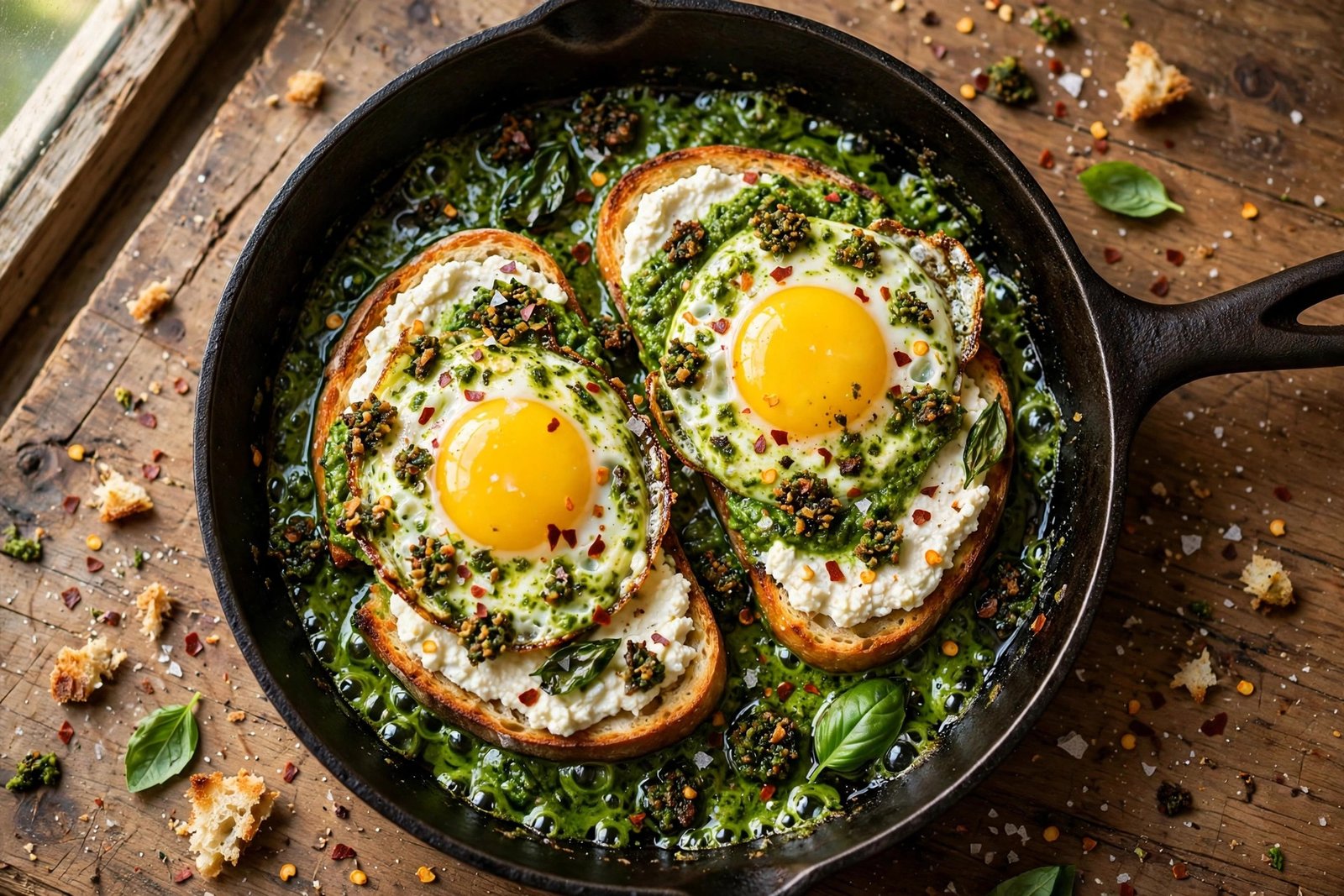
Viral Pesto Eggs — sunny-side eggs fried directly in sizzling basil pesto instead of oil or butter — broke TikTok a while back, and it is one of those rare viral recipes that actually earns the hype. The idea comes from food writer Amy Wilichowski, whose original video racked up tens of millions of views because it solved breakfast in the most deliciously lazy way possible: the pesto becomes the cooking fat, and as it heats, the basil fries, the garlic blooms, and the cheese crisps into lacy, golden edges that wrap around perfectly set eggs. It is creamy, salty, herby, and just spicy enough, with runny yolks that turn every spoonful of toast into something you want to chase around the plate.
What makes this dish so special is how the texture changes everything you expect from a fried egg. The whites pick up the pesto’s savory depth, the edges go delicately crisp like a fritter, and the whole thing lands on thick toasted sourdough spread with whipped ricotta or smashed avocado. It takes under ten minutes, uses a single pan, and feels like something you’d order at a café. Serve it for a slow weekend brunch, a quick work-from-home breakfast, or even a light dinner with a simple arugula salad on the side.
Why You’ll Love This Pesto Eggs Recipe
- Ready in 10 minutes: From a cold pan to the plate in about ten minutes, with exactly one skillet to wash — this is the definition of a fast weekday breakfast.
- Crispy, lacy edges: Frying the pesto first toasts the basil and cheese, so the egg whites set with golden, shattering edges you never get from plain oil.
- No added fat needed: The pesto itself is the cooking medium, so there is no butter or oil to measure — the olive oil already in the pesto does all the work.
- Endlessly customizable: Swap the spread under the toast, add burrata, chili crisp, or prosciutto, and you have a brand-new breakfast every time.
- Protein-packed and satisfying: Two to three eggs plus ricotta or avocado keeps you full well past lunch without feeling heavy.
- Beautifully simple: Six basic ingredients, one pan, restaurant-worthy results — this is the kind of recipe that makes you look like a genius with zero effort.
Ingredients
For the Pesto Eggs
- 3 tablespoons basil pesto (store-bought or homemade)
- 2 to 3 large eggs, at room temperature if possible
- 1/4 teaspoon kosher salt
- 1/4 teaspoon freshly ground black pepper
- 1/4 to 1/2 teaspoon red pepper flakes (optional, adjust to taste)
For Serving
- 2 slices thick-cut sourdough bread, toasted
- 1/2 cup whole-milk ricotta cheese (whipped with a pinch of salt), or 1 ripe avocado, smashed
- Fresh basil leaves, torn
- Flaky sea salt, for finishing
- Extra drizzle of pesto, optional
Instructions
- Heat the pesto: Place a 10-inch nonstick or well-seasoned cast-iron skillet over medium heat. Spoon in the 3 tablespoons of pesto and let it heat for about 1 minute, stirring once, until it sizzles and the oil loosens. You are looking for gentle bubbling and the edges of the pesto just beginning to turn golden — do not let it brown deeply, or the garlic can turn bitter.
- Crack in the eggs: Push the pesto slightly to make room, then crack the eggs directly into the sizzling pesto, spacing them apart. Work quickly and carefully so the yolks stay intact. The pesto will immediately start hissing and frying the whites — that is exactly what you want.
- Season generously: Sprinkle the eggs with the kosher salt, black pepper, and red pepper flakes. The seasoning should go right onto the whites and yolks while the eggs are still raw so it bakes into the tops as they set.
- Cook the eggs: Let the eggs cook undisturbed for 3 to 4 minutes over medium heat. The whites will turn opaque, the edges will crisp and turn lacy and golden, and the pesto underneath will continue to toast. If you like your yolks more set, cover the skillet with a lid for the last minute of cooking — the trapped steam finishes the tops without flipping.
- Toast the bread: While the eggs cook, toast the sourdough slices until deeply golden and crisp. A hot, sturdy slice matters here: it needs to hold up under the juicy eggs and the spread underneath.
- Build the base: Spread each slice of toast thickly with the whipped ricotta (or the smashed avocado if you prefer). Season the ricotta with a tiny pinch of salt before the eggs go on — bland ricotta is the one thing that can dull this breakfast.
- Assemble and finish: Lift each egg out of the skillet with a spatula, spooning up plenty of the crispy pesto and oil, and lay them over the ricotta toast. Scatter torn fresh basil over the top, add a pinch of flaky sea salt, and finish with an extra drizzle of pesto if you like. Serve immediately while the yolks are still runny.
Tips for the Best Pesto Eggs
- Watch the pesto, not the clock: Pesto brands vary in oil content, so go by sight — when it bubbles briskly and the basil flecks darken to a deep green-gold at the edges, it is ready for the eggs. If it smells like roasting garlic, you have hit the sweet spot.
- Medium heat is non-negotiable: Too low and the pesto will just sit and steam the eggs; too high and the basil burns before the whites set. A steady medium heat gives you crispy edges and perfectly runny yolks in 3 to 4 minutes.
- Use a nonstick or seasoned skillet: The cheese in the pesto can stick, so a good nonstick pan (or a well-seasoned cast-iron skillet) makes releasing the eggs clean and keeps all that crispy pesto intact.
- Room-temperature eggs cook more evenly: Cold eggs lower the pan temperature and can make the whites rubbery before they set. Let them sit on the counter for 10 to 15 minutes while you gather everything else.
- Do not overcrowd the pan: Three eggs is the comfortable maximum in a 10-inch skillet — any more and they steam instead of fry. Cooking for a crowd? Make two batches rather than squeezing four eggs in at once.
- Season in layers: Salt the ricotta, salt the eggs, and finish with flaky salt. Pesto is salty, but eggs and bread need their own seasoning or the whole plate tastes flat.
Variations
- Burrata pesto eggs: Swap the ricotta for a ball of torn burrata on the toast. The cold, creamy cheese against the hot, crispy eggs is spectacular.
- Spicy chili-crisp pesto eggs: Drizzle a teaspoon of chili crisp over the finished eggs instead of (or in addition to) the red pepper flakes for extra heat and crunch.
- Prosciutto and pesto eggs: Drape a slice of prosciutto over the ricotta toast before adding the eggs — the salty ham with the runny yolk is a full café-style plate.
- Sun-dried tomato pesto eggs: Use red sun-dried tomato pesto instead of basil pesto for a tangy, sweet-savory twist. The edges crisp up just as beautifully.
- Pesto egg grain bowl: Skip the toast and serve the eggs over warm farro or brown rice with halved cherry tomatoes and arugula for a hearty lunch version.
Storage & Reheating
Pesto eggs are at their best eaten immediately — the crispy lacy edges and runny yolks do not survive storage. If you must save leftovers, cool the eggs to room temperature, store them in an airtight container in the refrigerator, and eat within 1 day. Reheat gently in a covered nonstick skillet over low heat for 2 to 3 minutes until just warmed through; the microwave will turn the eggs rubbery and is best avoided.
The components store well on their own: whipped ricotta keeps for up to 3 days in the fridge, and you can always fry fresh eggs in pesto the next morning. Since the whole recipe takes ten minutes, it is almost always better to cook a fresh batch than to reheat.
Frequently Asked Questions
Do I really not need oil or butter to fry the eggs?
Correct — that is the whole trick. Basil pesto is already made with olive oil, so as it heats, the oil releases and becomes the cooking fat. The basil, garlic, and cheese in the pesto fry and toast around the eggs, adding far more flavor than plain oil ever would.
Can I use homemade pesto?
Absolutely, and it is even better. Homemade pesto with good olive oil, fresh basil, toasted pine nuts, and real Parmigiano-Reggiano fries up with the crispiest edges. Just make sure your pesto has enough oil to sizzle freely — very thick, dry pesto may need a teaspoon of olive oil added to the pan first.
How do I get the yolks more set without overcooking the bottoms?
Cover the skillet with a lid for the last minute of cooking. The trapped steam gently sets the tops of the yolks without burning the crispy pesto underneath. For fully set yolks, give them 1 to 2 minutes under the lid — just watch that the whites don’t toughen.
Can I make this dairy-free?
Yes. Use a dairy-free basil pesto (many brands offer them, or blend basil, olive oil, garlic, pine nuts, and nutritional yeast) and serve on toast spread with smashed avocado instead of ricotta. The eggs still fry beautifully in the olive-oil base.
Serve these viral pesto eggs the moment they leave the pan — toast crisp, eggs sizzling, yolks ready to spill over whipped ricotta and torn basil. It is the rare internet recipe that lives up to the noise: ten minutes, one pan, and a breakfast that tastes like you actually planned it. Try it once and it will earn a permanent spot in your rotation.