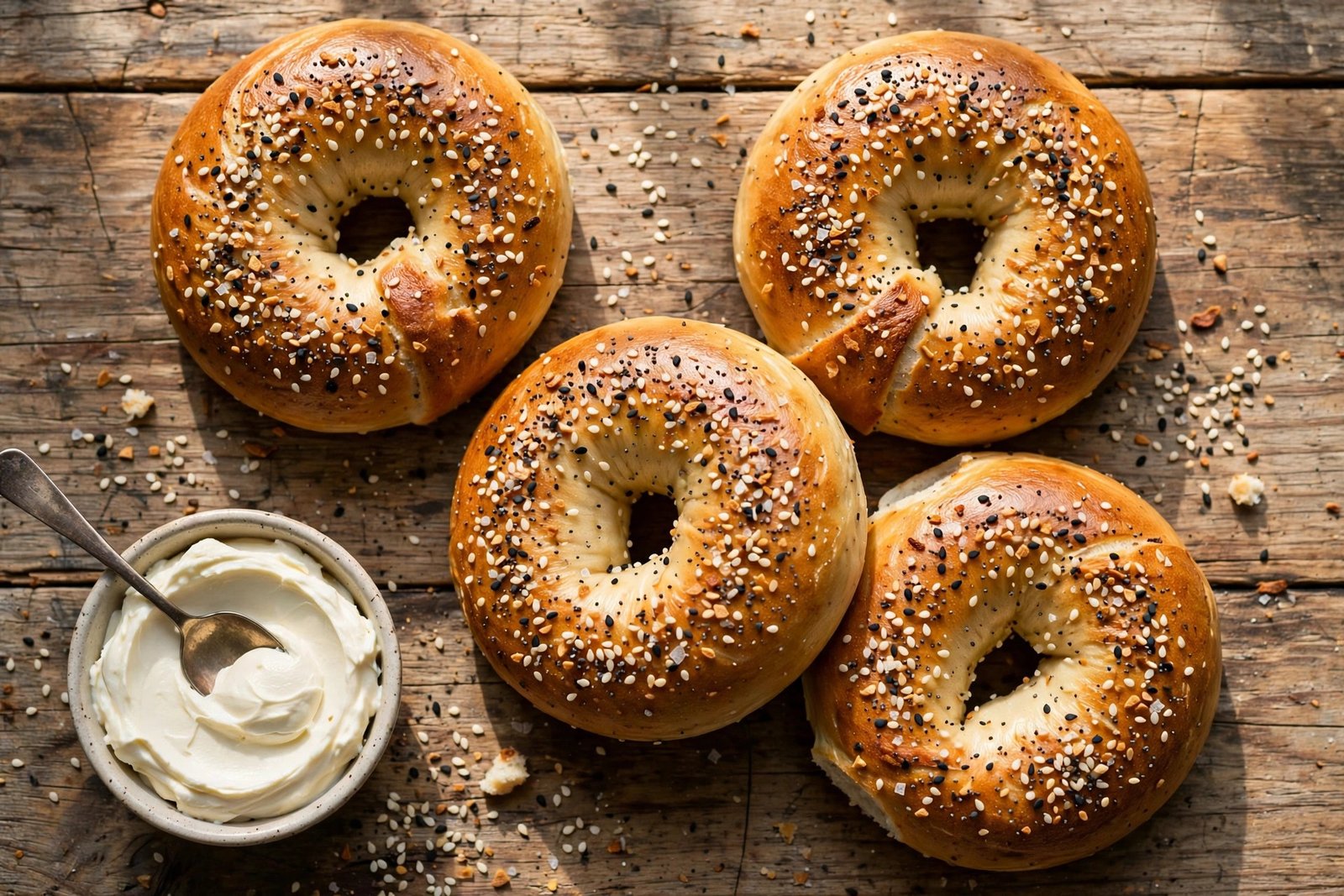
If you have spent any time on TikTok, Instagram Reels, or food Facebook groups lately, you have almost certainly seen these Viral Protein Bagels take over your feed. The claim sounds too good to be true: real, chewy, bakery-style bagels made from just two ingredients — self-rising flour and plain Greek yogurt — with zero yeast, zero rising time, and zero kneading skills required. But after baking dozens of batches in our own test kitchen, we can confirm the hype is earned. These bagels are legitimately delicious, with a golden, glossy crust, a tender, chewy crumb, and nearly three times the protein of a standard store-bought bagel.
What makes them so special is how wildly versatile they are. Each bagel clocks in at roughly 12–14 grams of protein depending on your yogurt, and the texture hits that perfect middle ground between a classic New York chew and a soft, pillowy dinner roll. We brush them with egg wash and shower them with everything bagel seasoning for that irresistible crunch, but they take beautifully to cinnamon sugar, sesame, or a simple smear of cream cheese. Whether you build towering breakfast sandwiches, slice one for avocado toast, or eat them warm straight off the pan (highly recommended), this recipe is about to become your new weekend ritual — and honestly, your weekday one too.
Why You’ll Love This Protein Bagel Recipe
- Just 2 ingredients for the dough: Self-rising flour and plain Greek yogurt are all you need — no yeast, no proofing, no special equipment, and the dough comes together in under five minutes.
- High protein, seriously satisfying: Thanks to the Greek yogurt, each bagel delivers around 12–14 grams of protein, keeping you fuller far longer than a regular bagel.
- Ready in about 30 minutes: Mix, shape, top, and bake — from pantry to plate in half an hour, with no waiting on a rise.
- Genuinely chewy bagel texture: A quick boil-free method still produces a golden, glossy exterior and a pleasantly dense, chewy interior that holds up to cream cheese and toppings.
- Endlessly customizable: Swap the everything seasoning for sesame, poppy seed, cinnamon sugar, or parmesan-garlic — the base recipe handles them all beautifully.
- Meal-prep friendly: They store and reheat well, so bake a batch on Sunday and enjoy bagels all week long.
Ingredients
- 1 cup self-rising flour, plus 2–3 tablespoons extra for dusting and shaping
- 1 cup plain nonfat Greek yogurt (see tip below — strain if watery)
- 1/4 teaspoon fine sea salt (optional but recommended for flavor)
- 1 large egg, beaten, for the egg wash
- 1–2 tablespoons everything bagel seasoning
No Self-Rising Flour? Make Your Own
- 1 cup all-purpose flour
- 2 teaspoons baking powder
- 1/4 teaspoon fine sea salt
Whisk the three together thoroughly before using. That is it — homemade self-rising flour in under a minute.
Instructions
- Preheat the oven: Set your oven to 425°F (220°C). Line a baking sheet with parchment paper or a silicone baking mat.
- Mix the dough: In a medium bowl, stir the self-rising flour and salt together. Add the Greek yogurt and mix with a sturdy spoon or spatula until a shaggy dough forms and most of the dry flour is absorbed. The dough will look a little rough — that is normal.
- Knead briefly: Turn the dough out onto a lightly floured surface and knead gently for 1–2 minutes, just until it comes together into a smooth, slightly tacky ball. Do not overwork it — over-kneading makes the bagels dense. Add a light dusting of flour if the dough sticks to your hands, but keep it minimal.
- Divide and shape: Cut the dough into 4 equal pieces. Roll each piece into a smooth ball, then poke your thumb through the center and gently stretch the hole to about 1–1.5 inches wide (it will shrink a bit as it bakes). Alternatively, roll each piece into a rope about 8 inches long and pinch the ends together firmly.
- Egg wash and season: Arrange the shaped bagels on the prepared baking sheet, spacing them about 2 inches apart. Brush the tops and sides generously with the beaten egg — this is what gives the bagels their glossy, golden bakery finish. Sprinkle each bagel generously with everything bagel seasoning.
- Bake until deep golden: Bake for 20–25 minutes, until the bagels are deeply golden brown, puffed, and firm to the touch. They should sound slightly hollow when tapped on the bottom. Oven temperatures vary, so start checking at the 20-minute mark.
- Cool before slicing: Transfer the bagels to a wire rack and let them cool for at least 10 minutes before slicing. This resting time finishes setting the crumb so they slice cleanly instead of gumming up.
Tips for the Best Protein Bagels
- Use thick Greek yogurt, not regular yogurt. Nonfat Greek yogurt works perfectly, but if your brand is loose or watery, strain it through a fine-mesh sieve lined with cheesecloth for 15–20 minutes first. Watery yogurt makes a sticky, hard-to-shape dough.
- Weigh your flour if you can. One cup of self-rising flour should weigh about 120 grams. Scooping directly from the bag can pack in up to 30% extra flour, which dries out the dough and makes dense bagels.
- Do not skip the egg wash. Without it, the bagels bake up pale and the seasoning slides right off. The egg gives you that glossy, crackly bakery-style crust and acts as glue for the toppings.
- Make the hole bigger than you think you need. The dough puffs up in the oven and the hole shrinks considerably — start with a 1.5-inch opening for the classic bagel look.
- Bake until truly golden. Pulling them early leaves a gummy interior. A deep golden-brown color is your best signal that the inside is fully baked.
- For extra chew, let the shaped bagels rest for 5 minutes before the egg wash step. The brief rest lets the flour hydrate, improving the crumb structure slightly.
Variations
- Cinnamon sugar bagels: Skip the everything seasoning and brush the tops with melted butter after the egg wash instead, then roll in 3 tablespoons granulated sugar mixed with 1 tablespoon cinnamon. Bake as directed.
- Parmesan-garlic bagels: Replace the everything seasoning with 2 tablespoons grated parmesan and 1/2 teaspoon garlic powder. These are incredible with marinara for dunking.
- Sesame or poppy seed bagels: Keep it classic — brush with egg wash and sprinkle with 1–2 tablespoons toasted sesame seeds or poppy seeds.
- Stuffed bagels: Flatten each dough ball, place 1 tablespoon of cream cheese in the center, and pinch the dough closed before rolling into a rope and shaping. A fun surprise inside.
- Mini bagel bites: Divide the dough into 8 pieces instead of 4 and bake for 14–16 minutes. Perfect for kids’ lunchboxes and snack platters.
Storage & Reheating
Store cooled bagels in an airtight container or zip-top bag at room temperature for up to 2 days. For longer storage, wrap each bagel individually in plastic wrap or foil and freeze for up to 3 months — they freeze beautifully. Thaw overnight in the refrigerator or at room temperature for 30 minutes.
To reheat, split the bagel and toast it in a toaster or toaster oven until warm and crisp, or warm whole bagels in a 350°F oven for 5–7 minutes. Frozen bagels go straight into the toaster from frozen on a lower setting, then a second round to crisp. Day-old bagels also make fantastic bagel chips: slice thin, brush with olive oil, and bake at 375°F for 8–10 minutes until crisp.
Frequently Asked Questions
Do these really taste like real bagels?
They taste like really good homemade bagels with a slightly softer, breadier crumb than a boiled New York bagel. The chew is satisfying, the crust gets golden and crisp, and once you add toppings most people cannot tell the difference. They are their own delicious thing — and honestly, for a 30-minute no-yeast recipe, the result is remarkable.
Can I use regular yogurt instead of Greek yogurt?
Not recommended. Regular yogurt is much thinner and higher in moisture, which makes the dough too wet and sticky to shape, and you lose the protein benefit that makes this recipe special. Stick with plain Greek yogurt — nonfat, 2%, or full-fat all work, just make sure it is thick and plain (unflavored).
Why is my dough so sticky?
The most common cause is watery yogurt or over-measured flour. Stir the yogurt in its container first to reincorporate any liquid on top, or strain it briefly. When shaping, flour your hands and work surface lightly, but resist the urge to add lots of extra flour to the dough itself — a tacky dough bakes up softer and chewier.
Are these bagels gluten-free?
As written, no. However, you can experiment with a 1:1 gluten-free all-purpose flour blend plus the homemade self-rising conversion (add 2 teaspoons baking powder and 1/4 teaspoon salt per cup). Results vary by brand, so expect a slightly denser crumb — still tasty, just not quite as chewy.
Serve your Viral Protein Bagels warm with a thick schmear of cream cheese, as the base for an egg-and-avocado breakfast sandwich, or alongside a bowl of soup for dunking. Once you realize how effortless they are — no yeast, no rising, no special skills — you will find yourself making a batch every week. Bake them once, and do not be surprised when your family starts requesting them by name.