
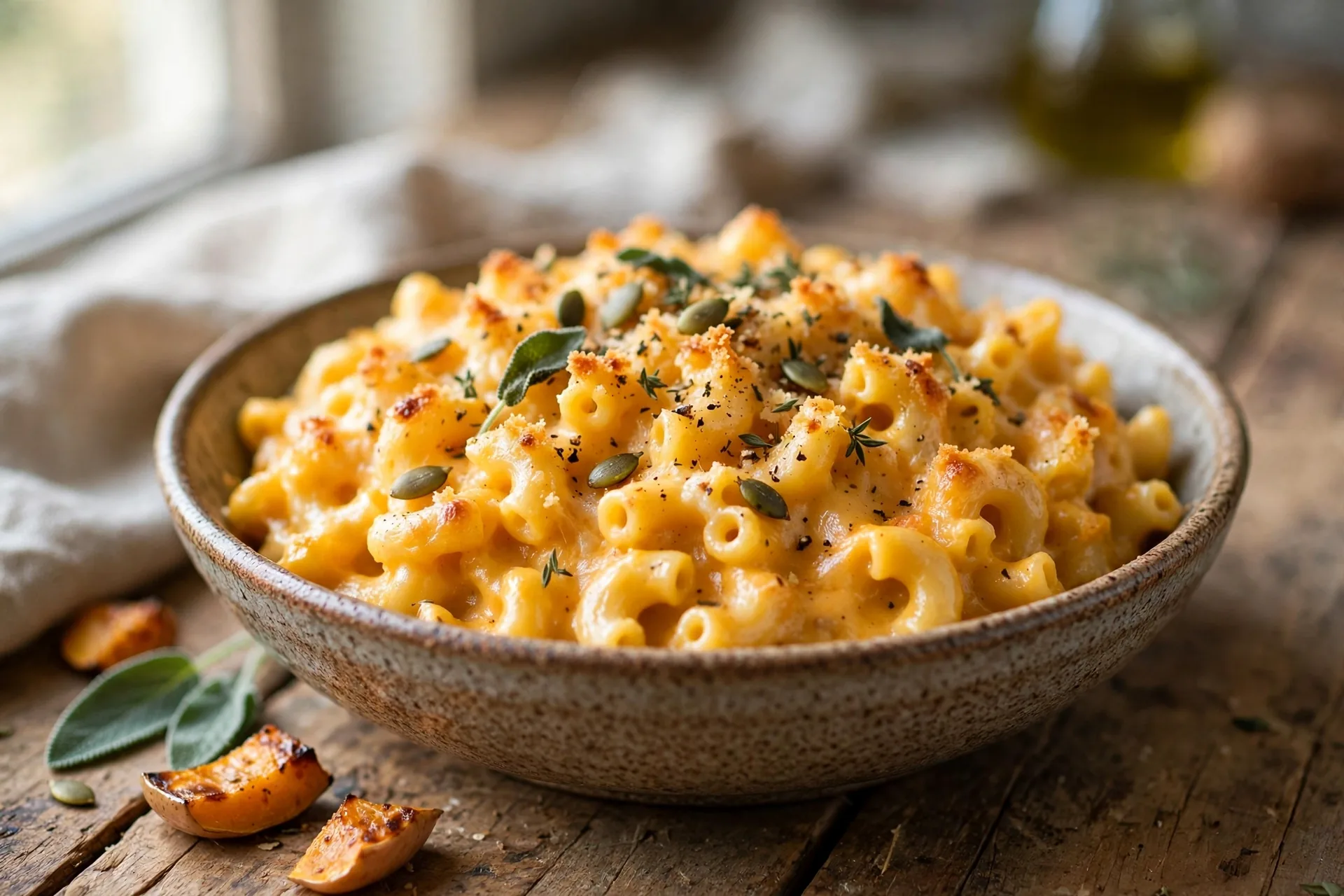
Mac and cheese is the ultimate comfort food, and this butternut squash version takes everything you love about the classic and makes it a little richer, a little sweeter, and a little more interesting. Roasted butternut squash is blended into a silky cheese sauce that coats every piece of pasta in a golden, velvety blanket. The squash adds natural sweetness and a beautiful color, while sharp cheddar and a touch of nutmeg keep the dish firmly savory and satisfying. It tastes indulgent, like the mac and cheese you grew up with, but with a depth of flavor that makes it feel special enough for a dinner party.
This recipe is perfect for fall and winter, when butternut squash is at its best, but it works year-round with frozen cubed squash if fresh is not available. It is a wonderful way to get more vegetables onto the table without a battle, because the squash melts right into the sauce and even picky eaters will ask for seconds. The pasta bakes under a crunchy breadcrumb topping that contrasts beautifully with the creamy sauce underneath, giving you the best of both textures in every bite.
Serve it as a main dish with a simple salad, or as a hearty side alongside roast chicken, pork chops, or a holiday ham. It is also a great dish to bring to a potluck or to make ahead for a busy week. Once you try butternut squash mac and cheese, the classic version may start to feel a little plain by comparison. This is comfort food with a seasonal twist, and it belongs in your regular rotation.
Why You’ll Love This Recipe
You will love this recipe because it is creamy, cheesy, and deeply comforting, with a subtle sweetness from the roasted squash that balances the sharp cheddar perfectly. The sauce is smooth and luscious without needing heavy cream, and the crispy breadcrumb topping adds a satisfying crunch. It is a one-dish meal that comes together with pantry staples and a single squash, and it reheats well for lunches. Kids love it, adults love it, and it is an easy way to serve a vegetable in a dish everyone already wants to eat.
Ingredients
- 1 pound elbow macaroni or cavatappi pasta
- 1 medium butternut squash, about 2 1/2 pounds, peeled, seeded, and cut into 1-inch cubes
- 2 tablespoons olive oil
- 1 teaspoon kosher salt, divided, plus more for the pasta water
- 1/2 teaspoon black pepper
- 4 tablespoons unsalted butter
- 1 small yellow onion, finely diced
- 3 cloves garlic, minced
- 1/4 cup all-purpose flour
- 2 1/2 cups whole milk, warmed
- 1 cup vegetable broth or chicken broth, warmed
- 1/2 teaspoon ground mustard
- 1/4 teaspoon ground nutmeg
- 1/4 teaspoon cayenne pepper, optional
- 2 cups sharp cheddar cheese, freshly shredded
- 1 cup Gruyere cheese, freshly shredded
- 1/2 cup Parmesan cheese, finely grated
- 1 cup panko breadcrumbs
- 2 tablespoons butter, melted
- 1 tablespoon fresh sage leaves, chopped, or 1 teaspoon dried sage
- Fresh parsley, chopped, for serving
Instructions
- 1. Preheat the oven to 400 degrees F. Line a large rimmed baking sheet with parchment paper. Toss the cubed butternut squash with the olive oil, half a teaspoon of salt, and the black pepper, and spread it in a single layer on the baking sheet.
- 2. Roast the squash for 25 to 30 minutes, until it is very tender and lightly caramelized at the edges. Let it cool for a few minutes. The roasting step is important because it concentrates the flavor of the squash and adds a gentle sweetness that boiled squash does not have.
- 3. While the squash roasts, bring a large pot of salted water to a boil. Cook the pasta according to the package directions until just shy of al dente, about 1 minute less than the recommended time. The pasta will continue cooking in the oven, so you want it slightly underdone now. Drain and set aside.
- 4. Transfer the roasted squash to a blender or food processor with half a cup of the warmed milk and blend until completely smooth. You should have about 2 cups of squash puree. Set it aside.
- 5. Melt the 4 tablespoons of butter in a large saucepan or Dutch oven over medium heat. Add the diced onion and cook for 4 to 5 minutes, until soft and translucent. Add the garlic and cook for 30 seconds more, until fragrant.
- 6. Sprinkle the flour over the onion and garlic and cook, stirring constantly, for 1 to 2 minutes to make a roux. The mixture should look pale golden and smell slightly nutty. Do not let it brown too much.
- 7. Slowly whisk in the remaining milk and the broth, a little at a time, whisking constantly to prevent lumps. Bring the sauce to a gentle simmer and cook for 3 to 4 minutes, stirring often, until it thickens enough to coat the back of a spoon.
- 8. Stir in the squash puree, ground mustard, nutmeg, and cayenne if using. Reduce the heat to low and add the cheddar, Gruyere, and Parmesan a handful at a time, stirring until each addition melts before adding the next. Taste and adjust the salt as needed.
- 9. Add the drained pasta to the cheese sauce and stir until every piece is evenly coated. The sauce should look glossy and creamy. If it seems too thick, stir in a splash of warm milk.
- 10. Lightly butter a 9 by 13-inch baking dish. Pour the mac and cheese into the dish and spread it into an even layer. In a small bowl, toss the panko breadcrumbs with the melted butter and the chopped sage, then sprinkle the mixture evenly over the top.
- 11. Bake at 375 degrees F for 20 to 25 minutes, until the sauce is bubbling around the edges and the breadcrumb topping is golden brown and crisp. Let the dish rest for 10 minutes before serving so the sauce sets slightly and is easier to scoop. Garnish with chopped parsley.
Tips and Variations
Shred your own cheese rather than using pre-shredded cheese, because pre-shredded cheese is coated in anti-caking agents that can make the sauce grainy. Freshly shredded cheddar and Gruyere melt much more smoothly. If you cannot find Gruyere, use fontina, Monterey Jack, or more cheddar. For a richer sauce, replace half a cup of the milk with heavy cream.
You can make this dish with frozen cubed butternut squash to save time. Roast the frozen cubes the same way, adding about 5 extra minutes to the roasting time. For added protein, stir in cooked bacon, diced ham, or shredded rotisserie chicken before baking. For a vegetarian version, use vegetable broth and skip the meat additions. To make it spicier, add a diced jalapeno to the onion or increase the cayenne. If you like a stronger squash flavor, increase the squash to 3 cups of puree and reduce the milk slightly.
Serving Suggestions
Serve butternut squash mac and cheese as a main dish with a crisp green salad dressed with a light vinaigrette and some crusty bread. It also works as a side dish with roast chicken, baked ham, pork tenderloin, or grilled sausages. For a fall dinner, pair it with roasted Brussels sprouts or sauteed green beans. A glass of apple cider or a light white wine goes well with the sweet and savory flavors.
Storage and Make-Ahead
Store leftovers in an airtight container in the refrigerator for up to 4 days. Reheat individual portions in the microwave with a splash of milk to loosen the sauce, or reheat the whole dish covered with foil in a 350 degree F oven until warmed through. You can assemble the mac and cheese up to a day ahead, cover it tightly, and refrigerate it before baking; add 10 minutes to the baking time if baking from cold. Freeze baked mac and cheese in portions for up to 2 months, then thaw overnight in the refrigerator before reheating.
Nutrition Notes
Butternut squash is a good source of fiber, vitamin A, vitamin C, and potassium, and it adds those nutrients to a dish that is traditionally based on pasta and cheese. The cheese provides protein and calcium, while the milk adds additional protein. This is a rich, hearty dish, so a moderate portion served with a salad or vegetables makes a balanced meal. Using whole milk and real cheese gives the best texture and flavor.
Frequently Asked Questions
Can I use frozen butternut squash? Yes, frozen cubed butternut squash works well. Roast it from frozen, adding about 5 minutes to the roasting time, then blend it the same way. Make sure it is very tender before blending.
Can I make this without baking it? Yes, you can serve it straight from the pot as stovetop mac and cheese. Skip the breadcrumb topping and the baking step, and serve immediately after stirring the pasta into the sauce.
Why is my sauce grainy? Grainy sauce is usually caused by cheese added over heat that is too high, or by pre-shredded cheese. Keep the heat on low when adding the cheese, add it a handful at a time, and use cheese you shred yourself for the smoothest sauce.