
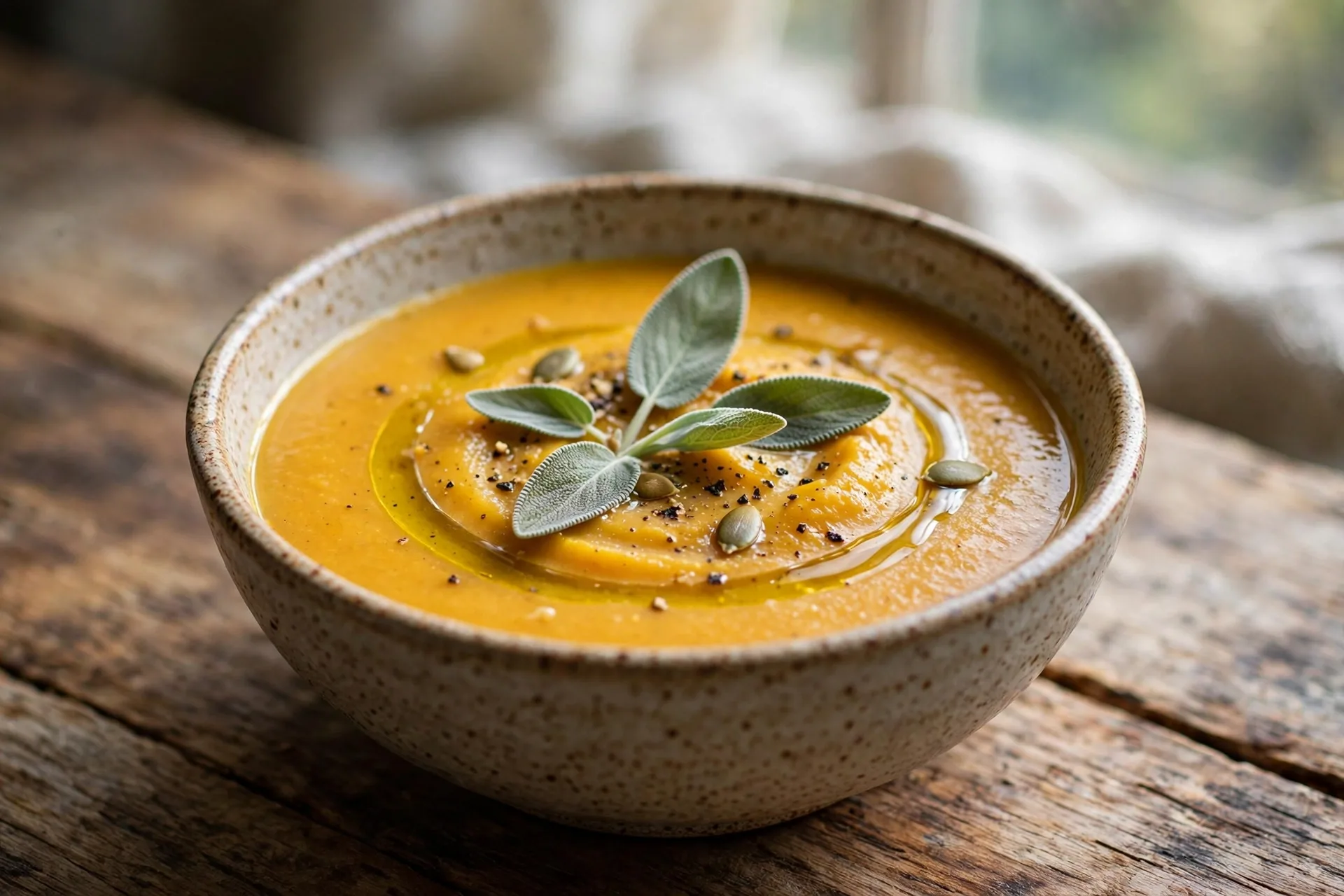
Butternut Squash Soup with Sage is autumn in a bowl. It is smooth, velvety, and gently sweet, with the earthy warmth of roasted squash balanced by savory sage, a touch of garlic, and a swirl of cream. The color alone is enough to make you smile: a deep, glowing orange that looks beautiful in a bowl and feels like sunshine on a cold day. This soup is the kind of dish that works everywhere, as a light lunch with crusty bread, as an elegant first course at a holiday dinner, or as a cozy weeknight supper when you want something nourishing without a lot of fuss.
What makes this version special is that the squash is roasted first, which concentrates its flavor and adds a subtle caramelized depth that boiled squash never achieves. The sage is crisped in butter until fragrant, and some of it is stirred into the soup while the rest is saved for garnish, so its woodsy, slightly peppery flavor runs through every spoonful. The soup blends up silky smooth, and a final swirl of cream and a drizzle of good olive oil make it feel luxurious. It is naturally vegetarian, easy to make vegan, and it freezes beautifully, so a big pot now means easy lunches later.
Why You’ll Love This Recipe
You will love this recipe because it is simple, comforting, and deeply flavorful with very little effort. Roasting the squash does most of the work, and the soup comes together in one pot with an immersion blender or a regular blender. It is smooth and creamy without being heavy, and it is endlessly adaptable: make it richer with cream, lighter with broth, or spicier with a pinch of chili. It is a soup that both children and adults enjoy, and it makes the house smell wonderful while it cooks.
Ingredients
- 1 large butternut squash (about 3 pounds), peeled, seeded, and cut into 1-inch cubes
- 2 tablespoons olive oil
- 1 teaspoon kosher salt, plus more to taste
- 1/2 teaspoon freshly ground black pepper
- 1 medium yellow onion, diced
- 2 medium carrots, peeled and diced
- 3 cloves garlic, minced
- 1 tablespoon fresh sage leaves, chopped, plus 8 to 10 whole leaves for garnish
- 4 cups low-sodium vegetable broth (or chicken broth)
- 1/2 teaspoon ground cinnamon
- 1/4 teaspoon ground nutmeg
- 2 tablespoons unsalted butter
- 1/2 cup heavy cream, plus more for serving
- 1 tablespoon pure maple syrup (optional)
- 1 tablespoon apple cider vinegar or lemon juice
- Toasted pumpkin seeds, for garnish (optional)
Instructions
- 1. Preheat the oven to 425 degrees F (220 degrees C). Line a large rimmed baking sheet with parchment paper.
- 2. Toss the cubed squash with 1 tablespoon of the olive oil, 1/2 teaspoon of the salt, and 1/4 teaspoon of the pepper. Spread it in a single layer on the baking sheet.
- 3. Roast for 25 to 30 minutes, turning once halfway through, until the squash is tender and golden at the edges. Roasting is the key step for flavor, so do not rush it or crowd the pan.
- 4. While the squash roasts, heat the remaining tablespoon of olive oil in a large pot or Dutch oven over medium heat. Add the onion and carrots and cook for 6 to 8 minutes, stirring occasionally, until the onion is soft and translucent and the carrots are beginning to soften.
- 5. Add the garlic and the chopped sage and cook for 1 minute until fragrant.
- 6. Add the roasted squash to the pot along with the vegetable broth, cinnamon, and nutmeg. Stir well, scraping up any browned bits from the bottom of the pot, and bring to a gentle simmer.
- 7. Simmer for 15 minutes so the flavors meld and the carrots finish softening. The squash should be completely tender.
- 8. While the soup simmers, melt the butter in a small skillet over medium heat. Add the whole sage leaves in a single layer and fry for 30 to 60 seconds per side until crisp and fragrant. Transfer them to a paper towel and sprinkle lightly with salt. These will be your garnish.
- 9. Remove the soup from the heat. Use an immersion blender to blend it directly in the pot until completely smooth and velvety, or transfer it in batches to a regular blender, filling it no more than halfway each time, holding the lid down with a towel, and blending until smooth before returning it to the pot.
- 10. Stir in the heavy cream and the maple syrup if using. Add the apple cider vinegar or lemon juice and taste. Adjust the salt, pepper, and sweetness until the soup tastes balanced: sweet from the squash, savory from the sage and broth, and bright from the vinegar.
- 11. Ladle into warm bowls. Swirl a little extra cream over the top, add a few crisp sage leaves, and scatter toasted pumpkin seeds over each serving if you like.
Tips and Variations
For the smoothest soup, blend longer than you think you need to, at least a full minute with an immersion blender, and pass it through a fine-mesh strainer if you want a truly silky restaurant texture. If the soup is too thick, thin it with a little extra broth until it reaches the consistency you like; if it is too thin, simmer it uncovered for a few minutes to reduce. For a vegan version, use olive oil instead of butter, coconut cream or cashew cream instead of heavy cream, and vegetable broth. A diced apple added with the onion and carrots gives a lovely sweet-tart note, and a pinch of cayenne or a spoonful of curry powder turns the soup in a spicier direction. Roasting the squash with a whole head of garlic is another easy upgrade: squeeze the soft cloves into the pot with the squash.
Serving Suggestions
Serve this soup hot as a starter or a light main course with warm crusty bread, a grilled cheese sandwich, or a crisp green salad with apple and walnuts. It is a natural opener for a Thanksgiving or fall dinner party, served in small cups or bowls with the crisp sage on top. For a heartier lunch, pair it with a turkey and cheddar sandwich or a slice of savory quiche. A drizzle of chili oil or a spoonful of creme fraiche at the table lets each person finish their bowl the way they like it.
Storage and Make-Ahead
Store the soup in an airtight container in the refrigerator for up to 5 days, or freeze it for up to 3 months. If freezing, leave out the cream and add it after reheating for the best texture. Reheat gently over medium-low heat, stirring often, and add a splash of broth if it has thickened. The crisp sage leaves are best made fresh, but the soup itself tastes even better the next day as the flavors deepen. This is an ideal make-ahead dish for a busy week or a holiday when you want one course ready before guests arrive.
Nutrition Notes
Butternut squash is rich in vitamin A, vitamin C, fiber, and potassium, and it provides natural sweetness without added sugar when roasted. Carrots and onion add more fiber and flavor, while sage contributes antioxidants and a distinctive aroma. Cream adds richness and a small amount of calcium, and using vegetable broth keeps the soup light. Overall, this is a wholesome, satisfying soup that fits well into a balanced diet, especially when served with whole-grain bread and a protein-rich main dish.
Frequently Asked Questions
Can I use frozen butternut squash? Yes. Use about 5 cups of thawed frozen squash and skip the roasting step, or roast it from thawed and patted dry. The soup will still be delicious, though roasting fresh squash gives the deepest flavor.
How do I make it dairy-free? Use olive oil instead of butter and full-fat coconut milk or cashew cream instead of heavy cream. The soup stays creamy and the coconut adds a subtle sweetness that works well with squash.
Why is my soup grainy? It likely needs more blending time, or the squash was not fully tender before blending. Blend for a full minute or two and strain it if you want a perfectly smooth finish.