
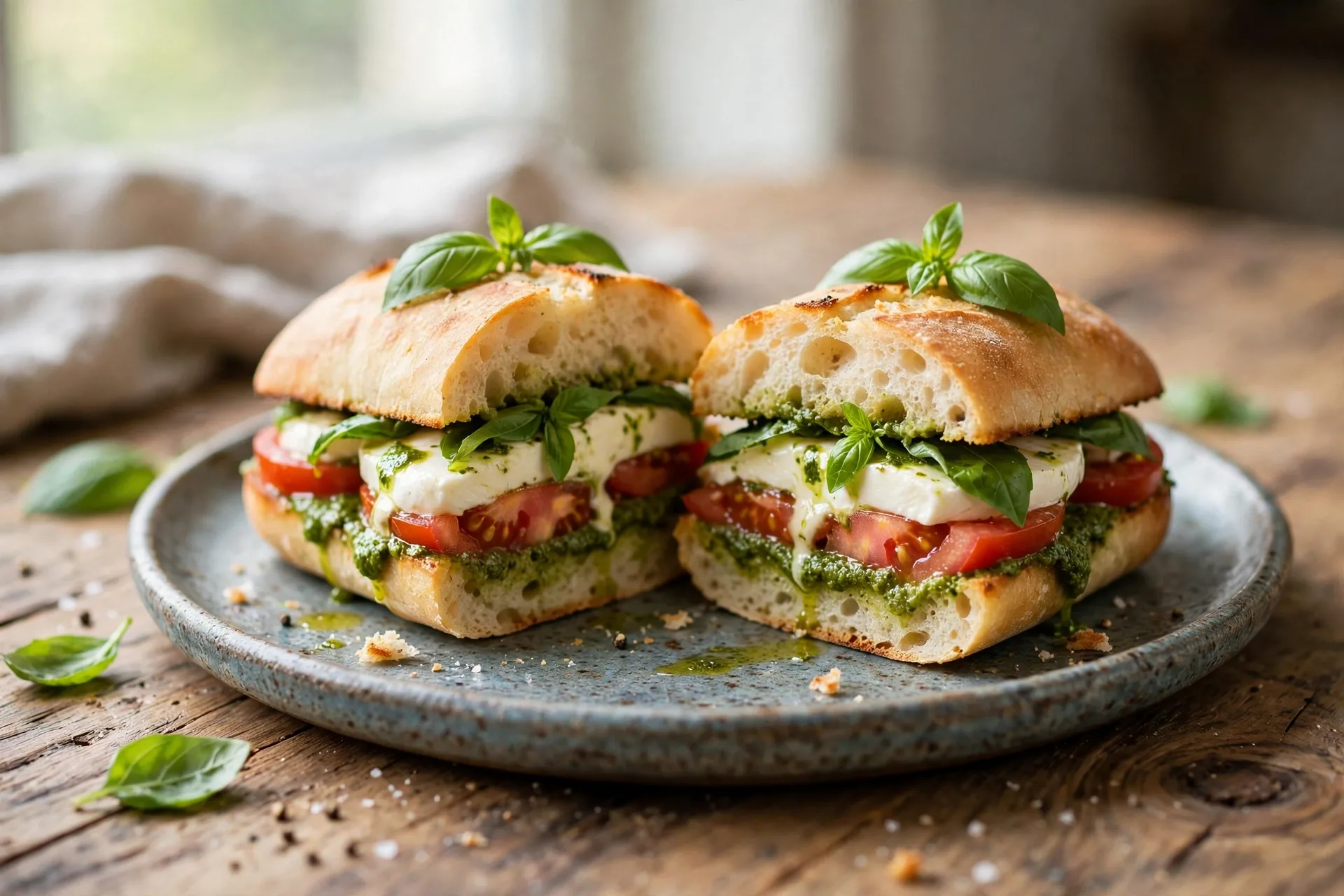
Few sandwiches capture the feeling of summer as perfectly as a Caprese sandwich with pesto. It is the classic Italian combination of ripe tomatoes, fresh mozzarella, and basil, layered between good bread and brightened with a generous spread of pesto. Every bite is juicy, creamy, and fragrant, with the sweetness of the tomato, the mild richness of the cheese, and the garlicky, herbaceous punch of the pesto working together in perfect balance. It is simple food at its best, and it proves that you do not need a long ingredient list to make a lunch that feels special.
The Caprese salad was born on the island of Capri, where the colors of tomato, mozzarella, and basil were said to echo the Italian flag. Turning that salad into a sandwich is a natural step, and pesto makes it even better. The pesto adds depth and a savory, nutty richness that plain olive oil cannot match, and it helps hold the sandwich together while adding flavor to every layer. A good crusty bread, such as ciabatta or a sturdy sourdough, gives the sandwich structure so the tomato juices do not make it soggy, while still being soft enough to bite through easily.
This is a sandwich for warm days, for picnics, for packed lunches, and for those afternoons when you want something fresh and satisfying without cooking. It comes together in about fifteen minutes, and most of that time is just slicing tomatoes and spreading pesto. There is no stove, no oven, and no complicated technique involved. If you have good tomatoes and good mozzarella, you are already most of the way there.
The key to a great Caprese sandwich is the quality of the ingredients. Because there are so few of them, each one matters. Use the ripest tomatoes you can find, preferably in season, and fresh mozzarella packed in water rather than the low-moisture block used for pizza. Use real basil leaves, not dried, and a pesto you genuinely enjoy, whether homemade or a good store-bought jar. With those pieces in place, the sandwich practically makes itself, and the result tastes like a small trip to Italy in the middle of an ordinary day.
Why You’ll Love This Recipe
You will love this recipe because it is fresh, fast, and full of flavor with almost no effort. It takes about fifteen minutes, uses no cooking at all, and delivers that classic tomato, mozzarella, and basil combination with the added richness of pesto. It is perfect for lunch at home, for picnics, and for packed lunches, and it is easy to scale up for a crowd.
Ingredients
- 1 large ciabatta loaf or 4 ciabatta rolls, or 8 slices sturdy sourdough bread
- 1/2 cup basil pesto, homemade or store-bought
- 2 large ripe tomatoes, about 1 pound total, sliced 1/4 inch thick
- 1 ball fresh mozzarella, 8 ounces, sliced 1/4 inch thick
- 1 cup fresh basil leaves, washed and patted dry
- 2 tablespoons extra-virgin olive oil
- 1 tablespoon balsamic glaze, optional
- 1/2 teaspoon flaky sea salt, plus more to taste
- 1/2 teaspoon freshly ground black pepper
- 1 clove garlic, halved, optional, for rubbing the bread
- 1 cup baby arugula, optional
Instructions
- 1. Prepare the bread. If you are using a ciabatta loaf, slice it in half horizontally, then cut it crosswise into 4 equal sandwich portions. If you are using rolls, split them open. If you are using sliced sourdough, lay out 8 slices. For extra flavor, lightly toast the cut sides of the bread in a dry skillet over medium heat for 1 to 2 minutes until just golden, or toast them in a toaster. Toasting is optional, but it helps the bread stand up to the juicy tomatoes and adds a pleasant crunch.
- 2. Season the bread. If you like, rub the cut side of each piece of toasted bread lightly with the cut side of a garlic clove. This adds a subtle garlic warmth without overpowering the sandwich. Brush or drizzle the cut sides very lightly with olive oil. This thin layer of oil acts as a barrier that helps keep the bread from getting soggy.
- 3. Spread the pesto. Spread about 2 tablespoons of pesto on the cut side of each bottom piece of bread, and about 1 tablespoon on the top piece. Use the back of a spoon to spread it evenly all the way to the edges so every bite has pesto. If your pesto is very thick, you can stir in a teaspoon of olive oil to loosen it and make it easier to spread.
- 4. Layer the mozzarella. Arrange the mozzarella slices in a single layer over the pesto on the bottom half of each sandwich. Overlap the slices slightly so the cheese covers the bread evenly. Sprinkle the mozzarella lightly with a pinch of salt and pepper. The cheese should be at room temperature if possible, which helps it taste creamier and more flavorful.
- 5. Add the tomatoes. Lay the tomato slices over the mozzarella, overlapping them slightly. Season the tomatoes generously with flaky sea salt and black pepper. Salt is especially important here because it draws out the sweetness and juice of the tomatoes and seasons the whole sandwich. If you are using balsamic glaze, drizzle a little over the tomatoes now.
- 6. Add the basil and arugula. Tuck the fresh basil leaves over the tomatoes in a single layer. If you are using arugula, add a small handful on top of the basil for a peppery bite. The basil should be fresh and unbruised, since torn or wilted leaves can turn dark and bitter. Whole leaves look beautiful and taste best.
- 7. Close the sandwich. Place the top piece of bread, pesto side down, over the filling. Press down gently with the palm of your hand to compact the sandwich slightly without squeezing out the tomatoes or cheese. If the sandwich feels very tall, you can press it a little more firmly, but do not crush it.
- 8. Rest and slice. Let the sandwich rest for 2 to 3 minutes so the flavors can settle and the bread can absorb just a little of the tomato juice and pesto. Cut each sandwich in half on a diagonal with a serrated knife, using a gentle sawing motion so you do not push the filling out. Serve immediately while the bread is still crisp and the tomatoes are fresh.
Tips and Variations
Choose tomatoes that are heavy for their size, fragrant at the stem end, and deeply colored. Out-of-season tomatoes will still work, but the sandwich will be at its best in summer when tomatoes are at their peak. If your tomatoes are very juicy, sprinkle the slices with salt and let them sit on a plate for 5 minutes, then pat them dry before building the sandwich. This keeps the bread from getting soggy. For a warm version, press the assembled sandwich in a panini press or a hot skillet with a heavy pan on top for 3 to 4 minutes until the bread is crisp and the mozzarella just begins to melt. For extra protein, add a slice of prosciutto, a few slices of turkey, or a fried egg. Swap the ciabatta for focaccia, a baguette, or a hearty whole-grain bread. Add sliced avocado for creaminess, or a few thin slices of red onion for bite. Homemade pesto is wonderful here, but a good refrigerated store-bought pesto works well too. Taste the pesto first and add a squeeze of lemon juice if it tastes flat.
Serving Suggestions
Serve this sandwich on its own for a light lunch, or pair it with a simple side that will not compete with its fresh flavors. A cup of tomato soup, a small green salad with lemon vinaigrette, a handful of kettle chips, or a fruit salad all work well. It is also excellent cut into smaller pieces and served as part of a picnic spread or a casual lunch buffet. A glass of iced tea, lemonade, or sparkling water makes a refreshing drink alongside it. Serve the sandwiches on a wooden board with extra basil and a small bowl of balsamic glaze for a pretty presentation.
Storage and Make-Ahead
This sandwich is best eaten within a few hours of making it, while the bread is crisp and the tomatoes are fresh. If you need to make it ahead, assemble it without the tomatoes, wrap it tightly in plastic wrap or foil, and refrigerate it for up to 8 hours. Add the tomatoes just before serving to keep the bread from becoming soggy. Leftover assembled sandwiches can be wrapped and refrigerated for up to 1 day, though the bread will soften. Do not freeze this sandwich, since the fresh tomatoes, basil, and mozzarella will lose their texture. Store leftover pesto separately in the refrigerator for up to 1 week, with a thin layer of olive oil on top to keep it from browning.
Nutrition Notes
This sandwich is built around fresh, whole ingredients. Tomatoes provide vitamin C, potassium, and lycopene, a plant compound that gives them their red color. Fresh mozzarella provides protein and calcium, and basil and pesto contribute flavor along with small amounts of vitamins and minerals from the herbs and olive oil. The bread is the main source of carbohydrates, so choosing a whole-grain bread will add fiber. Because pesto and cheese both contain fat and sodium, the sandwich is most balanced when paired with a vegetable side or a salad. Portion size and the type of bread you choose will have the biggest effect on the overall nutrition of the meal.
Frequently Asked Questions
Can I make this sandwich without pesto? Yes. You can use a drizzle of olive oil and a little extra basil instead, or spread the bread with a thin layer of mayonnaise mixed with a little garlic. The pesto adds a lot of flavor, though, so the sandwich will taste simpler without it.
What bread works best for a Caprese sandwich? Ciabatta is the classic choice because it is sturdy, chewy, and has a crisp crust that holds up to juicy tomatoes. Focaccia, sourdough, and a crusty baguette are also excellent. Avoid very soft sandwich bread, which can become soggy quickly.
Can I grill this sandwich? Yes, it makes a wonderful warm sandwich. Assemble it as directed, brush the outside lightly with olive oil, and cook it in a panini press or a hot skillet for 3 to 4 minutes per side until the bread is golden and the cheese is melted. Let it rest for a minute before slicing.