
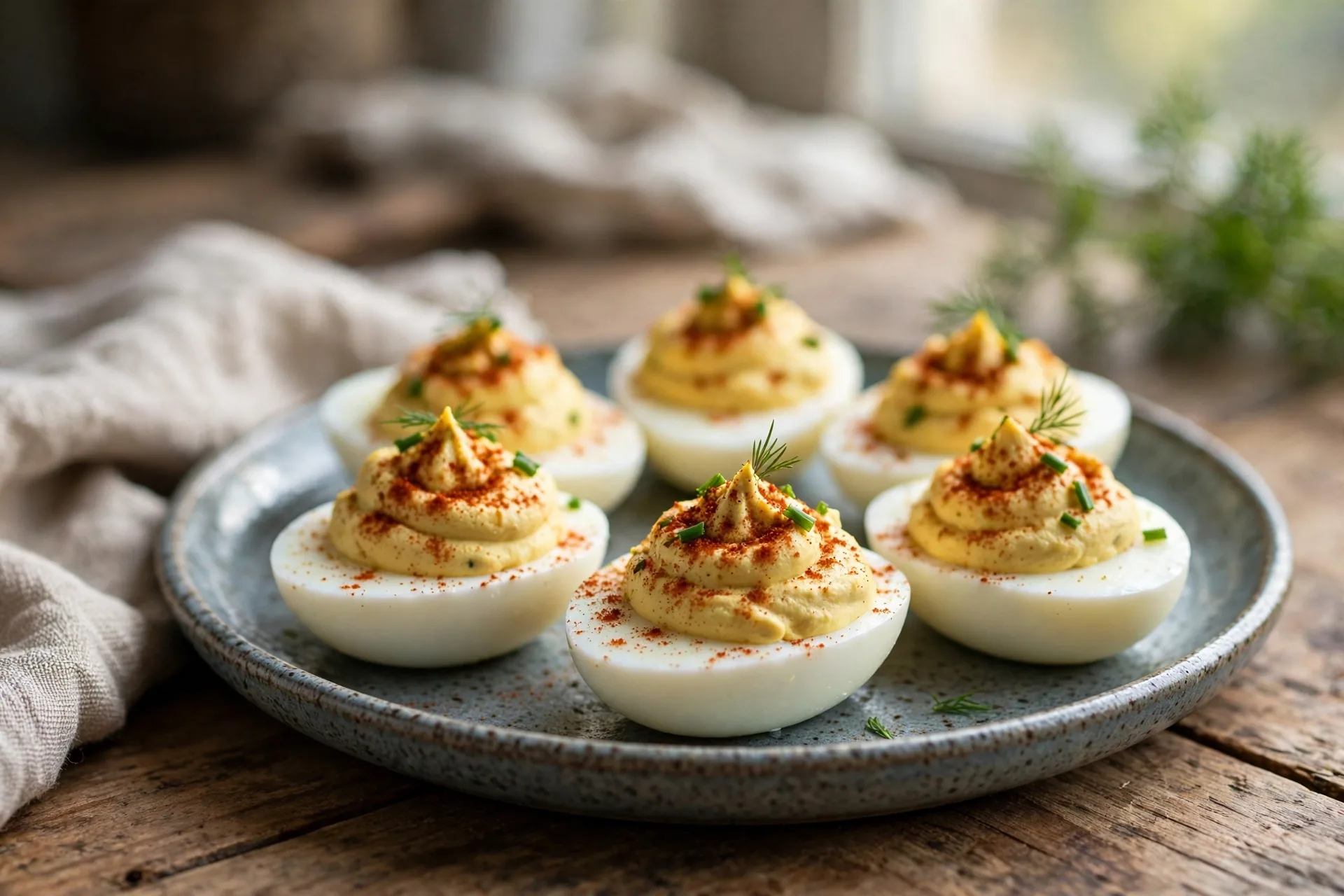
Deviled eggs are a timeless appetizer that shows up at every kind of gathering, from Easter brunch to summer picnics to holiday parties, and there is a good reason for that. They are creamy, tangy, and satisfying, with a smooth filling that melts in your mouth and a gentle kick of seasoning that keeps you reaching for another. They are inexpensive to make, easy to transport, and universally loved. A well-made deviled egg looks elegant on a platter, yet it is one of the simplest appetizers you can prepare. This version adds smoked paprika, which brings a warm, smoky depth that elevates the classic recipe without complicating it.
The key to great deviled eggs is in the details. The eggs must be cooked just right, with firm whites and creamy yolks that have no green ring around them. The filling should be silky smooth, with the right balance of mayonnaise, mustard, and vinegar, and it should be seasoned generously enough to taste bright rather than bland. Smoked paprika, made from peppers that are dried over oak fires, adds a subtle smokiness and a beautiful rust-red color that makes the eggs look as good as they taste. A sprinkle of fresh chives or a tiny piece of crispy bacon on top adds color and texture. Whether you are making them for a party or just for yourself, these deviled eggs are a reliable classic.
Why You’ll Love This Recipe
Deviled eggs are quick, affordable, and endlessly popular. They require only a handful of ingredients, come together in about thirty minutes, and can be made ahead and refrigerated until serving time. The smoked paprika gives them a distinctive flavor that sets them apart from ordinary deviled eggs, while the filling stays creamy and smooth. They are naturally gluten-free, easy to scale up for a crowd, and they look beautiful on any appetizer table. If you need a dependable party appetizer that everyone will eat, this is the one to make.
Ingredients
- 12 large eggs
- 1/2 cup (115 grams) mayonnaise
- 2 teaspoons Dijon mustard
- 1 teaspoon yellow mustard
- 1 tablespoon white vinegar or apple cider vinegar
- 1/2 teaspoon smoked paprika, plus more for garnish
- 1/4 teaspoon garlic powder
- 1/2 teaspoon fine sea salt, plus more to taste
- 1/4 teaspoon black pepper, freshly ground
- 1 teaspoon sugar, optional
- 2 tablespoons finely chopped fresh chives, plus more for garnish
- Hot sauce, a few drops, optional
- Crispy bacon bits or thinly sliced green onions, for garnish, optional
Instructions
- 1. Cook the eggs. Place the eggs in a large saucepan in a single layer and cover them with cold water by about 1 inch. Place the pan over high heat and bring the water to a full rolling boil. As soon as it boils, remove the pan from the heat, cover it with a tight-fitting lid, and let the eggs stand in the hot water for 11 minutes. This gentle cooking method produces firm whites and creamy yolks without the green ring that comes from overcooking.
- 2. Cool and peel. While the eggs stand, prepare a large bowl of ice water. When the 11 minutes are up, use a slotted spoon to transfer the eggs to the ice water and let them cool completely, about 10 minutes. The ice bath stops the cooking and makes the eggs easier to peel. To peel, tap each egg gently on a hard surface to crack the shell all over, then roll it lightly under your palm. Peel under cool running water, starting from the wide end where the air pocket sits, and the shell should come off in large pieces.
- 3. Halve the eggs. Pat the peeled eggs dry with a paper towel. Slice each egg in half lengthwise with a sharp knife, wiping the blade clean between cuts for neat edges. Gently pop the yolks out into a medium bowl, and arrange the white halves on a serving platter, cut side up.
- 4. Make the filling. Mash the yolks with a fork until they are fine and crumbly. Add the mayonnaise, Dijon mustard, yellow mustard, vinegar, smoked paprika, garlic powder, salt, pepper, and sugar if using. Stir vigorously with a fork or whisk until the mixture is completely smooth and creamy. For an extra-smooth filling, press the mixture through a fine-mesh sieve or blend it briefly with an immersion blender. Taste and adjust the seasoning, adding a few drops of hot sauce or more salt if desired. Stir in the chopped chives.
- 5. Fill the egg whites. Spoon the filling into a piping bag fitted with a large star tip, or use a zip-top bag with one corner snipped off. Pipe the filling generously into each egg white half, mounding it slightly above the rim. If you do not have a piping bag, a small spoon works fine, and the eggs will still taste wonderful.
- 6. Garnish and chill. Sprinkle each filled egg lightly with additional smoked paprika and a few chopped chives. Add crispy bacon bits or sliced green onions on top if desired. Cover the platter loosely with plastic wrap and refrigerate for at least 30 minutes before serving, so the filling firms up slightly and the flavors meld. Serve cold or at cool room temperature.
Tips and Variations
Use eggs that are at least a week old, because very fresh eggs are harder to peel. The ice bath is essential for easy peeling and for preventing the green ring around the yolks. If you want a lighter filling, replace half the mayonnaise with plain Greek yogurt, which adds tang and protein. For a spicy version, add a teaspoon of sriracha or a finely diced jalapeno to the filling. For a Southern twist, add a tablespoon of sweet pickle relish. To make the eggs ahead, cook and peel the eggs up to 2 days in advance, store the whites and the filling separately in the refrigerator, and fill the eggs just before serving so the whites stay firm and dry.
Serving Suggestions
Serve deviled eggs chilled on a pretty platter, garnished with smoked paprika and fresh chives, as part of an appetizer spread. They pair beautifully with other finger foods such as cheese and crackers, vegetable crudites, and cured meats. They are a natural fit for Easter brunch, summer barbecues, picnics, and holiday parties. For a buffet, arrange them on a deviled egg plate if you have one, or nestle them on a bed of lettuce leaves to keep them from sliding around. A dozen eggs makes 24 halves, which serves about 8 to 12 people as an appetizer.
Storage and Make-Ahead
Deviled eggs are best eaten within 2 days of making them. Store them in an airtight container in the refrigerator, in a single layer if possible. Do not leave deviled eggs at room temperature for more than 2 hours, and keep them chilled until just before serving. The filling can be made up to 2 days ahead and stored separately in a sealed container, and the cooked egg whites can be stored in the refrigerator for up to 2 days. Fill the eggs no more than a few hours before serving for the best texture and appearance. Deviled eggs do not freeze well, so plan to make only as many as you will serve.
Nutrition Notes
Eggs are a nutritious food, providing high-quality protein, vitamin D, vitamin B12, and choline, which supports brain health. The yolks contain most of the nutrients, while the whites are almost pure protein. Mayonnaise and the other filling ingredients add fat and flavor, so a deviled egg is best enjoyed as part of a balanced appetizer spread with fresh vegetables and fruit alongside. The smoked paprika adds flavor and color with virtually no calories, and the fresh chives contribute a small amount of vitamins. A serving of two egg halves is a satisfying, protein-rich appetizer that fits well into a varied diet.
Frequently Asked Questions
How do I prevent the green ring around the yolks? The green ring forms when eggs are overcooked or cooled too slowly. Use the method in this recipe, removing the pan from the heat as soon as the water boils and letting the eggs stand for 11 minutes, then transfer them immediately to an ice bath. This stops the cooking promptly and keeps the yolks bright yellow.
Can I make deviled eggs the day before? Yes, deviled eggs can be made a day ahead. Store them in a single layer in an airtight container in the refrigerator, and add the garnish just before serving so the paprika and chives stay bright. For the best results, you can also store the whites and filling separately and fill the eggs a few hours before the party.
What is the difference between smoked paprika and regular paprika? Smoked paprika is made from peppers that are dried over oak fires, which gives it a deep, smoky flavor and a darker color. Regular paprika, often labeled sweet paprika, is made from peppers dried in the sun or in ovens, and it has a milder, sweeter flavor. For this recipe, smoked paprika is the right choice, because its smokiness is what makes the eggs special.