
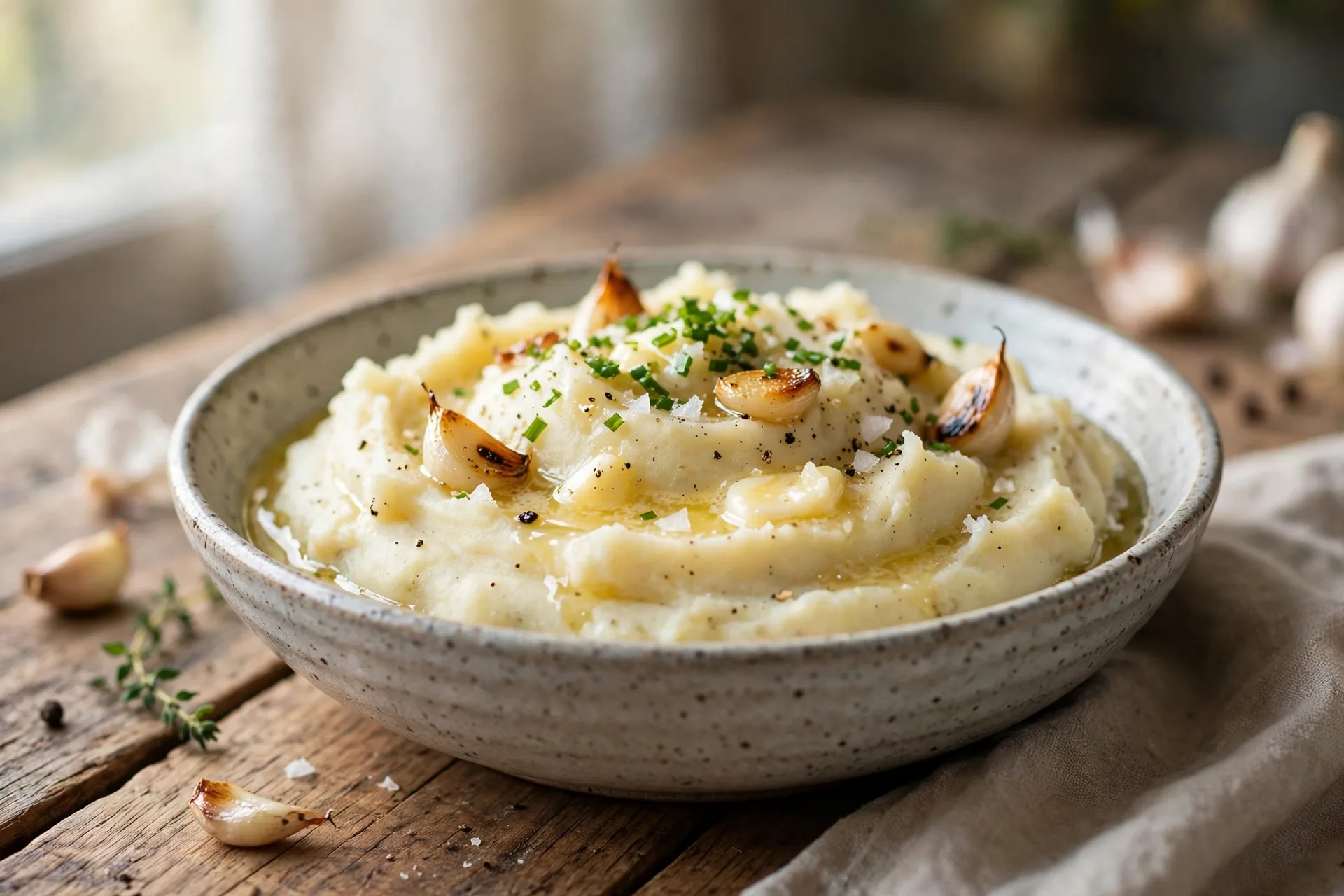
Garlic butter mashed potatoes are the side dish that turns an ordinary dinner into something memorable. They are creamy, rich, and deeply comforting, with a smooth texture, a gentle garlic warmth, and a buttery finish that makes them impossible to resist. Whether they are served next to a holiday turkey, a weeknight roast chicken, or a simple pan-seared steak, they belong on the table, and they have a way of disappearing faster than any other dish.
The secret to great mashed potatoes is not complicated, but it does require attention to a few details. Start with the right potatoes. Russet potatoes and Yukon Gold potatoes are the best choices because they mash into a light, fluffy texture without becoming gluey. Cook them in generously salted water until they are completely tender, drain them well, and mash them while they are still hot. Warm milk and melted butter, added gradually, create a smooth, creamy result. Garlic, gently cooked in butter until fragrant and golden, adds a savory depth that plain mashed potatoes simply do not have.
This recipe uses a whole head of roasted or gently simmered garlic, which gives a mellow, sweet garlic flavor rather than a sharp, raw bite. If you prefer a stronger garlic flavor, you can add an extra clove or two. If you prefer a milder flavor, use fewer cloves or roast the garlic longer until it is very soft and sweet. The potatoes are finished with butter, warm milk or cream, salt, pepper, and a sprinkle of fresh chives or parsley. The result is a side dish that is rich but balanced, and that pairs well with almost any main course.
Mashed potatoes are also one of the most forgiving dishes to make ahead. They can be kept warm, reheated gently, and even made a day in advance and finished just before serving. That makes them a natural choice for holidays and large gatherings, when the oven and the stove are already busy and you need a dish you can trust. Make them once with this method, and they will become your standard mashed potatoes.
Why You’ll Love This Recipe
You will love this recipe because it is creamy, buttery, and full of mellow garlic flavor, with a smooth texture that is never gluey or lumpy. It uses simple ingredients, comes together in about forty minutes, and pairs with everything from roast turkey to grilled steak. It is also easy to make ahead and reheat for holidays and busy weeknights.
Ingredients
- 3 pounds Russet or Yukon Gold potatoes, about 6 large potatoes
- 1 whole head garlic, cloves separated and peeled, about 10 to 12 cloves
- 1/2 cup unsalted butter, 1 stick, plus 2 tablespoons for serving
- 1 cup whole milk, warmed
- 1/2 cup heavy cream, warmed, optional, for extra richness
- 1 tablespoon fine sea salt, for the cooking water, plus more to taste
- 1 teaspoon fine sea salt, for the finished potatoes, or to taste
- 1/2 teaspoon freshly ground black pepper
- 1/4 teaspoon ground white pepper, optional
- 2 tablespoons chopped fresh chives or flat-leaf parsley, for serving
- 1/4 teaspoon ground nutmeg, optional
Instructions
- 1. Prepare the potatoes. Peel the potatoes and cut them into even chunks about 2 inches across. Cutting them into uniform pieces helps them cook at the same rate. Place the potato chunks in a large pot and cover with cold water by about 2 inches. Cold water is important because it lets the potatoes heat evenly from the outside in, which prevents the outside from overcooking while the center stays firm.
- 2. Salt and boil the potatoes. Add 1 tablespoon of salt to the pot and bring the water to a boil over high heat. Reduce the heat to medium and simmer gently for 18 to 22 minutes, until the potatoes are very tender when pierced with a fork. They should break apart easily with almost no resistance. Be careful not to overcook them to the point where they fall apart in the water, which can make them waterlogged.
- 3. Cook the garlic in butter. While the potatoes cook, melt 1/2 cup of butter in a small saucepan over medium-low heat. Add the peeled garlic cloves and cook gently for 8 to 10 minutes, stirring occasionally, until the garlic is soft, fragrant, and lightly golden. Do not let the garlic brown deeply or it will taste bitter. Remove the pan from the heat. You can leave the garlic cloves whole and mash them into the potatoes, or mash them into a paste in the pan with a fork before adding them.
- 4. Warm the milk. In a separate small saucepan or in the microwave, warm the milk and the heavy cream, if using, until hot but not boiling. Warm liquid absorbs into hot potatoes much better than cold liquid, and it keeps the potatoes fluffy instead of cooling them down and making them dense.
- 5. Drain the potatoes well. When the potatoes are tender, drain them thoroughly in a colander. Return the drained potatoes to the hot, empty pot and place the pot back on the stove over low heat for 1 to 2 minutes, shaking the pot gently. This dries out any remaining moisture and helps the potatoes become light and fluffy. Remove the pot from the heat.
- 6. Mash the potatoes. Mash the potatoes with a potato masher or a potato ricer until smooth. A ricer gives the smoothest, lightest texture, while a masher gives a slightly more rustic result. Do not use a food processor or a blender, which will overwork the starch and turn the potatoes gluey. Mash until there are no large lumps, but do not keep mashing longer than needed.
- 7. Add the garlic butter and milk. Pour the warm garlic butter, including the softened garlic cloves, over the mashed potatoes. Add about half of the warm milk and cream. Stir gently with a wooden spoon or a spatula until combined, then add more milk a little at a time until the potatoes reach the consistency you like. Some people prefer thick, hearty mashed potatoes, while others like them soft and almost pourable. Season with 1 teaspoon of salt, black pepper, white pepper, and nutmeg if using. Taste and adjust the salt and pepper.
- 8. Serve. Transfer the mashed potatoes to a warm serving bowl. Make a shallow well in the center and add the remaining 2 tablespoons of butter so it melts into a glossy pool. Sprinkle with chopped chives or parsley and serve immediately while hot and creamy.
Tips and Variations
Start the potatoes in cold, salted water and cook them until they are completely tender. Undercooked potatoes will stay lumpy no matter how much you mash them. Drain them well and dry them briefly in the hot pot before mashing. Add the butter first, before the milk, because the fat coats the starch and helps keep the potatoes fluffy. Add the milk gradually so you can control the texture. For the smoothest potatoes, use a ricer. For extra garlic flavor, roast the whole head of garlic in the oven at 400 degrees F for 40 minutes until soft, then squeeze the cloves into the butter. For a lighter version, use all milk instead of cream and reduce the butter to 6 tablespoons. For a richer holiday version, add 4 ounces of softened cream cheese or 1/2 cup of sour cream. Stir in shredded cheddar and cooked bacon for loaded mashed potatoes, or fold in roasted garlic and fresh rosemary for a more savory variation. Always taste before serving and adjust the salt, since potatoes need a generous amount of seasoning to taste their best.
Serving Suggestions
Serve garlic butter mashed potatoes as a side dish with roast turkey, roast chicken, baked ham, pot roast, meatloaf, grilled steak, or pan-seared salmon. They are a classic partner for gravy, so spoon warm turkey gravy or beef gravy over the top if you have it. They also work well next to roasted vegetables, green beans, or a simple salad. For a holiday table, serve them in a large, warmed bowl with a pat of butter melting on top and a sprinkle of chives. They are filling enough to anchor a meal, so a modest portion goes a long way alongside a protein and a vegetable.
Storage and Make-Ahead
Store leftover mashed potatoes in an airtight container in the refrigerator for up to 4 days. Reheat them gently in a saucepan over low heat, stirring often and adding a splash of warm milk or cream to restore their creamy texture. You can also reheat them in the microwave in 1-minute intervals, stirring between each interval. To make them ahead, prepare the potatoes up to 2 days in advance, cool them, and refrigerate them in a buttered baking dish. Reheat covered in a 325 degree F oven for 30 to 40 minutes, stirring halfway through and adding a little warm milk if needed. Mashed potatoes can be frozen for up to 2 months, though the texture will be slightly softer after thawing. Thaw overnight in the refrigerator and reheat gently with extra butter and milk.
Nutrition Notes
Potatoes are a good source of potassium, vitamin C, vitamin B6, and dietary fiber, especially when the skins are left on, though this recipe uses peeled potatoes for a smoother texture. Butter and cream add saturated fat and calories, so the richness of this dish comes with a trade-off. Using whole milk instead of cream and reducing the butter slightly will lighten the dish while keeping it creamy. Garlic adds flavor with very few calories, and fresh herbs add color and nutrients. As a side dish, mashed potatoes are best enjoyed as part of a balanced plate with a lean protein and plenty of vegetables. Portion size is the easiest way to keep this comforting dish in balance.
Frequently Asked Questions
Why did my mashed potatoes turn out gluey? Gluey potatoes usually come from overworking them with a food processor, blender, or electric mixer, or from using waxy potatoes. Use Russet or Yukon Gold potatoes, mash them by hand with a masher or ricer, and stop as soon as they are smooth.
Can I make mashed potatoes without milk? Yes. You can use warm vegetable broth, chicken broth, or a dairy-free milk alternative. The texture will be a little less rich, but the potatoes will still be creamy if you add enough warm liquid and butter or olive oil.
Can I leave the skins on? Yes, especially with Yukon Gold potatoes, which have thin, tender skins. Leaving the skins on adds fiber and a rustic texture. Scrub the potatoes well before cooking, and mash them a little less thoroughly so the skins stay in small pieces.