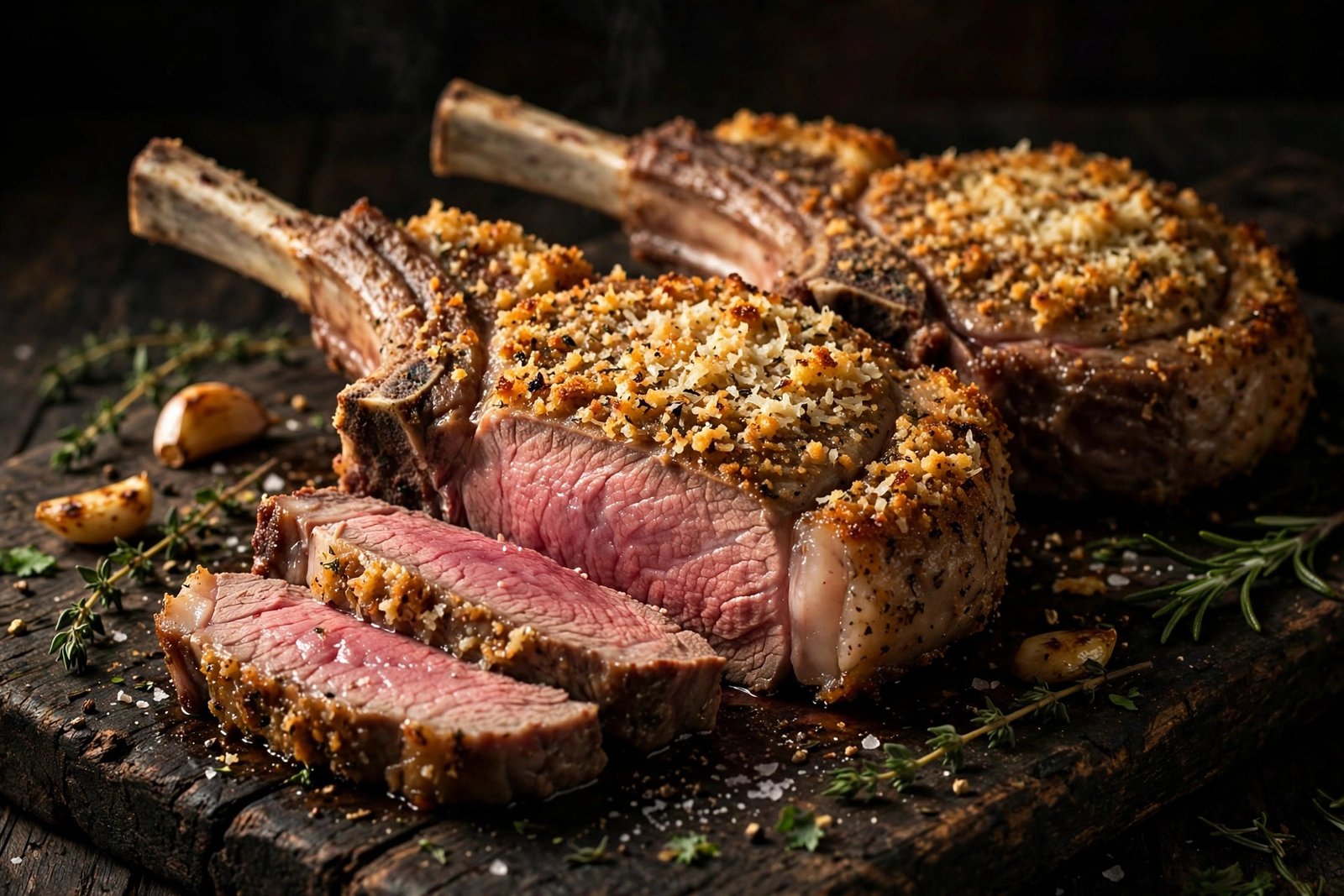
Some dinners are just food on a plate, and some become the stories you tell for years. The first time I ever tasted a proper garlic Parmesan crusted veal chop, it was on our anniversary at a tiny restaurant with about twelve tables and candles that dripped wax all over the tablecloths. My husband ordered it because it sounded impressive, and I will be honest with you — I stole half of his. The crust crackled under my fork, all golden cheese and garlic, and the meat inside was so tender it barely needed a knife. I went home that night determined to recreate it in my own kitchen.
It took me three tries to get it right, and I am not too proud to admit it. The first batch had a crust that slid right off the chops like a little cheesy hat, sitting sadly on the baking tray. The second batch was overcooked and dry, and nobody at the table said a word, which is always the worst review of all. But the third attempt? That was the one. Searing the chops first, brushing on a thin swipe of Dijon mustard as glue, and pressing a Parmesan and panko mixture on firmly enough that it actually stays put — that is the whole secret. Now it is one of those recipes my family requests whenever something is worth celebrating, and honestly, sometimes we make it just because it is Tuesday and we feel like it.
Why You’ll Love This Recipe
Before we get into the details, here is why this one deserves a permanent spot in your recipe rotation:
- Restaurant-level results in about 35 minutes. Most of that is hands-off oven time, which means you can set the table, pour yourself a glass of wine, and look impressively calm when everyone sits down.
- The crust actually sticks. I know the particular heartbreak of a beautiful topping sliding straight off the meat. The thin mustard layer plus a confident, firm press solves that problem completely. No more cheesy hats.
- Simple, honest ingredients. Nothing here requires a speciality shop or a second mortgage. Veal chops, real Parmesan, garlic, and pantry staples — that is the entire shopping list.
- It turns an ordinary night into an occasion. Serve these on a random Wednesday and watch everyone at the table sit up a little straighter. They look and taste like a celebration.
- Easy to scale up or down. Cooking for two or feeding eight? The method stays exactly the same. You just need a bigger tray and a little more of the crumb mixture.
Ingredients You’ll Need
Prep Time: 15 minutes | Cook Time: 20 minutes | Total Time: 35 minutes | Servings: 4 servings
- 4 bone-in veal chops, about 2.5 cm (1 inch) thick
- Salt and freshly ground black pepper
- 2 tablespoons olive oil
- 4 cloves garlic, minced
- 120 g (1/2 cup) freshly grated Parmesan cheese
- 40 g (1/2 cup) panko breadcrumbs
- 2 tablespoons fresh parsley, finely chopped
- 1 teaspoon Italian seasoning
- 1/2 teaspoon garlic powder
- 2 tablespoons Dijon mustard
- 1 tablespoon butter, melted
- Lemon wedges, to serve
Ingredient Notes
Veal chops: Look for bone-in chops about 2.5 cm thick — that thickness is the sweet spot between a good sear and a juicy centre. The bone adds flavour and helps the meat cook evenly, and it looks gorgeous on the plate. If your butcher counter does not carry veal, thick-cut pork rib chops are a perfectly respectable stand-in.
Parmesan cheese: This is the one ingredient where fresh really matters. Grate it yourself from a wedge, because the pre-shredded tubs contain anti-caking starches that stop the cheese melting and browning properly. Freshly grated Parmesan turns nutty, golden, and irresistibly crisp in the oven.
Panko breadcrumbs: These Japanese-style crumbs are lighter and flakier than standard breadcrumbs, which is exactly why they go so shatteringly crisp. If you only have regular breadcrumbs, they will work — just expect a slightly denser crust.
Dijon mustard: Think of this as edible glue rather than a flavour bomb. A thin layer helps the crumb mixture grip the meat, and its gentle tang disappears into the background. Wholegrain mustard works too if you like little pops of texture.
Garlic: Fresh cloves, minced fine. Garlic powder seasons the crust, but the fresh minced garlic folded into the Parmesan mixture is what perfumes the whole dish while it roasts. Your kitchen will smell incredible.
How to Make Garlic Parmesan Crusted Veal Chops
- Bring the chops to room temperature. Take the veal chops out of the fridge about 20–30 minutes before cooking and pat them very dry with paper towels. A dry surface is what gives you a deep, mahogany sear instead of sad grey steaming. Season them generously on both sides with salt and freshly ground black pepper, and let them sit while you prep everything else.
- Heat the oven and set up your station. Preheat the oven to 200°C (400°F). Line a baking tray with foil for easy clean-up and set a wire rack on top of it — the rack lets hot air circulate under the chops so the bottoms stay crisp instead of sitting in their own juices. Get your crumb mixture bowl, the Dijon, and a pastry brush or spoon within arm’s reach.
- Sear the chops. Heat the olive oil in a large oven-safe skillet over medium-high heat until it shimmers and moves like water when you tilt the pan. Lay in the chops and do not touch them for 2–3 minutes per side. Listen for that confident sizzle. You are looking for a deep golden-brown crust with darker caramelised edges — that colour is pure flavour.
- Transfer to the rack. Move the seared chops onto the wire rack on your prepared tray, giving each one a little breathing room. They will look beautiful already, all burnished and glistening. Let them cool for just a minute or two so the mustard you are about to brush on does not slide straight off.
- Mix the crust. In a medium bowl, toss together the freshly grated Parmesan, panko, chopped parsley, Italian seasoning, garlic powder, and the minced garlic. Drizzle in the melted butter and stir until the mixture looks like damp, fragrant sand. It should smell garlicky and savoury enough that you want to eat it with a spoon. Try to resist.
- Brush with mustard. Using a pastry brush or the back of a spoon, spread a thin, even layer of Dijon mustard over the top of each chop — and I mean thin, just enough to make the surface tacky. Too much and the flavour overwhelms; too little and the crust has nothing to hold onto.
- Press on the crust. Take generous handfuls of the Parmesan mixture and press them firmly onto the mustard-coated tops of the chops. Do not be shy here — use the heel of your hand and really pack it down. This firm press is the difference between a crust that shatters beautifully under your fork and one that falls off in one sad sheet.
- Roast until golden. Slide the tray into the hot oven and roast for 10–12 minutes. You will know they are ready when the crust turns a deep, even gold and smells toasty and nutty, and a meat thermometer slipped into the thickest part reads 63°C (145°F). If the crust is browning faster than the meat is cooking, tent the chops loosely with foil.
- Rest the chops. Transfer the chops to a warm plate and let them rest for 5 minutes. I know it is tempting to cut straight in, but this pause lets the juices redistribute through the meat instead of flooding the plate. The crust will stay crisp while they rest — no sogginess, I promise.
- Finish with lemon and serve. Squeeze a wedge of lemon over each chop right before serving. That bright hit of acidity cuts through the richness of the cheese and butter like nothing else. Serve immediately while the crust is at its crackling best, with your favourite sides alongside.
Pro Tips
- Never skip the sear. It does two jobs at once: it builds that deep savoury flavour you cannot get from the oven alone, and it gives the mustard and crumb mixture a textured surface to cling to.
- Grate your own Parmesan. I have said it before and I will say it again — the green-tub stuff will not brown properly. A wedge of real Parmigiano-Reggiano and a box grater take two minutes and change everything.
- Use a meat thermometer. Veal is lean and goes from juicy to chalky fast. Pulling the chops at 63°C (145°F) and letting carryover heat do the rest is the only reliable way to nail it every single time.
- Let the chops come to room temperature. Cold meat hitting a hot pan seizes up and cooks unevenly. Those 20–30 minutes on the counter make a real, noticeable difference.
- Press, do not sprinkle. The crust mixture needs firm, deliberate pressure to bond with the mustard layer. Sprinkling gives you a topping; pressing gives you a crust.
- Make the crumb mixture ahead. You can stir together the dry crust ingredients a day in advance and keep them in an airtight container. On cooking day, just add the melted butter and you are minutes from the oven.
Variations
Add a chilli kick: Stir half a teaspoon of crushed red pepper flakes into the crumb mixture. It will not make the chops properly spicy — just warm and interesting, with a gentle heat that lingers at the back.
Go herby with rosemary and thyme: Swap the Italian seasoning for a tablespoon of finely chopped fresh rosemary and thyme. The piney, woodsy notes are stunning with veal, especially in autumn.
Make it with pork: Thick-cut bone-in pork rib chops work beautifully with this exact method. Just cook them to 63°C (145°F) internal temperature as well, and rest them the same way.
Gluten-free version: Replace the panko with gluten-free panko or crushed pork rinds for an even crunchier, lower-carb crust. Everything else stays exactly the same.
Storage & Reheating
Leftovers will keep in an airtight container in the fridge for up to 3 days, though I will warn you — the crust is at its absolute best on day one. To reheat, skip the microwave (it turns that beautiful crust soggy and sad). Instead, warm the chops in a 180°C (350°F) oven on a wire rack for 8–10 minutes until heated through and the topping crisps back up. I do not recommend freezing these; the Parmesan crust loses its magic in the freezer.
Serving Suggestions
These chops are rich, so I like to pair them with something fresh and something comforting. A simple rocket and cherry tomato salad with lemon vinaigrette cuts through the richness perfectly. Creamy mashed potatoes or a silky parsnip purée are made for soaking up the juices. For a slightly fancier spread, add roasted asparagus with a squeeze of lemon, or a tangle of garlic butter green beans. And if you are pouring wine, a medium-bodied red like a Chianti or a Merlot is a lovely match.
Frequently Asked Questions
Can I use pork chops instead of veal? Absolutely. Thick-cut bone-in pork rib chops are the closest swap and work with the identical method and timings. The flavour will be a little heartier, which plenty of people actually prefer.
How do I know when the veal is done without a thermometer? Honestly, I really recommend getting a thermometer — they are inexpensive and take all the guesswork out. But in a pinch, press the centre of the chop with your finger; it should feel firm with just a slight give, and the juices should run clear with the faintest blush of pink.
Why did my crust fall off? Almost always one of three things: the chops were not seared (the crust needs texture to grip), the mustard layer was too thick and acted like a slip-and-slide, or the crumb mixture was sprinkled on instead of pressed on firmly. Fix those three and you will be golden — literally.
Can I prepare these ahead of time? You can sear the chops and mix the crumb topping a few hours ahead, keeping them separately in the fridge. Assemble (mustard plus crust) just before roasting so the topping stays crisp. I would not assemble them the night before — the mustard will soften the crumbs.
What wine pairs best with veal chops? A medium-bodied red is the classic choice — think Chianti, Merlot, or a Côtes du Rhône. If you are more of a white wine person, a rich, oaky Chardonnay stands up to the Parmesan crust surprisingly well.
Nutrition
Per serving (approximate): 520 calories, 42 g protein, 28 g fat, 12 g carbohydrates. These figures are estimates based on the ingredients listed and will vary with the exact size of your chops and how generously you pile on that Parmesan crust. As always, they are a helpful guide rather than gospel.