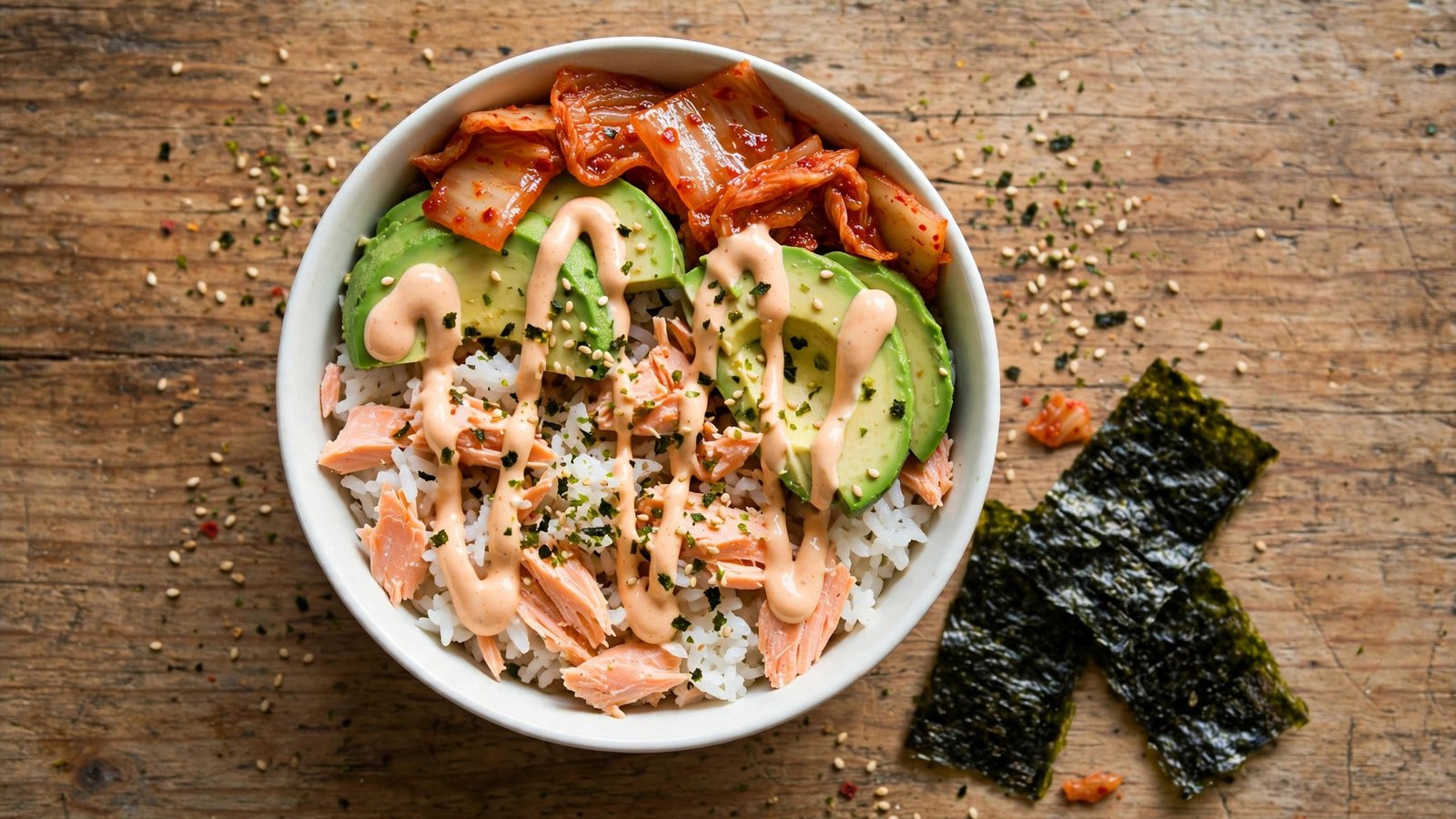
If you have spent any time on TikTok, you have almost certainly seen Viral Salmon Rice Bowl – Emily Mariko’s 15-Minute Leftover Salmon Bowl on your For You Page. It is one of the most-watched food videos in the platform’s history — tens of millions of views for a recipe that is essentially reheated leftovers in a bowl. And yet, one bite is all it takes to understand why. Creamy, savory, and spicy, this bowl turns last night’s cooked salmon and a scoop of cold rice into a meal that tastes like something from a trendy Japanese café.
What makes this bowl so genius is the combination of textures and flavors in every single scoop. Flaky, tender salmon gets mashed into warm rice with soy sauce, sriracha, and a slick of toasted sesame oil, then everything is steamed together in the microwave with the now-famous ice cube trick for perfectly fluffy rice. A zigzag of creamy kewpie mayo, silky avocado, briny kimchi, and a snowfall of furikake finish it off, and you scoop it all up with crispy roasted seaweed sheets. It takes about 15 minutes, delivers a solid hit of protein and omega-3s, and proves that the best viral recipes earn their hype. Let’s make it.
Why You’ll Love This Salmon Rice Bowl
- The most famous leftovers glow-up on the internet: Emily Mariko’s original video racked up tens of millions of views for a reason — this recipe transforms a plain cooked salmon fillet and day-old rice into something that genuinely tastes restaurant-worthy.
- Ready in 15 minutes flat: If your salmon and rice are already cooked, this bowl comes together in minutes. Even starting from a raw fillet, you can have dinner on the table in about 15.
- Packed with protein and healthy fats: Between the salmon, avocado, and egg-based kewpie mayo, this is a genuinely nourishing meal — high in protein, rich in omega-3 fatty acids, and filling enough to keep you satisfied for hours.
- The viral ice cube trick actually works: Placing an ice cube on the rice before microwaving sounds like a gimmick, but it is just clever food science — the ice melts into steam, gently reheating the rice so it stays fluffy and moist instead of dry and rubbery.
- Totally customizable to your fridge: No kimchi? Add cucumber or pickled ginger. No furikake? Sesame seeds and crumbled nori do the job. This bowl is forgiving and endlessly adaptable.
- One bowl, minimal cleanup: Everything gets mashed, mixed, and microwaved in a single bowl. Weeknight cooking does not get easier than this.
Ingredients
- 1 cup cooked rice, ideally day-old or leftover short-grain rice (about 150g)
- 1 cooked salmon fillet, about 5 ounces (150g), skin removed — or one 5-ounce can of salmon, drained
- 1 tablespoon soy sauce
- 1 tablespoon kewpie mayonnaise, plus extra for drizzling
- 1 teaspoon sriracha, plus extra to taste
- 1/2 teaspoon toasted sesame oil
- 1 ice cube
- 1/2 ripe avocado, sliced or cubed
- 2 tablespoons kimchi, roughly chopped
- 1 teaspoon furikake
- 2–3 sheets roasted seaweed snacks (gim/nori), for serving
- Sliced green onions and toasted sesame seeds, for garnish (optional)
Substitutions
- Salmon: Any cooked salmon works — leftover grilled, baked, air-fried, or pan-seared. In a pinch, well-drained canned salmon or even leftover cooked tuna is excellent.
- Kewpie mayo: Regular mayonnaise works fine, though kewpie is tangier and richer thanks to the rice vinegar and egg yolks. Mix 1 tablespoon of regular mayo with a tiny splash of rice vinegar for a closer match.
- Furikake: Use sesame seeds plus crumbled roasted nori if you cannot find furikake. Any Japanese rice seasoning blend works here.
- Kimchi: Swap in pickled ginger, quick-pickled cucumber, or sauerkraut for that tangy fermented crunch.
Instructions
- Flake the salmon: Place the cooked salmon fillet in a wide, microwave-safe bowl. Use a fork to flake it into bite-sized pieces, removing any skin and checking for pin bones as you go. If you are using canned salmon, drain it very well and flake it the same way.
- Add the rice and seasonings: Add the cooked rice to the bowl with the flaked salmon. Drizzle over the soy sauce, sriracha, and toasted sesame oil. Mash and mix everything together with your fork so the salmon and rice are thoroughly combined and evenly coated — the original viral version is deliberately a bit mashed and rustic, so do not worry about keeping things pretty.
- The ice cube trick: Place a single ice cube in the center of the rice mixture. Cover the bowl with a microwave-safe lid, an inverted plate, or a damp paper towel. The ice cube will melt during heating and release gentle steam, keeping the rice moist and fluffy as it reheats.
- Microwave until steaming hot: Microwave on high for 1 1/2 to 2 minutes (at 1000 watts), until the bowl is steaming and the salmon is piping hot throughout. If your microwave runs cooler, add 30-second bursts until everything is thoroughly heated. Carefully remove the cover — watch out for hot steam — and stir the rice to distribute any remaining moisture.
- Finish the bowl: Zigzag a generous drizzle of kewpie mayonnaise over the top. Arrange the sliced avocado and chopped kimchi over the rice, then shower everything with the furikake.
- Garnish and serve: Scatter over the sliced green onions and sesame seeds if using. Serve immediately with the roasted seaweed sheets on the side — scoop up bites of the rice mixture with the seaweed like little hand rolls. Enjoy warm.
Tips for the Best Salmon Rice Bowl
- Day-old rice is genuinely better here. Freshly cooked rice is too moist and gets mushy when microwaved a second time; refrigerated day-old rice firms up the starches and reheats to a perfect fluffy texture. If you only have fresh rice, spread it on a plate and chill it for 20–30 minutes first.
- Do not skip covering the bowl in the microwave. The lid or damp paper towel traps the steam from the ice cube, which is what prevents the rice from drying out and the salmon from turning rubbery. An uncovered bowl will give you noticeably drier results.
- Reheat the salmon until it is steaming hot all the way through — aim for 165°F (74°C) in the thickest part if you want to check with a thermometer. Leftover fish should always be reheated thoroughly, not just warmed.
- Season in layers. The soy sauce, sriracha, and sesame oil go into the rice before microwaving so the flavors soak in; the kewpie mayo, avocado, and kimchi go on after so their fresh textures and flavors stay bright. Mixing everything in at once flattens the flavors.
- Do not overdo the sriracha before microwaving — heat intensifies spice. Start with the listed 1 teaspoon mixed in, then add more at the table if you like it hotter.
- Use a wide, shallow bowl rather than a deep one. Heat distributes more evenly and you get the perfect ratio of rice, salmon, and toppings in every seaweed-wrapped bite.
Variations
- Spicy tuna bowl: Swap the salmon for a 5-ounce can of well-drained tuna. Mix the mayo and sriracha directly into the tuna like a spicy tuna roll filling before adding it to the hot rice.
- Teriyaki glazed: Replace the soy sauce and sriracha with 2 tablespoons of teriyaki sauce for a sweeter, kid-friendly version. Top with diced pineapple or mango for a Hawaiian-inspired twist.
- Cream cheese salmon bowl: Stir 1–2 tablespoons of softened cream cheese into the hot rice with the salmon for a Philadelphia-roll-inspired flavor. Add sliced cucumber and extra furikake on top.
- Low-carb cauliflower version: Use 1 cup of cooked cauliflower rice instead of regular rice — microwave for just 1 minute since it reheats faster. Double the salmon to keep it filling.
- Breakfast salmon bowl: Add a jammy 6-minute soft-boiled egg on top and swap the kimchi for sautéed spinach. It eats like a Japanese-inspired breakfast of champions.
Storage & Reheating
This bowl is best eaten immediately after assembling, while the rice is steamy and the avocado is fresh. That said, the base of salmon and seasoned rice (before the toppings are added) stores well. Keep the salmon-rice mixture in an airtight container in the refrigerator for up to 3 days — leftover salmon should always be used within 3 days and reheated only once.
To reheat, sprinkle a tablespoon of water over the rice, cover, and microwave for 1 1/2 to 2 minutes until steaming hot throughout. Add the avocado, kimchi, mayo, and furikake fresh after reheating — toppings like avocado and kimchi do not reheat well and are much better added at serving time. Assembled bowls with fresh avocado should not be stored; the avocado will brown and the textures will suffer.
Frequently Asked Questions
Is the ice cube trick real, or just a TikTok gimmick?
It is real food science. The ice cube melts slowly in the microwave, releasing a small, steady amount of steam that gently reheats the rice instead of blasting it dry. The result is noticeably fluffier, moister rice than microwaving the bowl uncovered. That said, a tablespoon of water sprinkled over the rice with a cover works on the same principle if you would rather skip the ice cube.
Can I use freshly cooked salmon instead of leftovers?
Absolutely — it just becomes a 15-minute recipe instead of a 5-minute one. Season a 5-ounce fillet with salt and a drizzle of soy sauce, then pan-sear it skin-side down for about 4 minutes, flip, and cook 2–3 more minutes until it flakes easily. Let it rest for 2 minutes, then flake it into the rice and continue with the recipe. You can also bake at 400°F (200°C) for 10–12 minutes or air-fry at 390°F (200°C) for 7–9 minutes.
Is it safe to microwave leftover salmon?
Yes, as long as the salmon was stored properly and reheated thoroughly. Keep leftover cooked salmon in the refrigerator for no more than 3 days, and reheat it until it is steaming hot throughout — 165°F (74°C) internally is the food-safe target. If the salmon smells off, feels slimy, or has been at room temperature for more than 2 hours, throw it out.
What rice works best for this bowl?
Short-grain white rice, like sushi or jasmine rice, is ideal because it is slightly sticky and clumps together nicely with the flaked salmon. Day-old refrigerated rice reheats best. Brown rice is a fine healthy swap — just add 30 extra seconds in the microwave since it is denser.
Grab a sheet of roasted seaweed, load it up with a generous scoop of that creamy, savory, spicy rice, and take a bite — you will understand exactly why this 15-minute bowl broke the internet. It is the rare viral recipe that is just as good as it looks, and it might just change how you think about leftovers forever.