I will never forget the first Christmas I hosted dinner, because I spent the entire morning in a state of quiet panic. My mother had always done the big holiday roast, and now there I was, twenty-eight years old, staring at a whole beef tenderloin that had cost more than my first car payment. It sat on the counter looking expensive and judgmental while I refreshed the same cooking forum for the third time. What if I overcooked it? What if it was raw in the middle when twelve people sat down?
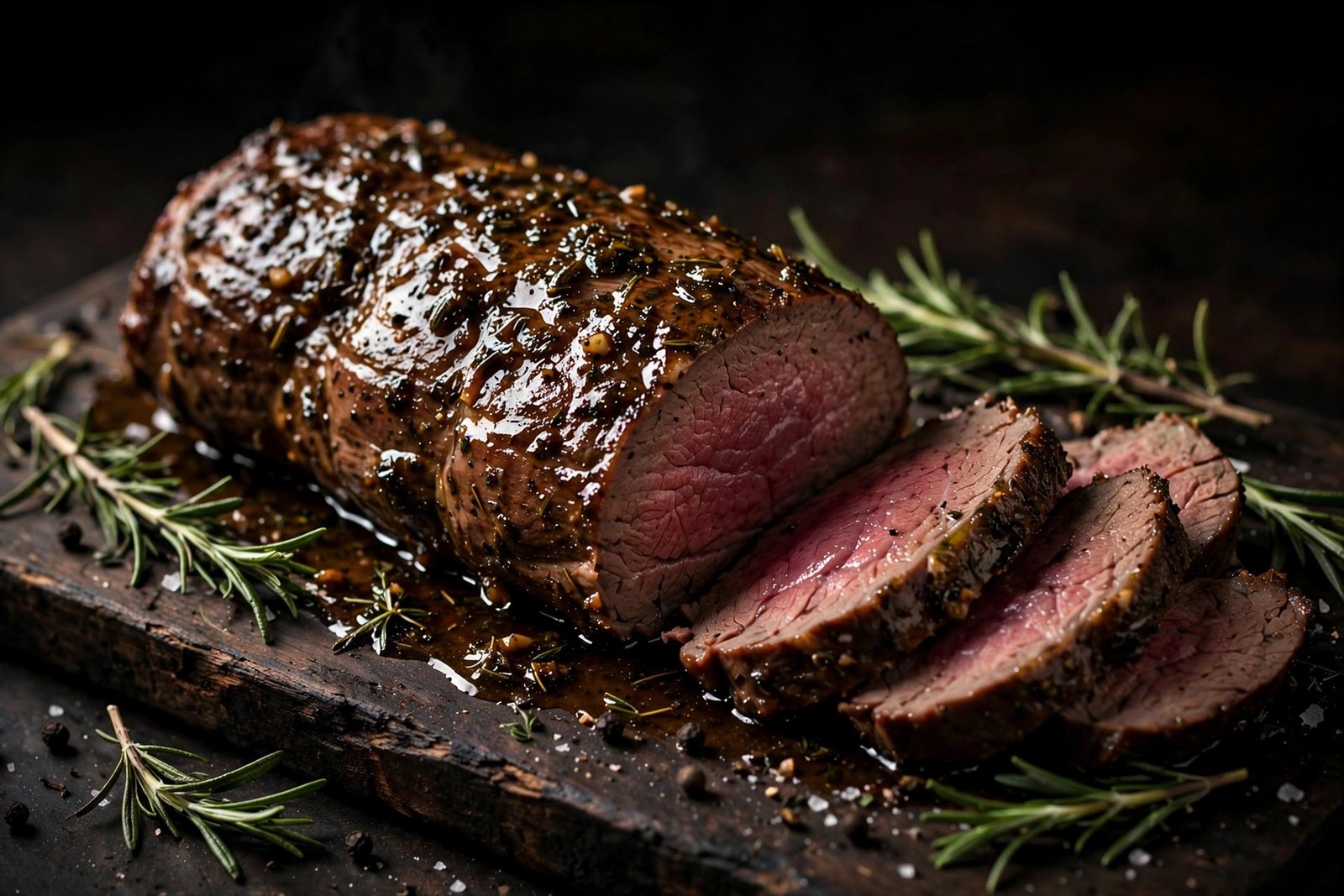
What saved me was a trick a chef friend had scribbled on a napkin months earlier: tie it, sear it hard, then smear it all over with a glossy butter packed with garlic and herbs. The butter does double duty — it bastes the meat as it roasts and turns into this burnished, fragrant glaze that makes the whole roast look like it belongs in a magazine. That Christmas dinner was a triumph. The tenderloin came out rosy and silky, the glaze crackling with rosemary, and my mother asked for the recipe. If you have ever been nervous about cooking an expensive cut, this is the recipe that will make you look like you were born doing it.
Why You’ll Love This Recipe
Beef tenderloin has a reputation for being fussy and reserved for restaurants. Here is the truth — it is one of the easiest roasts you will ever cook:
- Nearly foolproof with a thermometer. The single biggest variable is temperature, and a probe thermometer takes all the guesswork out. Hit your number, rest the meat, and you cannot go wrong.
- The herb glaze is outrageously good. Softened butter whipped with garlic, rosemary, thyme, Dijon, balsamic, and honey turns into a lacquered, savoury-sweet coating that bastes the roast from the outside in.
- Minimal hands-on time. Fifteen minutes of prep, one good sear, then the oven does the rest. You get to enjoy your own party instead of babysitting the stove.
- It feeds a crowd beautifully. A 1.5 kg tenderloin serves eight to ten generously, and thick slices arranged on a platter look spectacular with almost no effort.
- Impressive without being pretentious. This is the kind of main course that makes birthdays, anniversaries, and holidays feel properly special — no culinary degree required.
Ingredients You’ll Need
Prep Time: 15 minutes | Cook Time: 35 minutes | Total Time: 50 minutes plus resting | Servings: 8–10
- 1 whole beef tenderloin (about 1.5 kg / 3.3 lb), trimmed
- Salt and freshly ground black pepper
- 2 tablespoons olive oil
- 115 g (1/2 cup) unsalted butter, softened
- 5 cloves garlic, minced
- 2 tablespoons fresh rosemary, finely chopped
- 2 tablespoons fresh thyme leaves
- 1 tablespoon Dijon mustard
- 1 tablespoon balsamic vinegar
- 1 teaspoon honey
Ingredient Notes
Beef tenderloin: This is the most tender cut on the animal — the same muscle that gives us filet mignon — with a mild, buttery flavour that lets the herb glaze shine. Buy it trimmed if you can; removing the silverskin yourself is doable but fiddly. Let your butcher know it is for roasting whole. As for doneness, this lean cut is at its best served rosy.
Unsalted butter: Softened to room temperature, not melted. You need it pliable enough to mash into a paste with the herbs. Using unsalted lets you control the seasoning precisely, which matters when the meat itself is simply salted.
Fresh rosemary and thyme: Woody herbs are the classic partners for beef, and they hold up to roasting heat without turning bitter. Chop the rosemary finely — nobody wants to chew on a pine needle. In a real pinch you could use dried, but use a third of the amount.
Dijon mustard and balsamic vinegar: These two are the quiet overachievers. The mustard adds a gentle sharpness and helps the glaze cling; the balsamic brings a dark, fruity depth. Together with the honey, they create that glossy, caramelised finish.
Honey: Just a teaspoon — enough to help the glaze bronze in the oven’s heat without making anything taste sweet. Maple syrup works as a substitute if that is what you have.
How to Make Herb-Glazed Beef Tenderloin
- Bring the beef to room temperature and tie it. Take the tenderloin out of the fridge 45 minutes before cooking and pat it completely dry. Tie it with kitchen twine at 5 cm intervals along its length. Tenderloins taper at one end, so tuck the thin tail underneath and tie it in place — this gives you a roast of even thickness that cooks uniformly instead of a sad, overcooked tip. Season generously all over with salt and pepper.
- Preheat the oven and heat the pan. Set the oven to 220°C (425°F). Choose your largest oven-safe skillet or a roasting pan that can go from hob to oven. Add the olive oil and heat over high heat until it shimmers and just begins to smoke. You want serious heat here — a timid pan gives you grey meat, and grey meat is a tragedy at this price point.
- Sear on all sides. Lay the tenderloin in the screaming-hot pan and sear for 2–3 minutes per side, turning with tongs, until deeply browned all over — about 8–10 minutes total. You are building a dark, savoury crust through the Maillard reaction, and the kitchen will start smelling like a proper steakhouse. Do not forget the ends; stand the roast up briefly to brown them too.
- Mix the herb glaze. While the beef sears, mash the softened butter with the minced garlic, chopped rosemary, thyme leaves, Dijon mustard, balsamic vinegar, and honey. Work it with a fork until you have a thick, green-flecked paste that smells like the best parts of a herb garden. Taste it — it should be savoury, garlicky, and just barely sweet.
- Smear it generously. Take the pan off the heat and, using a spatula or your hands, coat the entire surface of the seared tenderloin with the herb butter — top, sides, ends, everywhere. Be generous. It will look like a lot, but most of it melts into the most incredible basting liquid in the oven’s heat.
- Roast to temperature, not time. Slide the pan into the hot oven and roast for 25–30 minutes for medium-rare. Start checking early: you are looking for 52°C (125°F) on a probe thermometer in the thickest part. Ovens lie and tenderloins vary, so trust the thermometer over the clock every single time.
- Baste halfway. About halfway through roasting, open the oven and spoon the melted, bubbling herb butter from the pan back over the roast. It will be fragrant and golden, pooling around the meat. This extra basting builds up that gorgeous lacquered glaze layer by layer.
- Rest — do not skip this. Transfer the tenderloin to a warm cutting board, tent it loosely with foil, and rest for a full 15 minutes. The internal temperature will climb a few more degrees (this is called carryover cooking), and the juices will settle back into the meat. Cut too early and those precious juices end up on the board instead of in the meat.
- Slice thick and serve. Snip off and remove all the twine, then carve into thick, confident slices — about 2–3 cm each. Each slice should be rosy pink in the centre with a burnished, herb-crusted exterior. Arrange on a warm platter and drizzle generously with the glossy pan juices. Serve immediately and accept your applause.
Pro Tips
- A probe thermometer is non-negotiable. For a cut this expensive, guessing is not a strategy. Pull the roast at 52°C (125°F) for medium-rare; carryover heat will take it to a perfect 55–57°C.
- Tuck the tail. That thin tapered end will overcook to leather while the centre is still perfect. Folding it under and tying it creates one even cylinder that cooks uniformly.
- Pat the meat very dry before searing. Moisture is the enemy of browning. A thorough pat-down with paper towels is the difference between a deep crust and a sad grey steam.
- Do not truss too tightly. Snug is good; strangling is not. Overly tight twine squeezes juices out and leaves the roast with an odd bulging shape.
- Let it rest the full 15 minutes. I know it is hard when everyone is hovering hungrily, but this pause is what keeps every slice juicy. Use the time to warm the plates and toss the salad.
- Save the pan drippings. That buttery, beefy liquid gold at the bottom of the pan is the best sauce this roast will ever have. Drizzle it over the slices — or whisk in a splash of cream for something even more decadent.
Variations
Horseradish crust: Stir two tablespoons of prepared horseradish into the herb butter. It adds a sinus-clearing warmth that is magnificent with beef — very old-school steakhouse.
Blue cheese finish: Crumble 50 g of blue cheese into the butter mixture. It melts into the glaze and gives the whole roast a funky, savoury depth that blue cheese lovers will adore.
Porcini mushroom version: Soak a handful of dried porcini, chop them finely, and fold them into the herb butter. The earthy, umami flavour is extraordinary — like the roast went to finishing school in Tuscany.
Pork tenderloin adaptation: The herb glaze works beautifully on pork tenderloin too. Sear and roast smaller tenderloins at the same temperature for about 20 minutes, pulling them at 63°C (145°F). A much cheaper weeknight-friendly version.
Storage & Reheating
Leftover tenderloin keeps in the fridge for up to 3 days, wrapped tightly. Honestly, cold slices are wonderful — thin-sliced on sandwiches with horseradish mayo is one of life’s great pleasures. To reheat, warm slices gently in a 150°C (300°F) oven wrapped in foil with a splash of stock, just until warmed through — overheating will take it past that perfect rosiness. I would not freeze a whole cooked tenderloin; the texture suffers. If you must, slice it first and freeze the slices with minimal air exposure for up to 2 months.
Serving Suggestions
Keep the sides elegant but simple so the beef stays the star. Buttery mashed potatoes or a silky celery root purée are classic for a reason. Roasted vegetables — think honey-glazed carrots, Brussels sprouts with bacon, or a tangle of green beans — add colour and balance. A peppery watercress or rocket salad cuts the richness. For wine, this is the moment for your best bottle: a bold Cabernet Sauvignon, a Barolo, or a mature Rioja will all sing alongside.
Frequently Asked Questions
What if my tenderloin is smaller or larger than 1.5 kg? The method stays the same; only the roasting time changes. A good rule of thumb is roughly 15–18 minutes per 500 g at 220°C, but always — always — cook to temperature rather than time. Your thermometer is the boss.
Can I prepare the herb butter in advance? Absolutely. The butter mixture keeps in the fridge for up to a week, or frozen for a month. Just bring it back to room temperature so it is spreadable before you smear it on the beef.
How do I get an even cook without a very thick middle and thin ends? Tucking the tapered tail underneath and tying the whole roast at even intervals is the whole trick. It turns an irregular shape into a neat cylinder, and a cylinder cooks evenly. Problem solved.
Is it safe to serve beef tenderloin pink in the middle? Yes — whole-muscle beef roasts are safe served medium-rare, since any bacteria live on the surface, which gets seared. The 52°C pull temperature plus resting brings it to a food-safe, deliciously rosy finish.
Can I cook this on the barbecue instead? You can. Sear over direct high heat, then move to indirect heat with the lid closed until it hits temperature. You will miss out on basting with the pan juices, so brush extra herb butter on during the indirect phase.
Nutrition
Per serving (approximate): 540 calories, 44 g protein, 38 g fat, 4 g carbohydrates. This is celebration food — rich, generous, and unapologetic. The estimates assume about eight servings from the roast and will vary with slice thickness and how much glaze ends up on each piece.